Industrial Boiler Replacement Cost Estimation in Oklahoma: What Drives Price, Schedule, and Risk
A practical Oklahoma guide to estimating industrial boiler replacement cost: sizing approach, equipment and installation cost drivers, permitting/inspection, outage planning, and lifecycle trade-offs.
Industrial Boiler Replacement Cost Estimation in Oklahoma: What Drives Price, Schedule, and Risk
Boiler replacement projects are rarely “just swapping a box.” For industrial and healthcare facilities in Oklahoma, boiler replacement cost is shaped by fuel train requirements, venting and combustion air, controls integration, pressure boundary scope, inspection coordination, and the realities of rigging and access. If you’re trying to budget a replacement (or justify CapEx), the best approach is to understand the cost drivers, build a range-based estimate, and reduce uncertainty early by scoping the unknowns.
This guide provides a practical framework to estimate replacement cost without hand-waving—and to avoid the common surprises that blow schedule and budget.
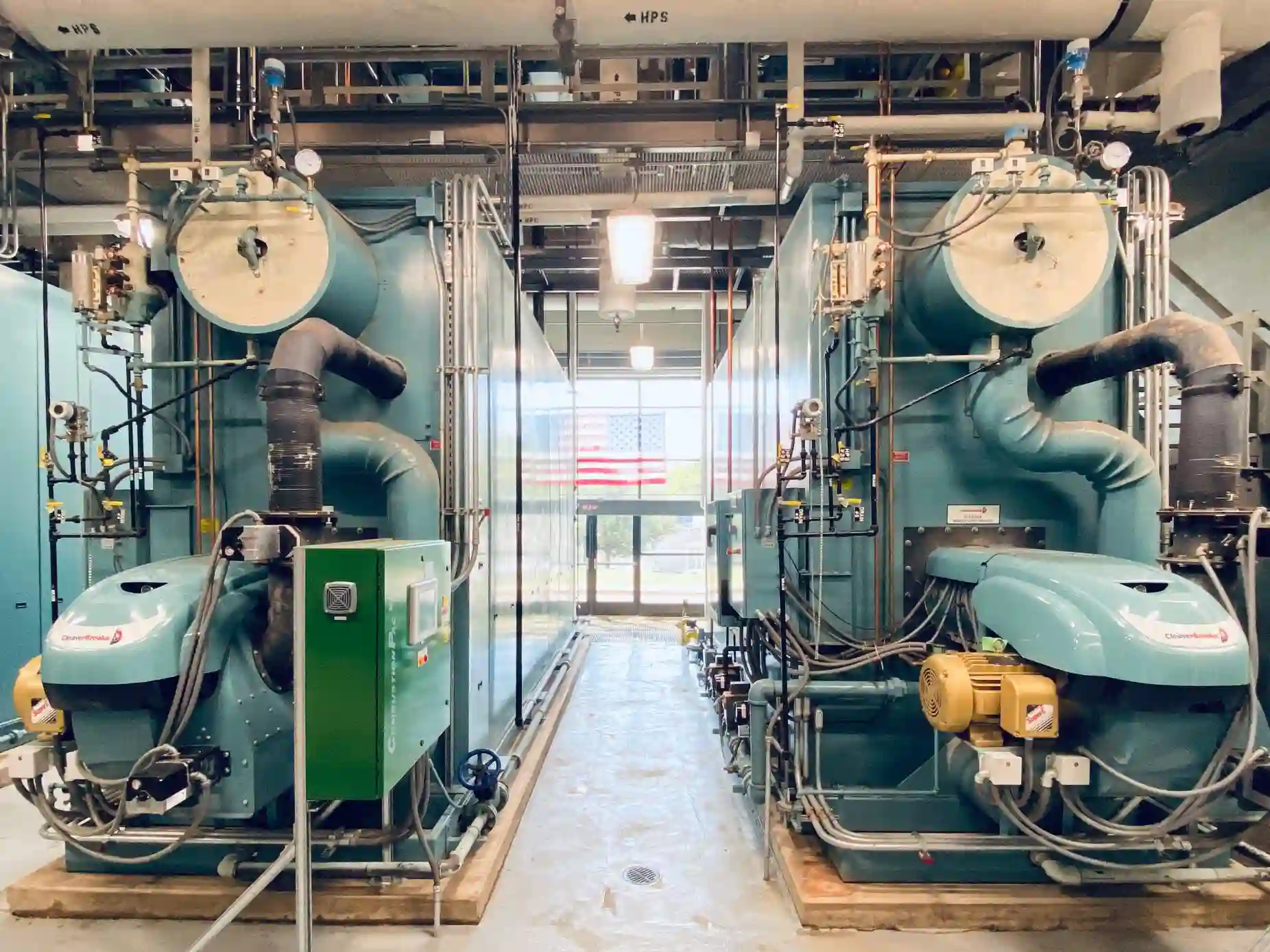
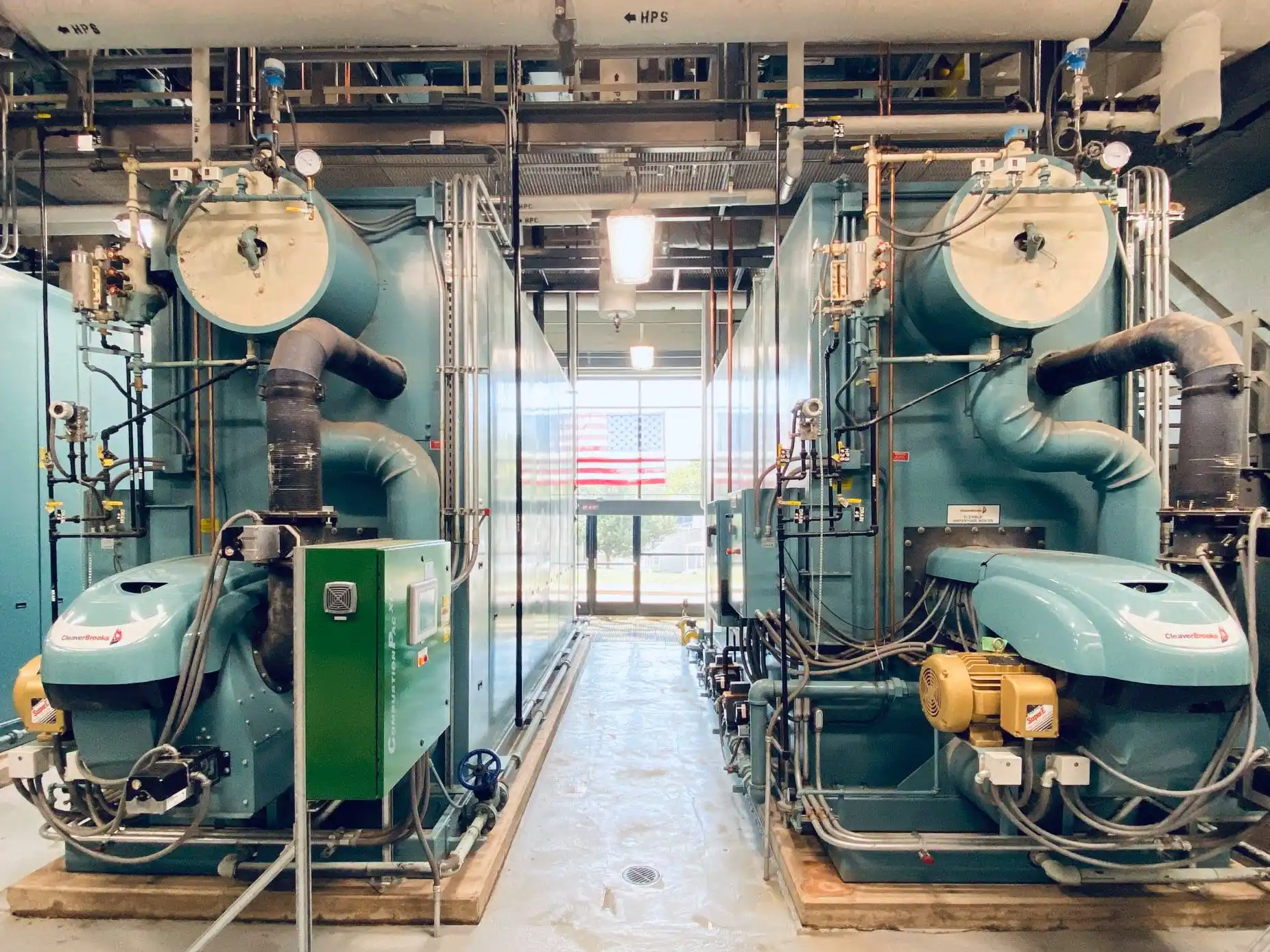
Photo credit: delval.com
Quick Answer: What determines boiler replacement cost?
Boiler replacement cost is determined by capacity and configuration, the complexity of installation (rigging, access, venting, fuel train, electrical, controls), the condition of surrounding piping and auxiliaries, inspection and documentation requirements, and outage constraints. The highest cost “surprises” usually come from scope outside the boiler itself: piping modifications, venting changes, electrical upgrades, and pressure-related compliance work.
If this project is being evaluated against other upgrades, tie the business case into our commercial HVAC retrofit ROI calculation guide.
Step 1: Define the scope (replace boiler vs replace boiler plant)
There are two very different projects that people call “boiler replacement”:
| Scope Type | What’s Included | What’s Retained | Typical Cost Multiplier |
|---|---|---|---|
| Replace boiler only | Pressure vessel, burner, controls | Piping, pumps, some controls | 1.0x (base) |
| Replace boiler plant | Boilers, burners, controls, pumps, valves, piping, accessories | Building structure | 2.0-3.5x |
A) Replace the boiler only
You’re replacing the pressure-generating unit but keeping:
- most of the distribution piping
- existing pumps (if compatible)
- existing controls architecture (sometimes)
B) Replace/rehab the boiler plant
You’re updating:
- boilers plus burners and controls
- pumps, valves, and sequencing
- heat exchangers
- expansion and makeup systems
- distribution and isolation strategy
Plant rehab costs more up front, but often yields better reliability and long-term cost control.
Typical Project Cost Range (Example)
Increased by $275,000 USD
Step 2: Sizing methodology (how to avoid oversizing)
Oversizing is common, and it can create:
- short cycling
- poor efficiency
- comfort control problems
| Sizing Factor | What to Evaluate | Source of Data |
|---|---|---|
| Actual load history | Peak and average demand | BAS trends, utility data |
| Building/process heat loads | Current and projected needs | Engineering analysis |
| Peak demand conditions | Worst-case weather + occupancy | Weather data, schedules |
| Redundancy requirements | N+1, N+2 configurations | Facility risk tolerance |
| Lead/lag staging | Multi-boiler sequencing | Controls strategy |
A practical sizing process includes:
- review actual load history (if trending exists)
- confirm building/process heat loads and redundancy expectations
- evaluate peak demand conditions (worst-case weather + occupancy)
- consider lead/lag staging if multiple boilers exist
For hospitals, redundancy and recovery expectations often drive sizing decisions more than average load.
Step 3: The major cost components (what you should budget)
| Cost Category | Typical % of Total | Key Drivers |
|---|---|---|
| Boiler and burner package | 25-40% | Capacity, type, efficiency |
| Rigging and access | 5-15% | Site constraints, equipment size |
| Fuel train and gas work | 5-10% | Pressure, safety requirements |
| Venting and combustion air | 5-15% | Code changes, stack modifications |
| Electrical and controls | 10-20% | Panel upgrades, BAS integration |
| Piping modifications | 10-25% | Condition, configuration changes |
| Permitting and inspection | 2-5% | Scope complexity |
| Contingency | 10-15% | Unknowns, change orders |
A) Boiler equipment and burner package
| Factor | Cost Impact | Considerations |
|---|---|---|
| Capacity (MBH or HP) | Higher capacity = higher cost | Right-size, don’t oversize |
| Pressure class | Higher pressure = higher cost | Match to actual needs |
| Boiler type | Steam vs hot water | Steam typically higher |
| Burner turndown | Higher turndown = better efficiency | Worth the investment |
| Controls sophistication | More features = higher cost | Balance with integration needs |
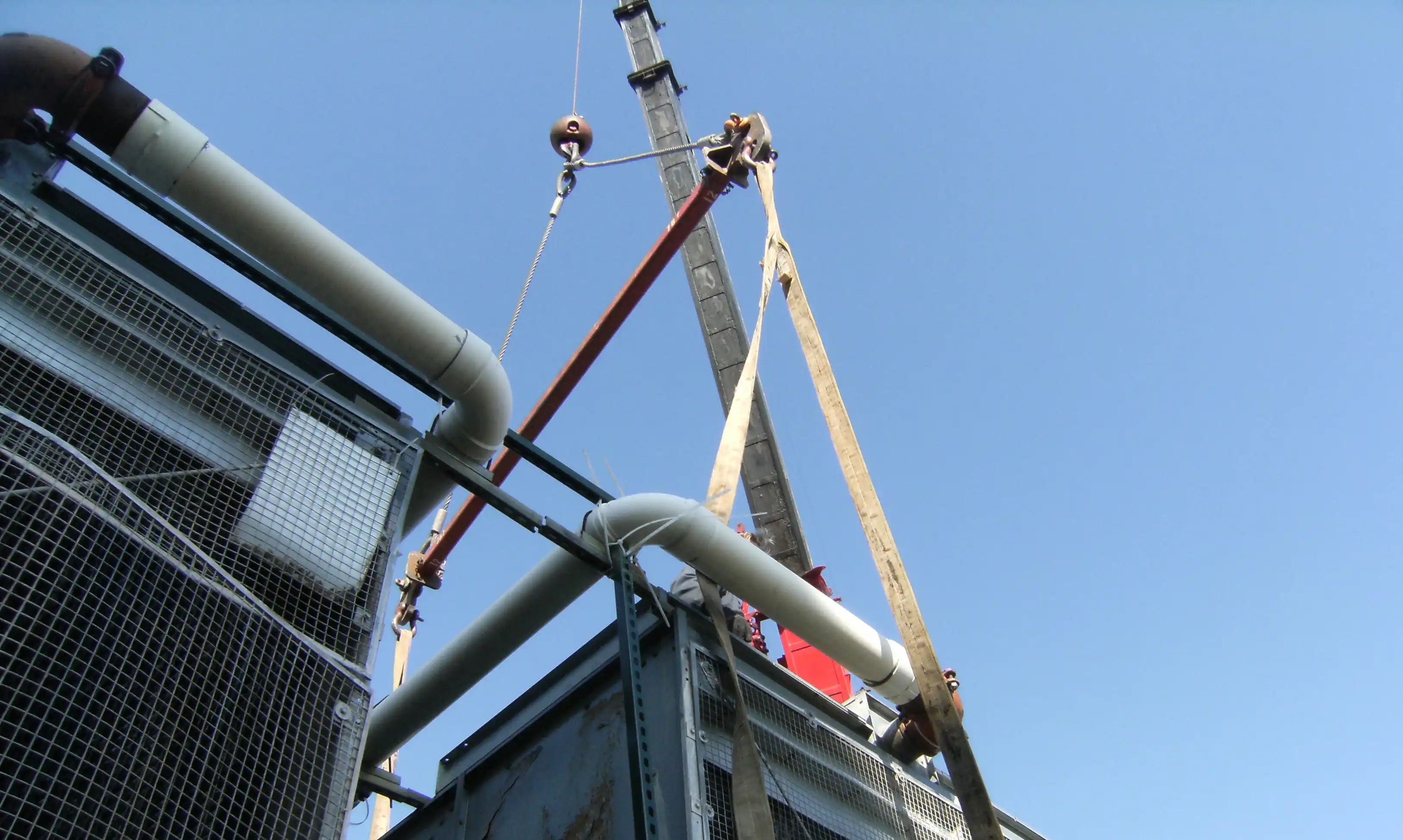
B) Rigging and access
This can be a major cost line item:
| Access Challenge | Cost Impact | Mitigation Strategy |
|---|---|---|
| Removing old equipment | Moderate to high | Plan demo sequence |
| Tight mechanical rooms | High | May require wall/roof opening |
| No crane access | High | Rigging alternatives |
| Upper floor location | Very high | Structural evaluation required |
| Outdoor installation | Moderate | Weather protection needed |
Access constraints create labor and schedule risk—budget for them explicitly.
C) Fuel train and gas work
| Fuel Train Component | Purpose | Inspection Requirements |
|---|---|---|
| Gas pressure regulation | Match supply to burner needs | Leak testing required |
| Main manual shutoff | Safety isolation | Per code |
| Safety shutoff valves | Automatic protection | Testing and certification |
| Pressure switches | Low/high gas pressure safety | Per manufacturer |
| Leak testing | System integrity verification | Before startup |
Fuel train scope should never be treated as an afterthought—this is a safety-critical system.
D) Venting and combustion air
| Venting Change | Cost Driver | Why It Happens |
|---|---|---|
| Stack diameter change | New boiler different than old | Common with efficiency upgrades |
| Liner requirements | Condensing or code requirements | Material and installation costs |
| Combustion air pathway | Code-driven requirements | Often overlooked in budgeting |
| Category I to IV change | Efficiency upgrade changes venting | May require complete rework |
If the new boiler has different venting characteristics than the old unit, plan for modifications.
E) Electrical and controls
| Electrical Scope Item | Typical Requirement | Notes |
|---|---|---|
| New feeders | Often needed for larger boilers | Coordinate with utility |
| Breaker capacity | May require panel upgrade | Lead time for equipment |
| Control panels | Modern boilers require integration | Include wiring allowance |
| BAS integration | Points, graphics, trending | Critical for operations |
| Sequencing logic | Lead/lag, outdoor reset | Controls programming time |
Controls work is often where “we’ll keep it simple” becomes “we need a real integration plan.”
F) Piping modifications and auxiliaries
| Piping Item | When Required | Cost Impact |
|---|---|---|
| Isolation valves | Maintenance accessibility | Low to moderate |
| Bypass configuration | Staged replacement | Moderate |
| Pump modifications | Flow changes, VFDs | Moderate to high |
| Expansion tank | System changes, sizing | Low to moderate |
| Makeup water system | Age, capacity | Moderate |
| Heat exchangers | Steam-to-water conversion | High |
| Condensate return | Steam system condition | Moderate to high |
G) Permitting, inspection, and documentation
| Requirement | Lead Time | Cost Impact |
|---|---|---|
| Building permit | 1-4 weeks | Low |
| Mechanical permit | 1-4 weeks | Low |
| Gas utility coordination | 2-6 weeks | Schedule risk |
| Pressure inspection | Coordinate with scope | Moderate |
| Final inspection | At completion | Schedule risk |
| Documentation package | Throughout project | Labor cost |
Schedule risk lives here if you plan it late.
For pre-inspection preparation and common findings, use our Oklahoma boiler inspection requirements guide.
Step 4: Schedule and outage planning (the “hidden cost”)
| Outage Factor | Cost Impact | Risk Mitigation |
|---|---|---|
| Tight completion window | Premium labor rates | Plan early, pre-stage materials |
| Zero downtime tolerance | Temporary heat required | Budget $5,000-$25,000+ |
| Healthcare facility | ICRA, infection control | Barrier and containment costs |
| Winter replacement | High risk of complications | Shoulder season preferred |
| Multi-boiler plant | Staged work possible | Reduces risk, extends schedule |
Boiler replacement cost increases when:
- outages must be completed in tight windows
- the facility cannot tolerate downtime (healthcare, industrial)
- temporary heat is required
If you have multiple boilers, you may be able to stage work to maintain partial operation—this can reduce risk even if it increases planning complexity.
Annual Operating Cost (After Upgrade)
Saved $17,000 USD
Step 5: How to build a budget range (not a fake single number)
The most honest approach is a range-based estimate:
| Scenario | Assumptions | Contingency |
|---|---|---|
| Low-case | Straightforward swap, good access, minimal piping changes | 5% |
| Expected-case | Typical modifications for venting, controls, piping | 10% |
| High-case | Significant unknowns, access constraints, compliance scope | 15-20% |
To tighten the range, reduce unknowns early:
- site walk and access evaluation
- review of existing drawings (and confirmation of accuracy)
- inspection of surrounding piping and auxiliaries
- confirmation of venting and gas supply conditions
Oklahoma-specific considerations
Winter timing
| Replacement Season | Risk Level | Cost Impact | Recommendation |
|---|---|---|---|
| November-February | High | Premium pricing likely | Avoid if possible |
| March-May | Low | Standard pricing | Preferred window |
| June-August | Low to moderate | Standard pricing | Good alternative |
| September-October | Moderate | Standard pricing | Plan early for winter readiness |
In Oklahoma, replacing boilers during peak winter demand increases risk and cost. Plan replacements for shoulder seasons when possible, or build a robust contingency plan (temporary heat, redundancy).
To reduce emergency exposure while the project is in planning, follow this industrial boiler preventative maintenance schedule.
Water quality and chemistry
| Water Issue | Impact on New Boiler | Required Action |
|---|---|---|
| High TDS | Scale buildup, efficiency loss | Water treatment program |
| Oxygen presence | Corrosion, tube failure | Deaerator or chemical treatment |
| pH imbalance | Corrosion or scale | Chemical treatment |
| Makeup water quality | Accelerates all issues | Pretreatment evaluation |
Boiler longevity is strongly affected by water chemistry. If the existing system has chemistry issues, replacement should include a plan to correct them—or the new boiler will inherit the same problems.
Healthcare redundancy expectations
| Requirement | Typical Standard | Documentation Needed |
|---|---|---|
| N+1 redundancy | Common for critical areas | Capacity calculations |
| Temperature recovery | Per ASHRAE 170 | Commissioning verification |
| Backup power | Often required for controls | Generator coordination |
| Maintenance access | 24/7 serviceability | Design review |
Hospitals often require redundancy and documented reliability. Replacement scope should account for:
- staging and controls
- stable temperature control
- clear documentation and maintenance plan
Common mistakes that inflate cost
| Mistake | Consequence | Prevention |
|---|---|---|
| Treating boiler as only scope item | Budget overrun on venting, gas, controls | Comprehensive scope review |
| Oversizing “just to be safe” | Poor efficiency, short cycling | Right-size using data |
| Delaying inspection coordination | Schedule delays, expedite fees | Early engagement |
| Ignoring access realities | Rigging surprises at mobilization | Site walk before budgeting |
| Skipping documentation planning | Rework, compliance issues | Include in project scope |
When to call for professional estimating and planning
Bring in support early if:
- you need budget numbers for capital planning
- the facility has tight outage constraints
- you suspect venting/gas/controls scope will be significant
- the project involves inspection-driven compliance requirements
If your scope includes pressure-boundary alterations during changeout, confirm contractor authorization using ASME R-Stamp vs S-Stamp guidance.
Need a replacement plan for an Oklahoma boiler plant?
Total Mechanical Services supports boiler replacement planning, scope definition, and execution across Oklahoma. Call (405) 223-9900 or request a proposal.
Disclaimer: This guide is informational. Actual costs vary significantly by equipment selection, site conditions, access constraints, and compliance requirements. A site walk and scope review are required for an accurate estimate.
Related Resources
ASME R-Stamp vs S-Stamp in Oklahoma: What Facilities Should Require (and How to Verify It)
A practical guide for Oklahoma facilities on ASME R-Stamp vs S-Stamp: what each allows, why it matters for liability, and how to vet a contractor before pressure work begins.

Oklahoma Ice Storm HVAC Recovery: Freeze Damage Triage, RTU/Chiller Plant Checks, and Safe Restart
A practical Oklahoma guide to recovering HVAC after ice storms: pre-storm prep, freeze damage triage, thaw and restart strategy, and documentation for insurance and risk control.
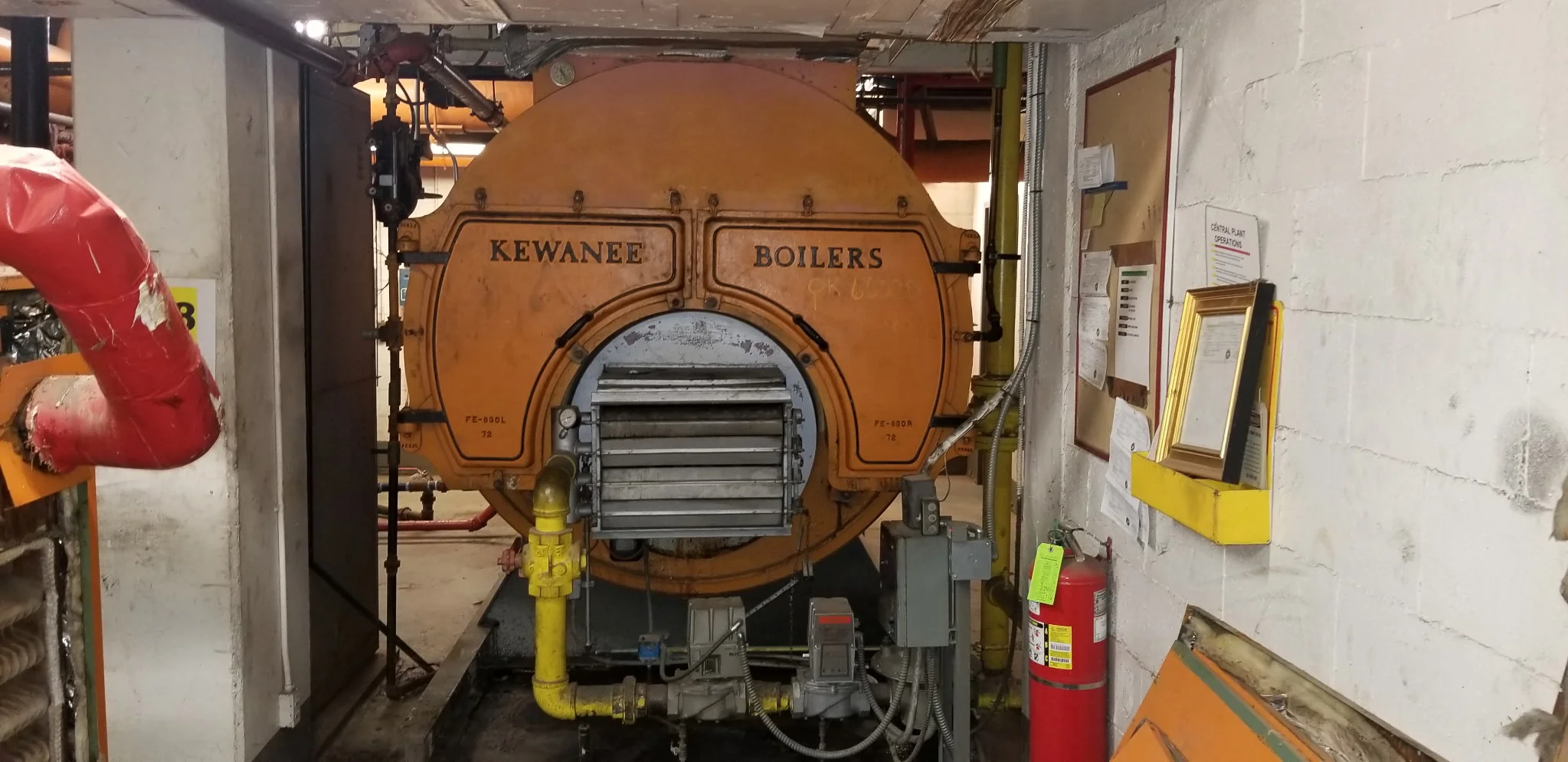
Oklahoma Boiler Inspection Requirements: What Facilities Need to Know (and How to Pass)
A practical overview of Oklahoma boiler inspection requirements: how facilities prepare, what inspectors commonly flag, and how to avoid delays, rework, and shutdown risk.
Need Help with Your System?
Our expert team is ready to assist with design, installation, maintenance, and troubleshooting.