Carrier Chiller Fault Codes (19XR/30XA): Meaning, Severity, and Next Steps in Oklahoma
A field-friendly Carrier chiller fault-code guide for Oklahoma facility teams: what common faults usually indicate, how to triage safely, and when to call for service.
Carrier Chiller Fault Codes (19XR/30XA): Meaning, Severity, and Next Steps in Oklahoma
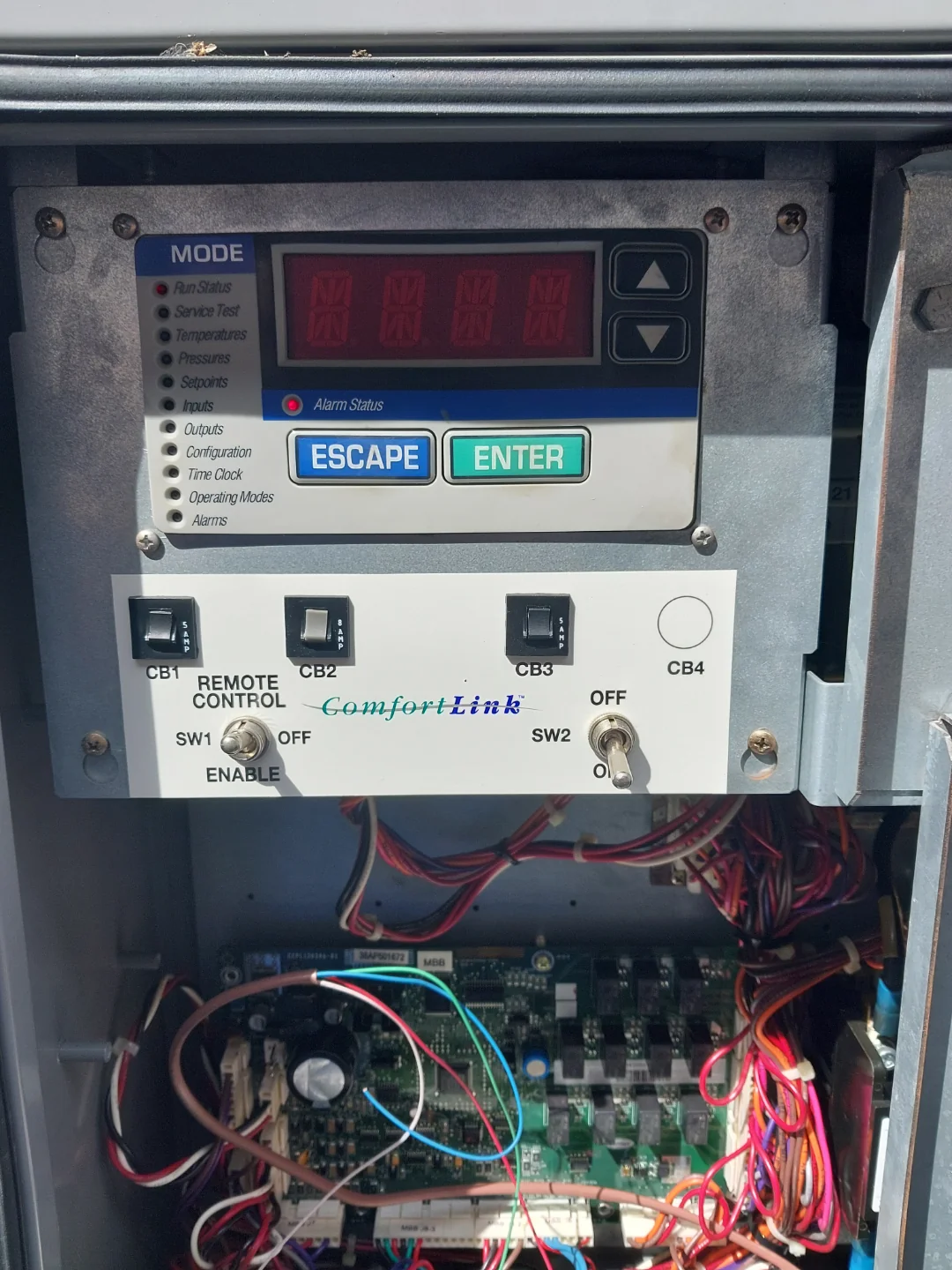
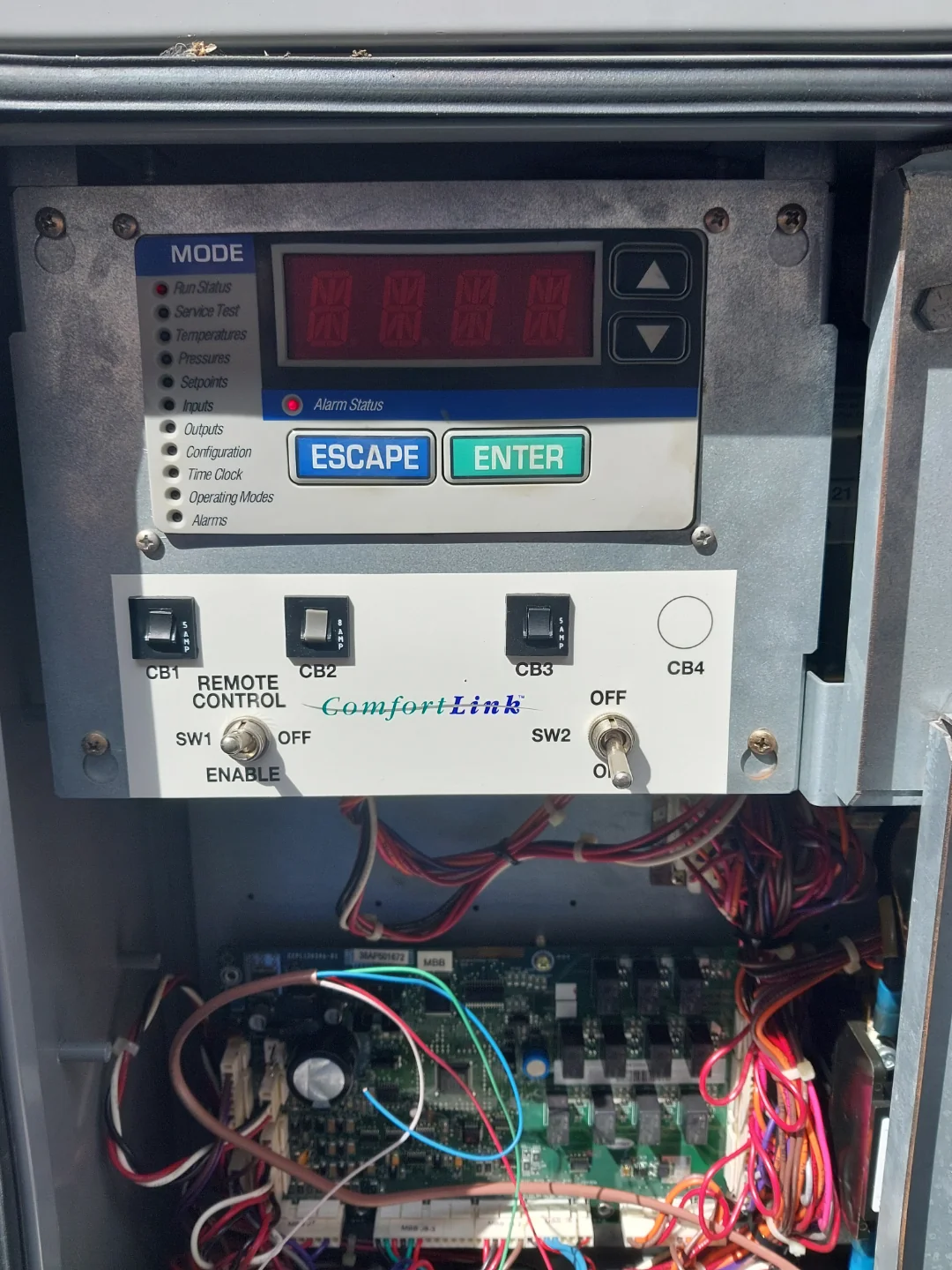
Carrier chillers will throw fault codes for one reason: the machine detected a condition that risks safety, reliability, or performance. Your best move isn’t to memorize every code—it’s to understand the categories (pressure, flow, oil, motor protection, sensors/controls) and apply a safe triage routine. In Oklahoma, we see fault events cluster during peak heat (condenser limits), during windy dust/cottonwood periods (coil loading), and during changeover seasons (unstable load and sequencing).
Step 1: Safety-first triage
Before you troubleshoot, decide whether you have a hazard or a maintenance issue:
| Condition | Classification | Action |
|---|---|---|
| Refrigerant odor or loud hissing | Hazard | Clear the area and call immediately |
| Visible oil around fittings or on floor | Hazard | Assume a leak risk and call |
| Electrical burn smell or smoke | Hazard | Isolate safely and call |
| Repeated safety lockouts | Hazard | Stop resetting—repeated starts damage equipment |
| Advisory alarm, chiller running normally | Maintenance | Document and schedule service |
If the chiller serves critical spaces (hospital ORs, imaging, process loads), start your backup plan (load shedding, alternate cooling, stakeholder notifications).
Step 2: Capture the “snapshot” that makes diagnosis faster
If you call for service, these details reduce time to restore cooling:
| Information to Capture | Why It Helps |
|---|---|
| Exact fault message/code | Determines troubleshooting path |
| Warning vs. lockout status | Indicates severity level |
| Air-cooled vs. water-cooled | Defines heat rejection system |
| Entering/leaving CHW temperatures | Shows evaporator performance |
| Condenser conditions | Coil cleanliness, fan status, tower/pump status |
| Recent changes | BAS setpoints, VFD tuning, chemical program, maintenance |
How to think about Carrier fault codes (category approach)
Carrier fault lists vary by model and control version, but in the field most faults fall into these categories:
| Category | Code Type | Primary System |
|---|---|---|
| A | High pressure / high head / condenser limit | Condenser-side |
| B | Low pressure / low suction / evaporator limit | Evaporator-side |
| C | Freeze protection | Evaporator-side |
| D | Flow proof / DP / pump interlock | Water-side |
| E | Oil system faults | Compressor protection |
| F | Motor protection / starter faults | Electrical |
| G | Sensor, communication, control | Controls |
Once you identify the category, your next steps are straightforward.
Common Carrier fault categories (meaning + safe next steps)
Category A: High pressure / high head / condenser limit faults
What it usually means: The chiller can’t reject heat fast enough.
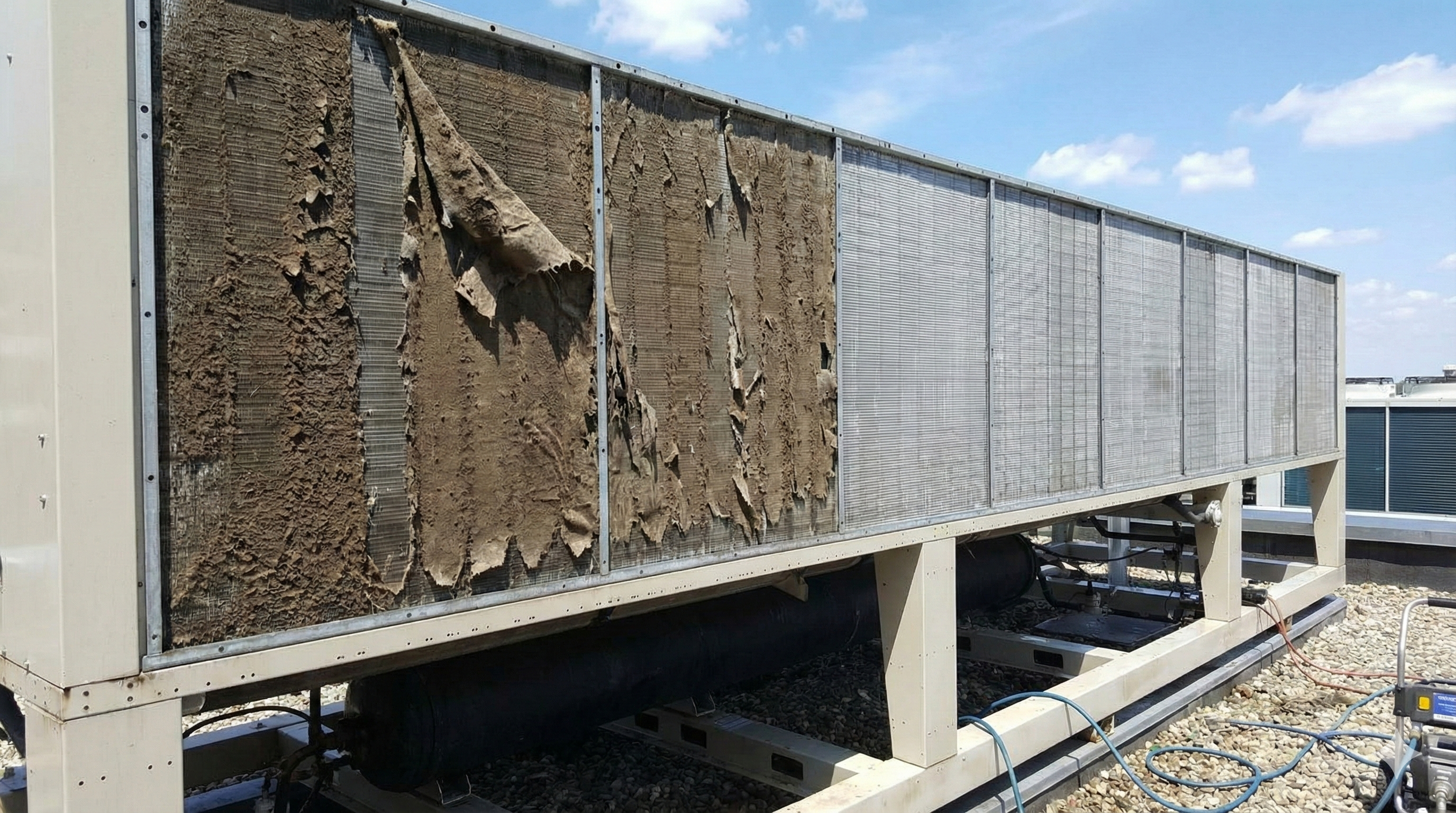
Most common Oklahoma causes: dirty coils (air-cooled), tower staging issues (water-cooled), high ambient heat events, airflow restrictions, tube scaling, fan failures.
| Chiller Type | Safe Checks |
|---|---|
| Air-cooled | Coil face condition, fan operation, debris/dust/cottonwood loading, hail damage |
| Water-cooled | Tower fans/pumps running, basin level, obvious flow issues, water treatment logs |
When to call: Same-day during summer; immediate if it trips repeatedly or serves critical loads.
Category B: Low pressure / low suction / evaporator limit faults
What it usually means: Evaporator pressure fell because heat absorption is low or unstable.
Common causes: low chilled-water flow, low load with unstable control, refrigerant issue, evaporator fouling, sensor fault.
| Check Item | What to Verify |
|---|---|
| Chilled water pumps | Running and not in fault |
| Isolation valves | Fully open after maintenance |
| CHW supply/return temps | Reasonable delta-T present |
| BAS setpoints | No recent aggressive changes |
When to call: Immediate if freeze risk is present, or if the chiller trips repeatedly.
Category C: Freeze protection faults
What it usually means: Leaving water temperature is approaching freezing, or the controller thinks it is.
Why it matters: Frozen evaporator tubes are expensive and can end a season.
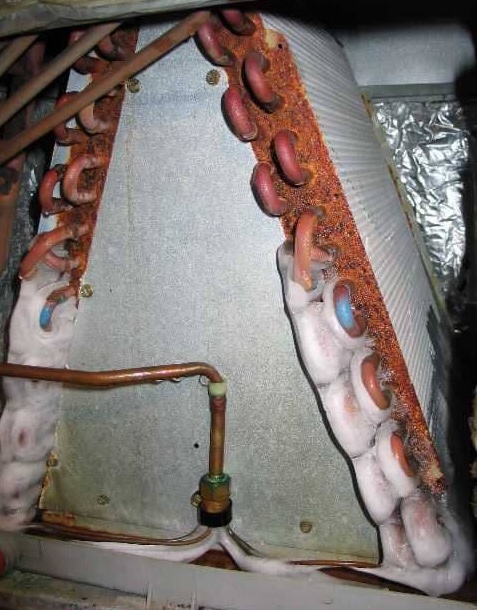
Photo credit: inspectapedia.com
Safe checks:
- Confirm flow proof and pump status
- Confirm setpoints and sensor plausibility via BAS trends
When to call: Immediate.
Category D: Flow proof / DP / pump interlock faults
What it usually means: The controller isn’t seeing required flow or DP.
Common causes: pump off, VFD speed too low, strainer clogged, valve closed after maintenance, flow switch failed.
| Flow Fault Diagnostics | What to Check |
|---|---|
| Pumps running | Confirm commanded and operating correctly |
| Strainers | Check DP if available, may be clogged |
| Isolation valves | Verify open position |
| VFD speed | Confirm not running at minimum |
When to call: If flow can’t be restored quickly, or if the issue is electrical/controls-related.
Category E: Oil system faults (centrifugal/screw)
What it usually means: The lubrication system is out of limits.
Why it matters: Oil issues can quickly become bearing failures.
| Oil System Concern | Risk Level |
|---|---|
| Low oil pressure alarm | High—potential bearing damage |
| Oil temperature high | High—lubrication breakdown risk |
| Oil level low | High—compressor protection at risk |
Safe checks: limited for non-technicians; note alarm history and trend data.
When to call: Immediate—avoid repeated restart attempts.
Category F: Motor protection / starter faults
What it usually means: Overcurrent, phase imbalance, starter issues, or an upstream electrical event.
Oklahoma context: Utility events during storm season and generator testing can contribute.
Safe checks:
- Confirm recent electrical events or breaker trips
- Verify that building power is stable and within spec (qualified personnel only)
When to call: Same-day; immediate if it impacts critical cooling.
Category G: Sensor, communication, or control faults
What it usually means: A transducer, wiring, or communication path is failing.
Safe checks: Compare BAS readings (if you have independent sensors) to confirm plausibility.
When to call: Schedule service; urgent if it prevents operation or causes lockouts.
A practical “severity” rubric (what to do without guessing)
| Fault Type | Severity | Action |
|---|---|---|
| High pressure lockout | Stop and call | Do not restart repeatedly |
| Oil pressure / oil differential issues | Stop and call | Bearing damage risk |
| Freeze protection shutdown | Stop and call | Tube damage risk |
| Motor protection trip | Stop and call | Electrical damage risk |
| Any refrigerant leak indicators | Stop and call | Safety hazard |
| Advisory/sensor fault (chiller stable) | Document and schedule | Prevent eventual lockout |
If it’s an advisory/sensor fault and the chiller is stable, you can often:
- document the event,
- keep the plant stable,
- schedule service to prevent an eventual lockout.
Oklahoma-specific “usual suspects” for Carrier faults
These are common, real-world contributors in Oklahoma facilities:
| Oklahoma Factor | Result | Fault Category |
|---|---|---|
| Dust/cottonwood coil loading | Blocked condenser airflow | High head faults (A) |
| High-ambient summer weeks | Condenser at capacity limit | High head faults (A) |
| Cooling tower chemistry drift | Rising approach temps | High pressure faults (A) |
| Seasonal changeover | Low load instability | Low-pressure trips (B) |
| Storm season power events | Utility sags and surges | Motor protection faults (F) |
Decision matrix: when to call
| Condition | Risk level | Recommended response |
|---|---|---|
| Refrigerant odor / hissing / visible oil | Critical | Clear area, call immediately |
| High pressure lockout during high ambient | High | Call same-day / emergency dispatch |
| Freeze protection or low temp shutdown | High | Call immediately |
| Oil system fault or motor protection trip | High | Call immediately; avoid restarts |
| Flow proof fault (pumps/valves) that you can’t clear | High | Call same-day |
| Sensor/communication advisory, chiller stable | Moderate | Schedule service soon |
Preventative steps that reduce fault calls
If you want fewer codes in the middle of summer:
| Preventative Action | Timing | Benefit |
|---|---|---|
| Coil cleaning cadence (air-cooled) | Quarterly during dusty seasons | Prevents high-head faults |
| Tower water treatment (water-cooled) | Continuous with documentation | Reduces scaling and fouling |
| Trend critical points in BAS | Continuous | Early fault detection |
| Review plant sequencing | Pre-summer | Prevents low-load instability |
Need Carrier chiller support in Oklahoma?
Total Mechanical Services provides commercial chiller troubleshooting and maintenance across Oklahoma. Call (405) 223-9900 or request a proposal.
Disclaimer: This is general information and not a substitute for OEM documentation or qualified service. Refrigerant and high-voltage work must be performed by trained personnel.
Related Resources
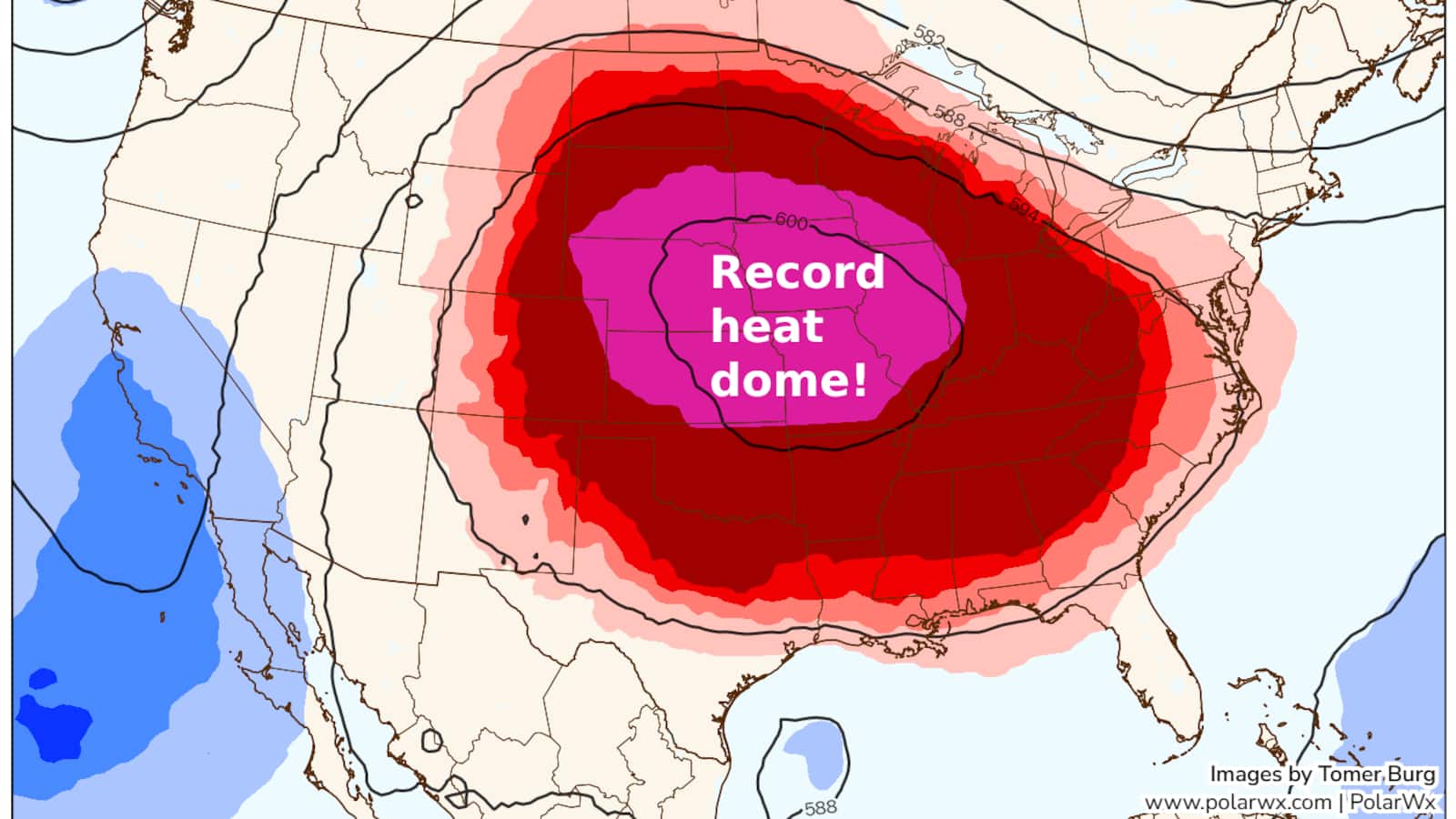
Protecting Commercial HVAC From Oklahoma Heat Domes: High-Ambient Strategy, Coil Cleaning, and Load Management
A practical Oklahoma guide to surviving heat domes: high-ambient chiller/RTU performance, coil cleaning cadence, tower readiness, demand management, and emergency cooling planning.

Oklahoma Ice Storm HVAC Recovery: Freeze Damage Triage, RTU/Chiller Plant Checks, and Safe Restart
A practical Oklahoma guide to recovering HVAC after ice storms: pre-storm prep, freeze damage triage, thaw and restart strategy, and documentation for insurance and risk control.
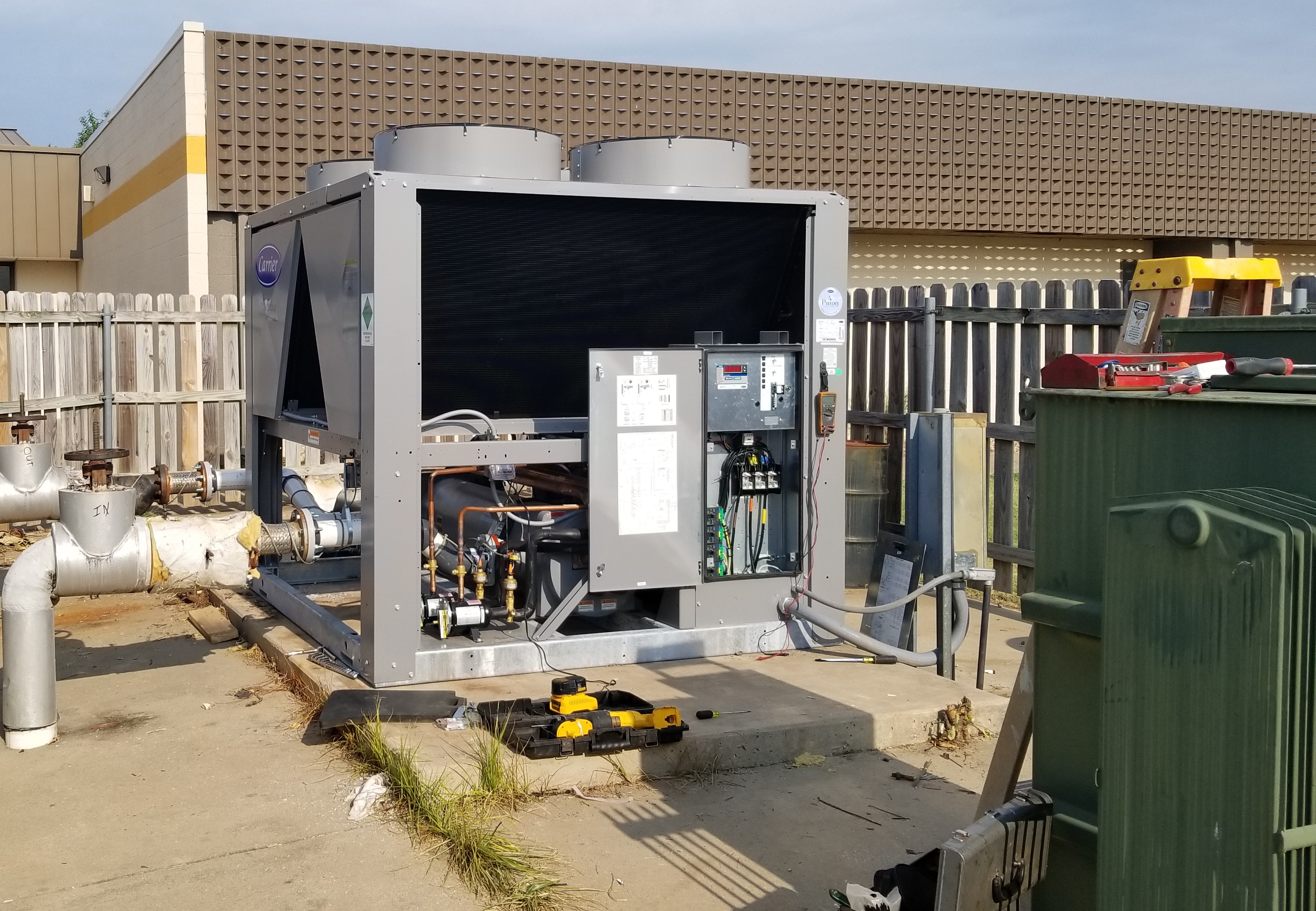
5 Common Chiller Problems and How to Diagnose Them
Expert troubleshooting guide for commercial chiller problems. Learn to identify symptoms, diagnose root causes, and determine when to call for emergency service.
Need Help with Your System?
Our expert team is ready to assist with design, installation, maintenance, and troubleshooting.