Protecting Commercial HVAC From Oklahoma Heat Domes: High-Ambient Strategy, Coil Cleaning, and Load Management
A practical Oklahoma guide to surviving heat domes: high-ambient chiller/RTU performance, coil cleaning cadence, tower readiness, demand management, and emergency cooling planning.
Protecting Commercial HVAC From Oklahoma Heat Domes: High-Ambient Strategy, Coil Cleaning, and Load Management
Quick Answer
When those trips do happen, pair this with the first-hour actions in our 24/7 emergency HVAC response guide.

Photo credit: oklahoman.com
Why heat domes break “normally reliable” systems
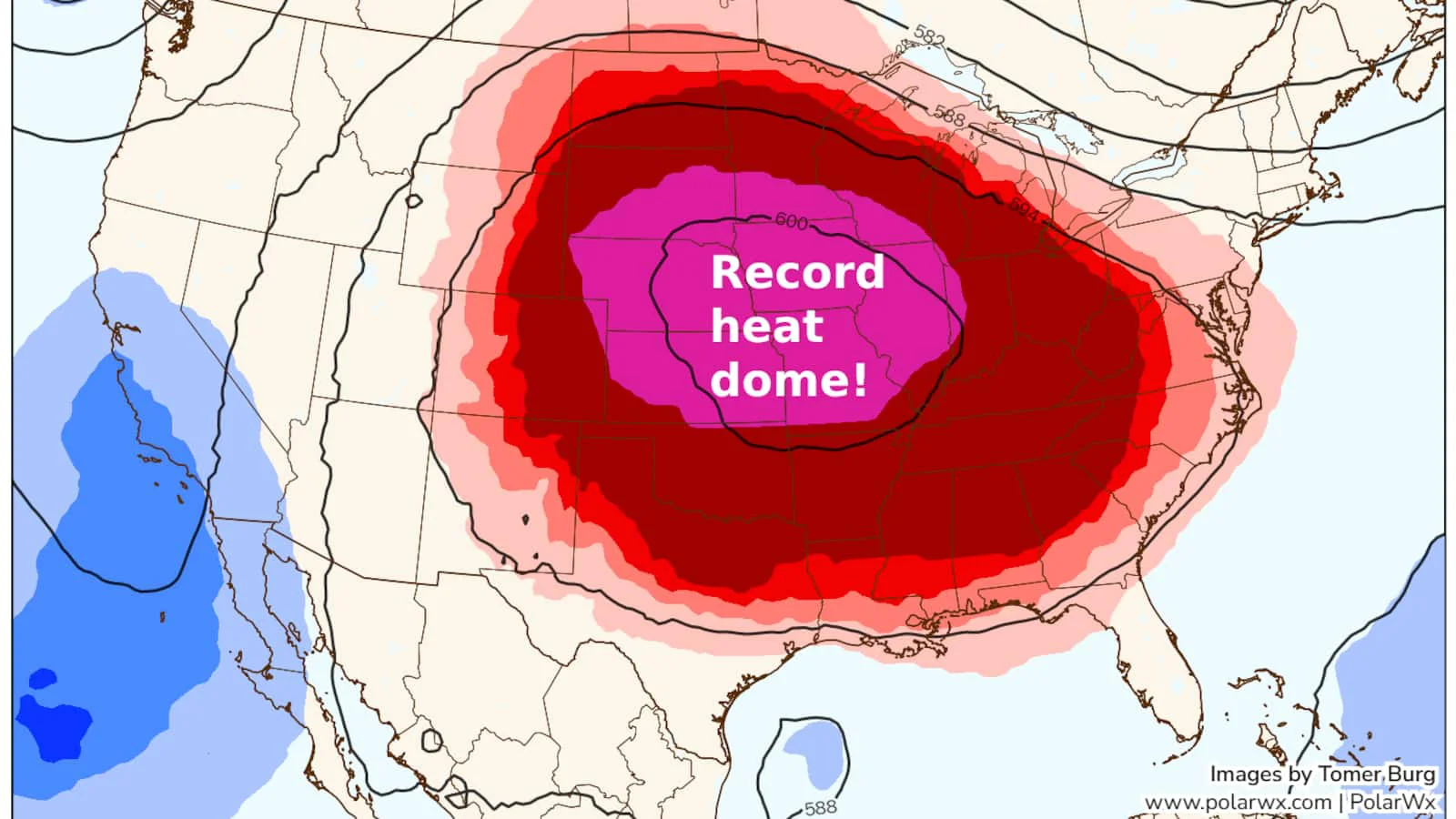
Heat domes expose weak margin. A system that runs fine most of the year can struggle when:
| Heat Dome Factor | Impact on HVAC |
|---|---|
| Multi-day high temps | No overnight recovery |
| Sustained 100°F+ ambient | Condenser capacity limits |
| High humidity | Added latent load |
| Accumulated maintenance debt | Dirty coils, tower chemistry |
The failure mode is often predictable: head pressure rises, compressor amps climb, safeties trip, and the building loses cooling at the worst time.
What “high ambient” does to chiller and RTU performance
Air-Cooled vs Water-Cooled During Heat Domes
| System Type | Heat Rejection | Heat Dome Vulnerability |
|---|---|---|
| Air-cooled | Direct to outdoor air | Severe—limited by ambient temp |
| Water-cooled | To cooling tower | Moderate—if tower maintained |
Air-cooled equipment (air-cooled chillers, RTUs, condensers)
Air-cooled systems reject heat to outdoor air. When outdoor air is hot:
- the condenser temperature rises
- head pressure rises
- compressors work harder for the same tonnage
Dirty coils or fan issues make this worse quickly.
Water-cooled systems (cooling towers and condenser water)
Water-cooled systems reject heat through a cooling tower. Heat domes stress:
- tower approach temperature
- tower fan staging and airflow
- water chemistry stability (biofilm and scale accelerate with warm water)
If tower performance slips, chiller head pressure climbs anyway—just through a different pathway.
For deeper maintenance execution on that pathway, use cooling tower Legionella-prevention and hygiene guidance and chiller tube-cleaning best practices.
Head Pressure (psig above normal)
Saved 20
Heat dome readiness checklist (what to do before the hottest week)
Pre-Heat Dome Readiness Checklist
| System | Task | Priority |
|---|---|---|
| Air-cooled coils | Clean and inspect | Critical |
| Condenser fans | Verify all operational | Critical |
| Cooling tower | Fan staging, basin, chemistry | Critical |
| Chilled water | Pump operation, strainers | High |
| Controls | Verify setpoints, review trends | High |
| Filters | Replace if approaching limit | Medium |
| Alarms | Test routing | Medium |
1) Coil cleaning and airflow verification (air-cooled systems)
In Oklahoma, dust and cottonwood seasons load coils fast. Before peak heat:
- inspect coil faces (look for matting and deep fin restriction)
- confirm all condenser fans operate and stage correctly
- verify nothing blocks airflow or causes recirculation (placement matters)
Key Insight: If you can’t move air through the coil, you can’t reject heat.
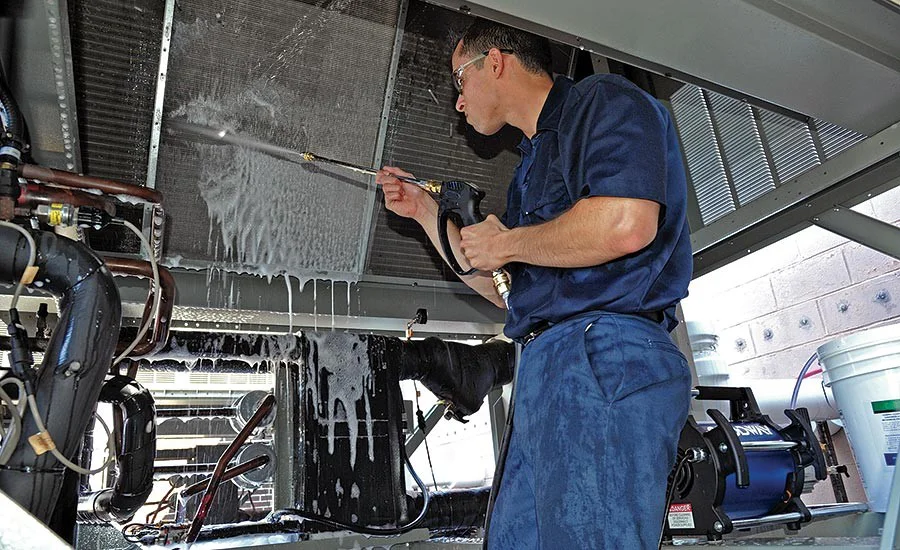
Photo credit: evapco.com
2) Cooling tower readiness (water-cooled plants)
Before peak heat:
| Tower Readiness Check | What to Look For |
|---|---|
| Fan operation | All fans running, proper staging |
| Basin condition | Clean, no debris, correct level |
| Water treatment | Current logs, chemical feed working |
| Approach temperature | Trend data showing normal range |
3) Chilled water flow stability
Low flow causes instability:
- low suction trips
- freeze protection risk in odd conditions
- poor coil performance at AHUs
Verify:
- pumps run correctly and VFD minimums protect flow proof
- strainers are clean
- valves are operating as intended
4) Controls and setpoint strategy
Heat domes reward stability. Avoid:
- aggressive setpoint swings
- schedules that cycle equipment unnecessarily
- overrides that disable safeties
Recommended BAS Trend Points During Heat Events
| Trend Point | Why |
|---|---|
| Leaving CHW temp | Verify chiller performance |
| Condenser water temps | Tower effectiveness |
| Key AHU discharge temps | Building comfort |
| Alarm history | Pattern recognition |
| Head pressure (if available) | Early warning |
The “coil cleaning cadence” that actually matches Oklahoma reality
Many facilities under-clean coils because they use a generic quarterly schedule.
Oklahoma-Specific Coil Cleaning Schedule
| Season | Cleaning Frequency | Notes |
|---|---|---|
| Spring (cottonwood) | Monthly inspection | Clean as needed |
| Pre-summer (May) | Full cleaning | Before heat hits |
| Summer | Bi-weekly inspection | Critical loads weekly |
| Fall | Post-season cleaning | Prepare for winter |
The cost of a cleaning is usually far less than the cost of an emergency trip and after-hours response.
Dust and cottonwood mitigation (what helps)
Not all facilities can change their site environment, but you can:
| Mitigation Strategy | Effectiveness | Notes |
|---|---|---|
| Intake screens | Medium | Don’t restrict airflow |
| Increased inspection | High | Catch problems early |
| Rooftop housekeeping | Medium | Remove debris regularly |
| Proper cleaning technique | High | Not just surface spray |
Peak demand and utility strategy (what facilities can control)
During heat domes, you may be paying for demand as much as energy. Practical strategies:
Demand Management Strategies
| Strategy | Implementation | Savings Potential |
|---|---|---|
| Staged startup | Sequence equipment starts | Avoid demand spike |
| VFD optimization | Tune minimums and sequences | 10-20% energy |
| Load shedding | Identify non-critical loads | Emergency capacity |
| Temperature tolerance | Relax non-critical zones | Reduce peak load |
| Demand response | Coordinate with utility | Incentive programs |
Emergency contingency planning (when the system can’t keep up)
Heat domes are when contingency plans matter:
Emergency Cooling Contingency Plan
| Priority Level | Zones | Action If Capacity Short |
|---|---|---|
| Critical | ORs, data rooms, process | Protect at all costs |
| High | Patient rooms, labs | Reduce load, spot cool |
| Medium | Offices, common areas | Raise setpoint |
| Low | Storage, utility | Allow to float |
- define which zones are critical and must hold setpoint
- plan for temporary cooling options (spot cooling, backup loops, rental chillers)
- document escalation: who calls who, what data to gather, what safety rules apply
If you wait until the building is already hot, everything costs more and takes longer.
For temporary capacity planning before conditions escalate, use this emergency rental chiller deployment guide.
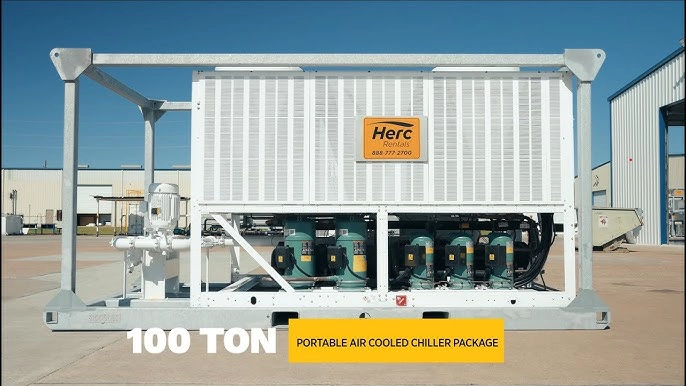
Photo credit: hercrentals.com
Common mistakes we see during Oklahoma heat events
| Mistake | Why It’s Bad | What to Do Instead |
|---|---|---|
| Repeatedly resetting trips | Damages compressors | Fix root cause first |
| Ignoring coil maintenance | Capacity already lost | Pre-season cleaning |
| Frequent setpoint changes | Causes hunting | Stabilize settings |
| Running beyond safe limits | Equipment damage | Shed load instead |
Best Practice: The best facilities treat heat domes as an operational mode with a planned playbook.
Decision guidance: when to call for professional support
Call for professional support when:
- high-pressure trips repeat
- condenser approach trends worsen quickly
- capacity shortfall appears despite normal operation
- critical zones (ORs, data rooms, process) are threatened
Early calls are easier than late calls when the whole city is hot and demand spikes.
Need help preparing your facility for Oklahoma heat domes?
Total Mechanical Services supports commercial HVAC readiness, troubleshooting, and maintenance planning across Oklahoma. Call (405) 223-9900 or request a proposal.
Disclaimer: This guide is informational and does not replace OEM procedures, site-specific engineering, or safety requirements. Heat events can create hazardous conditions; always follow qualified professional guidance and facility policy.
Related Resources
Oklahoma Ice Storm HVAC Recovery: Freeze Damage Triage, RTU/Chiller Plant Checks, and Safe Restart
A practical Oklahoma guide to recovering HVAC after ice storms: pre-storm prep, freeze damage triage, thaw and restart strategy, and documentation for insurance and risk control.
RTU Winterization Checklist for Oklahoma Ice Storms: Freeze Protection, Hail Risk, and Start-Up
A practical rooftop unit winterization checklist for Oklahoma facilities: freeze protection, condensate and economizer checks, hail prep, and post-storm start-up steps.
Commercial HVAC Retrofit ROI in Oklahoma: How to Calculate Payback, NPV, and Risk (Facility + CFO Guide)
A practical framework for Oklahoma facilities to calculate HVAC retrofit ROI: baseline energy, maintenance and downtime costs, incentives, simple payback vs NPV, and risk-adjusted decisions.
Need Help with Your System?
Our expert team is ready to assist with design, installation, maintenance, and troubleshooting.