The Dowell Building (Oklahoma City): Cooling Tower Consolidation and VFD Retrofit
We consolidated two aging, unreliable cooling towers into a single, high-efficiency unit with a Variable Frequency Drive (VFD), simplifying the building's mechanical plant and improving energy performance.
The Dowell Building (Oklahoma City): Cooling Tower Consolidation and VFD Retrofit
Quick Answer
Project Overview
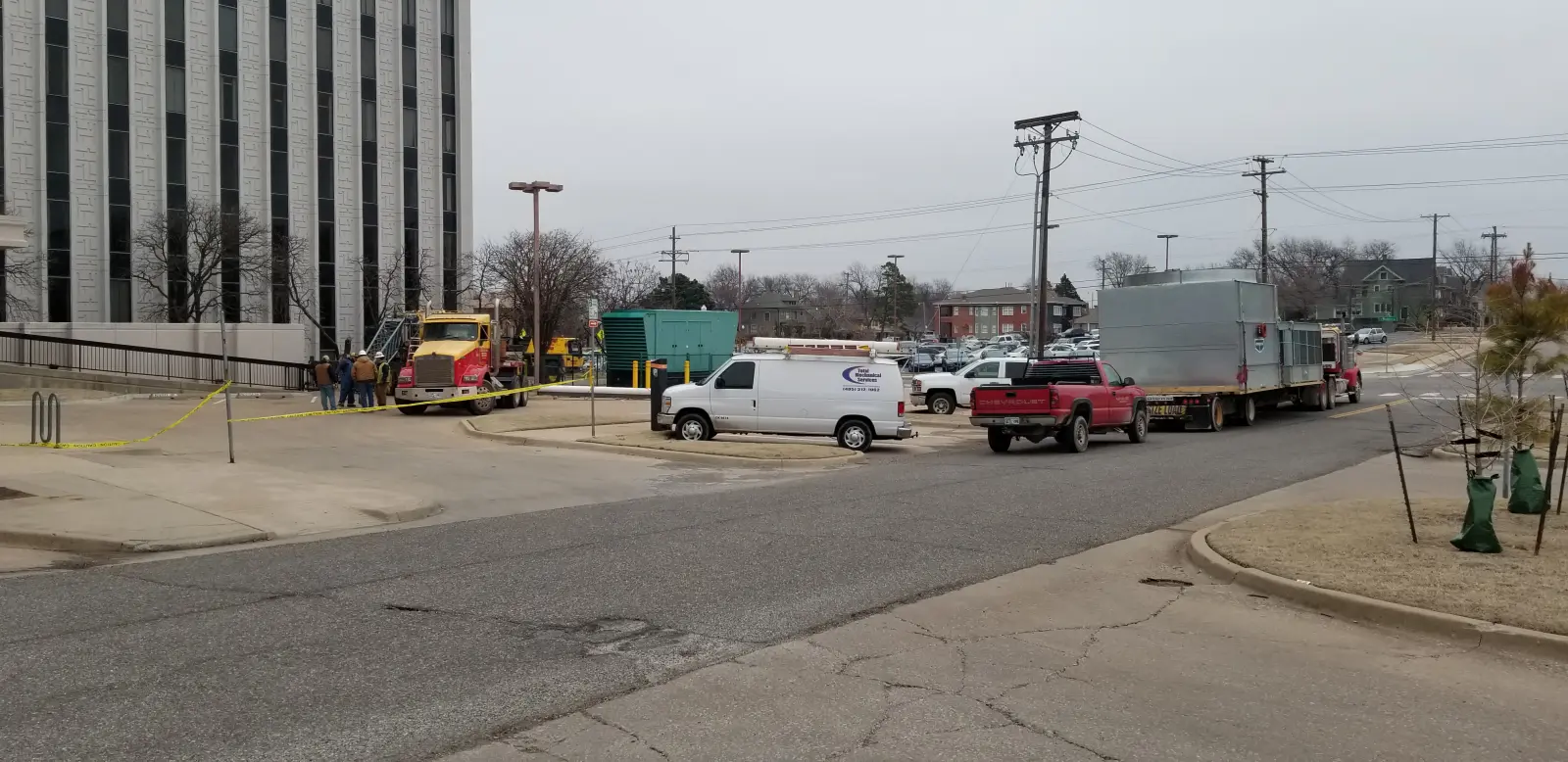
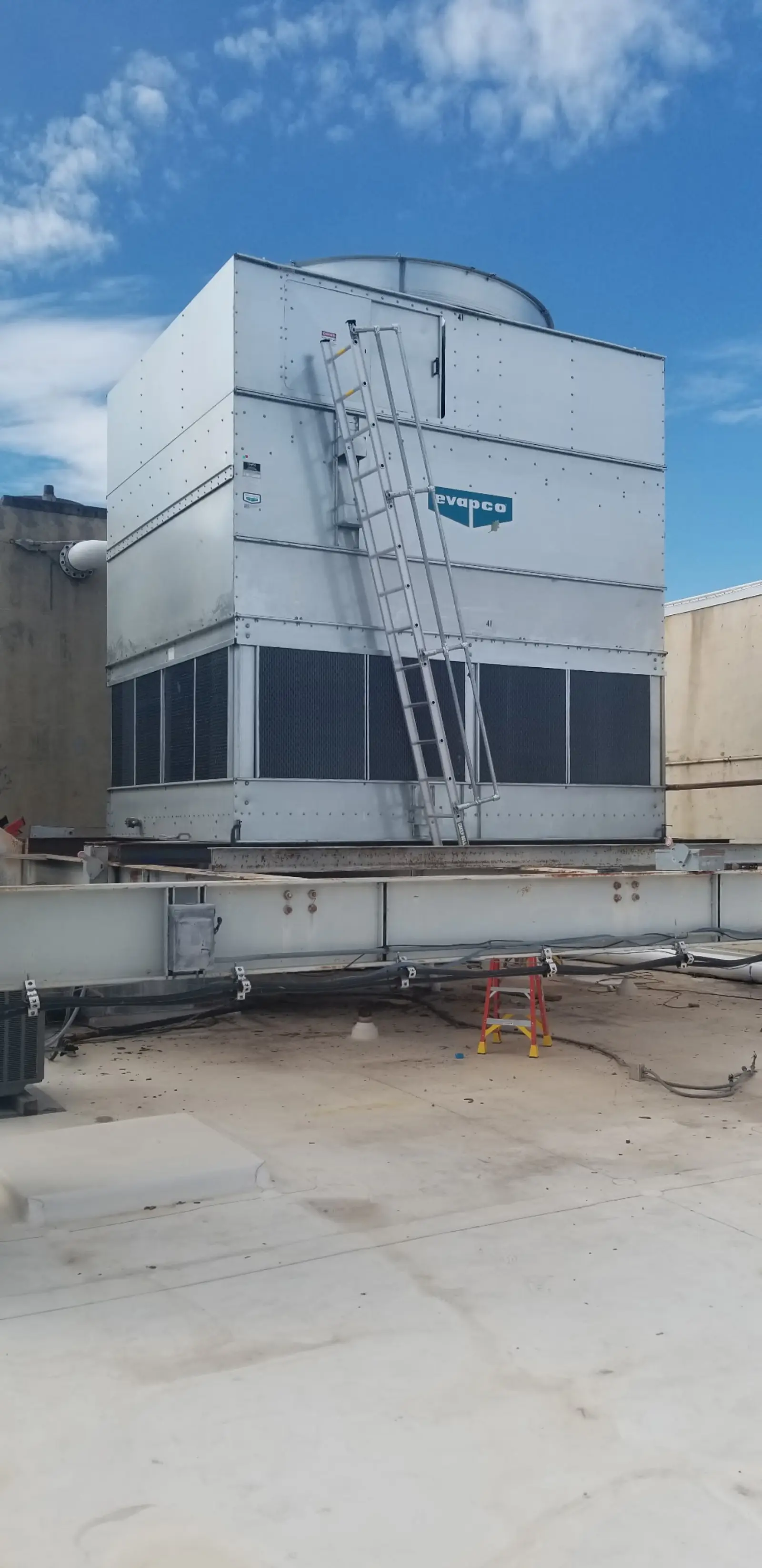
When the current owner purchased the Dowell Building, the cooling towers were “on the list” to be replaced immediately. The existing setup consisted of two small units that were increasingly unreliable. We proposed a design that didn’t just replace the old machines, but simplified the entire mechanical plant by consolidating two towers into one high-efficiency Baltimore Aircoil (BAC) unit.
For ongoing operations after projects like this, apply our cooling tower maintenance and Legionella prevention playbook.
Solution Design: Consolidating for Long-Term Reliability
The original configuration was redundant but in an inefficient way: it had two fans, two gearboxes, and two motors—which meant double the potential failure points and twice the preventive maintenance workload.
The Power of VFD Control
One of the most significant upgrades in this project was the addition of a Variable Frequency Drive (VFD).
- On-Off Systems (The Old Way): Older cooling towers are often binary—they are either 100% on or 100% off. This causes “bang-bang” wear on motors and gearboxes, and leads to dramatic swings in chilled water temperature.
- VFD Modulation: With a VFD, we can run the fan at low RPM on cool Oklahoma spring days. If the discharge water is only a few degrees above setpoint, the VFD can ramp up to 30% speed instead of 100%, significantly extending the life of the belt and motor.
- Passive Cooling Energy Savings: The new BAC unit has so much surface area that on many days, we can cool the water just by running it over the fill without the fan even turning. This results in massive energy savings that show up immediately on the utility bill.
If you need to defend those savings financially, use our commercial HVAC retrofit ROI calculation guide.
Project Challenges: Structural Engineering the Footprint
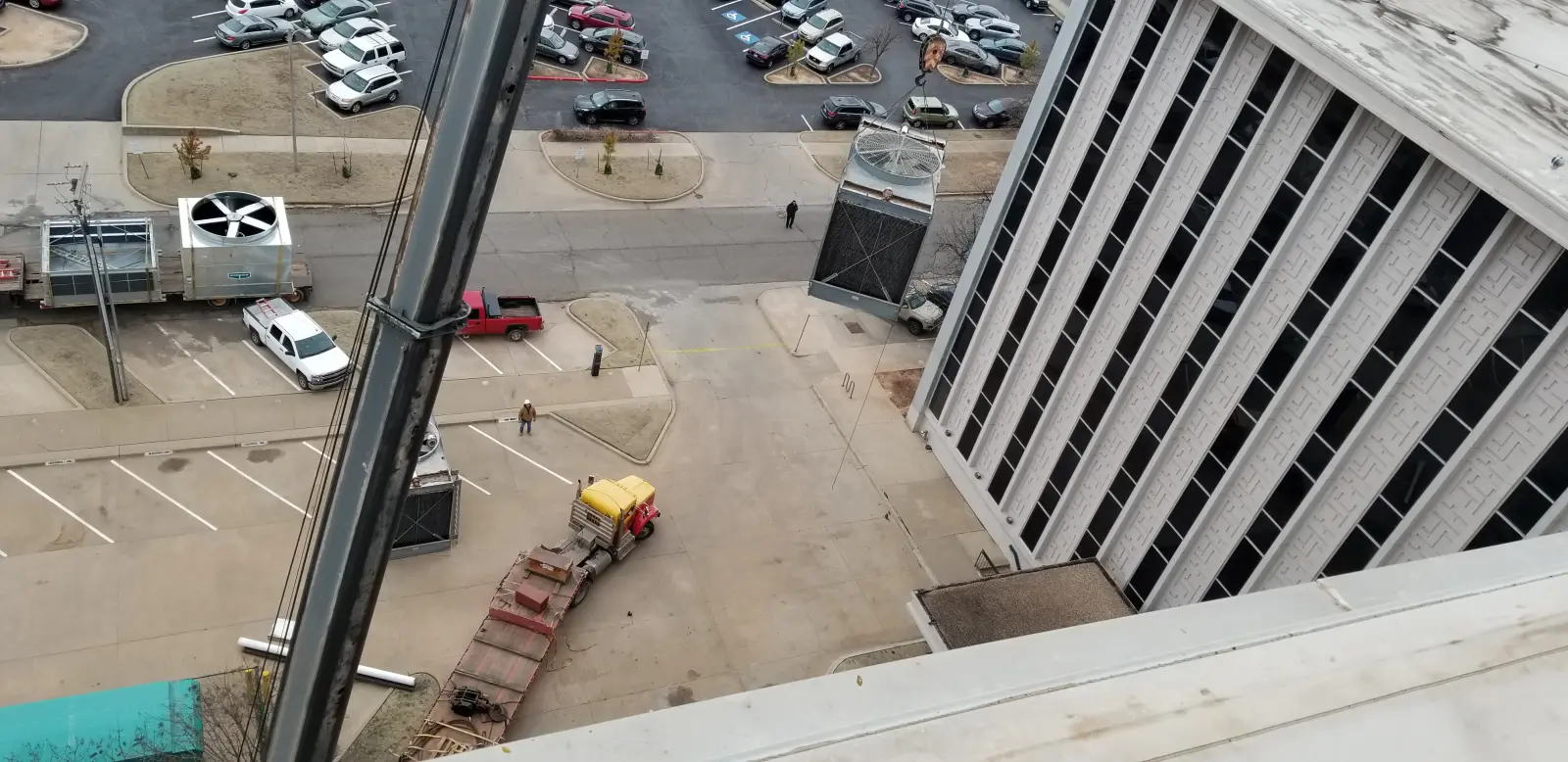
Consolidating from two towers to one isn’t just a plumbing challenge—it’s a structural engineering task. You cannot simply “place” a single large unit on top of the original two footprints.
Structural Beam Modifications
The original steel support beams on the roof were welded to match the footprints of the two original towers. Because the new, consolidated unit was larger and had different support points, we had to re-engineer the platform.
- Support Beam Gap: The middle beams from the old setup aligned, but the outside beams did not reach the support points of the new single unit.
- Custom Fabrication: We ordered custom steel I-beams that had to be lifted by crane and welded into the building’s structural frame before the tower could be landed.
- Weight Distribution: We had to verify the pounds-per-square-foot load on the roof structure to ensure the consolidated unit wouldn’t cause structural damage.
Execution Strategy: The Unpredictable Oklahoma Weather
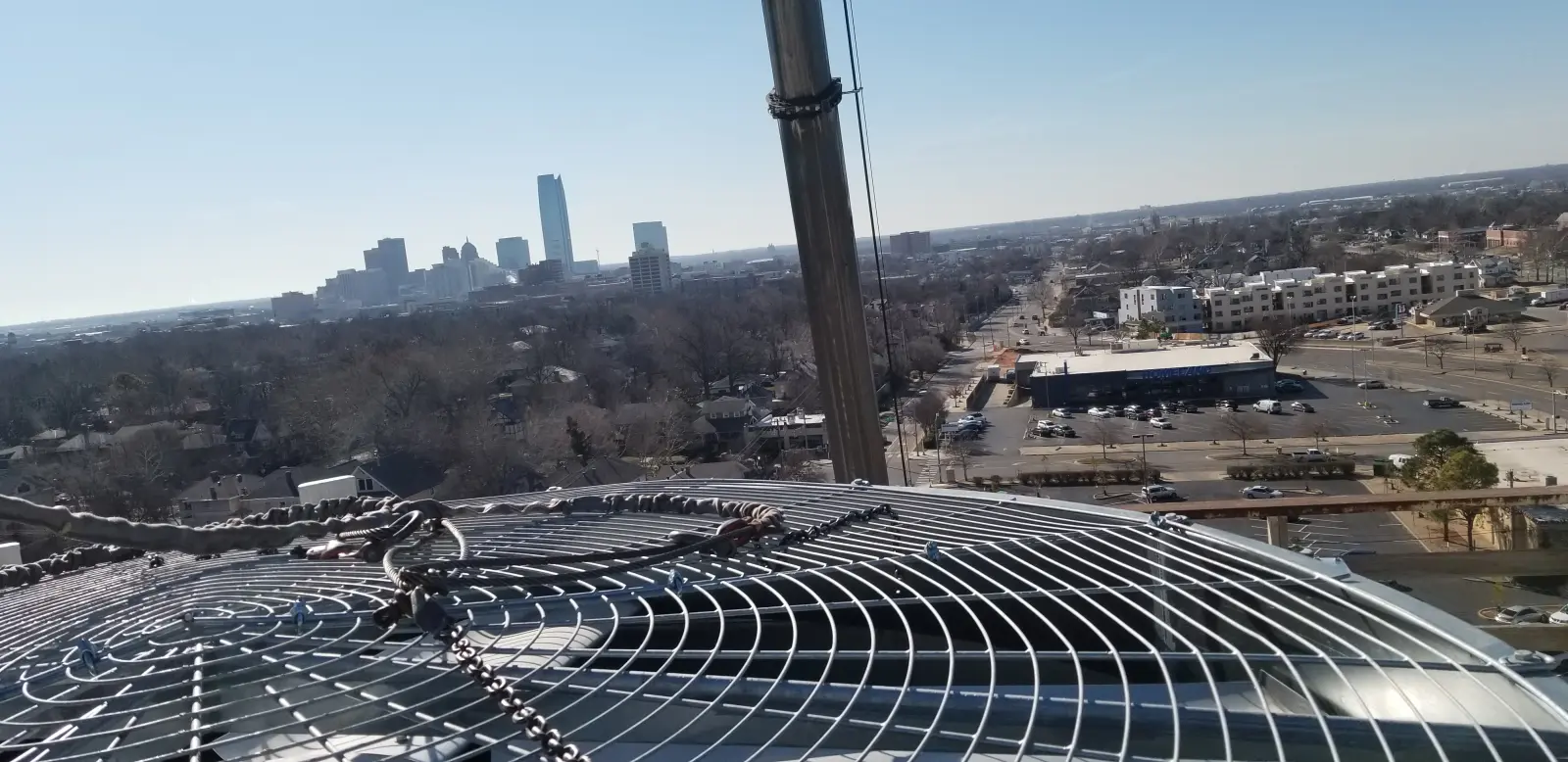
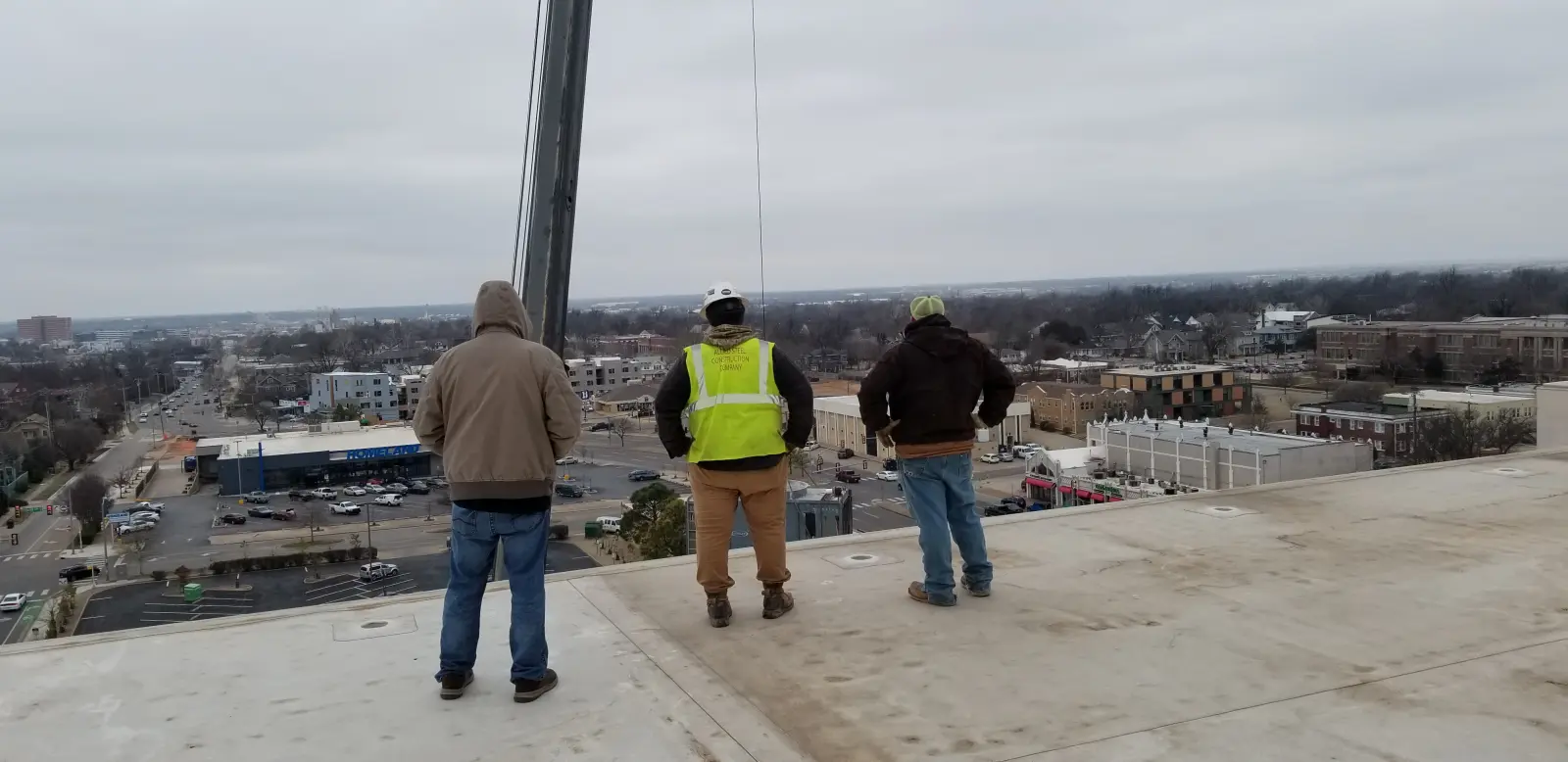
The first scheduled day for the crane set was a classic Oklahoma “wind day.” At the height of the Dowell Building’s roof, the gusts were creating dangerous updrafts and currents.
Those same environmental constraints should be reflected in seasonal operations planning from our Oklahoma heat dome HVAC protection guide.
Safety Protocol: We have zero control over the weather, but we have 100% control over the “Go/No-Go” decision. Our crane partner agreed that the current was too high. We called off the lift, waited 24 hours for the winds to die down, and completed the project safely under blue skies the following morning.
Assembly on the Roof: The “Flex” Factor
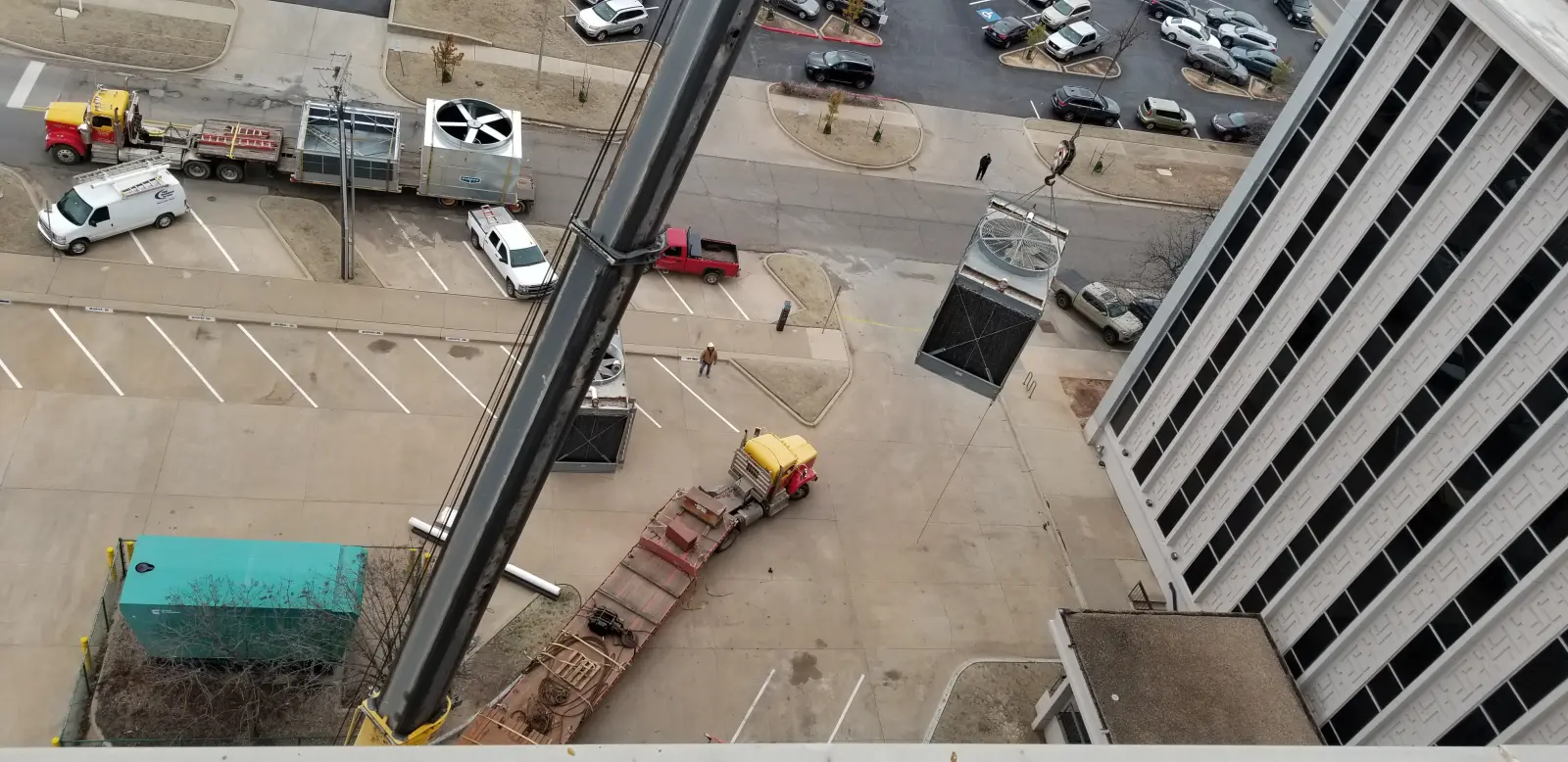
Like many large commercial units, the new tower arrived in sections. Because the tower frame isn’t rigid when suspended from a crane, it can flex and “tweak” during the lift.
- Alignment Difficulty: We spent several hours using specialized setting pins and pry bars to ensure the bolt holes lined up.
- Waterproofing: Between the upper and lower sections, we applied a specialized black sealant tape. If you don’t land the sections perfectly on the first try, the tape “grabs” and ruins the seal. We had to perform a reset twice to get it perfectly true and leak-free.
Business Protection: The “Pre-Lien” Lesson
An interesting byproduct of this project was a lesson in Oklahoma construction law for the building owner. After the Baltimore Aircoil unit was ordered, the manufacturer issued a pre-lien notice.
Business Tip: In Oklahoma, manufacturers of major equipment like cooling towers can file a pre-lien notice against a property owner to protect their right to get paid. This doesn’t mean the contractor is unreliable; it’s a standard business protection in the trades. Always work with a contractor who has established relationships with manufacturers and clear credit terms to avoid project delays or legal headaches.
Lessons Learned
- Simplified is Better. Moving from two units to one reduces the long-term cost of ownership by eliminating half the moving parts.
- Structural checks are mandatory. Never assume a new unit will fit the old beams. Footprint engineering is just as important as HVAC engineering.
- Patience with the weather. In Oklahoma, “tomorrow is usually better.” Pushing a crane lift in high winds can lead to catastrophic equipment loss.
After consolidation, keep efficiency gains from slipping by pairing tower PM with chiller tube cleaning strategy in Oklahoma.
Technical Specifications
| Component | Detail |
|---|---|
| Replacement Unit | Baltimore Aircoil (BAC) High-Efficiency Tower |
| Control System | ABB/Schneider VFD for Fan Modulation |
| Building Type | Commercial Office / Multi-Tenant |
| System Type | 4-Pipe Closed Loop (Heat & Cool) |
| Structural | Custom-Welded I-Beam Support Platform |
Full Project Gallery (16 Photos)
Your Facility’s Next Upgrade?
If your office building is managing multiple aging mechanical systems, consolidation might be the most cost-effective path to reliability. We provide full engineering, structural, and automation support for Oklahoma retrofits. Call (405) 223-9900 or request a proposal.
This case study represents a real-world project performed in Oklahoma City. Equipment specs and structural requirements vary by site.
Related Resources
Data Center Cooling Best Practices in Oklahoma: CRAC/CRAH, Hot Spots, Humidity, and Redundancy
A practical Oklahoma guide to data center cooling: how to prevent hot spots, manage humidity, maintain CRAC/CRAH systems, and build redundancy that holds up during heat events.
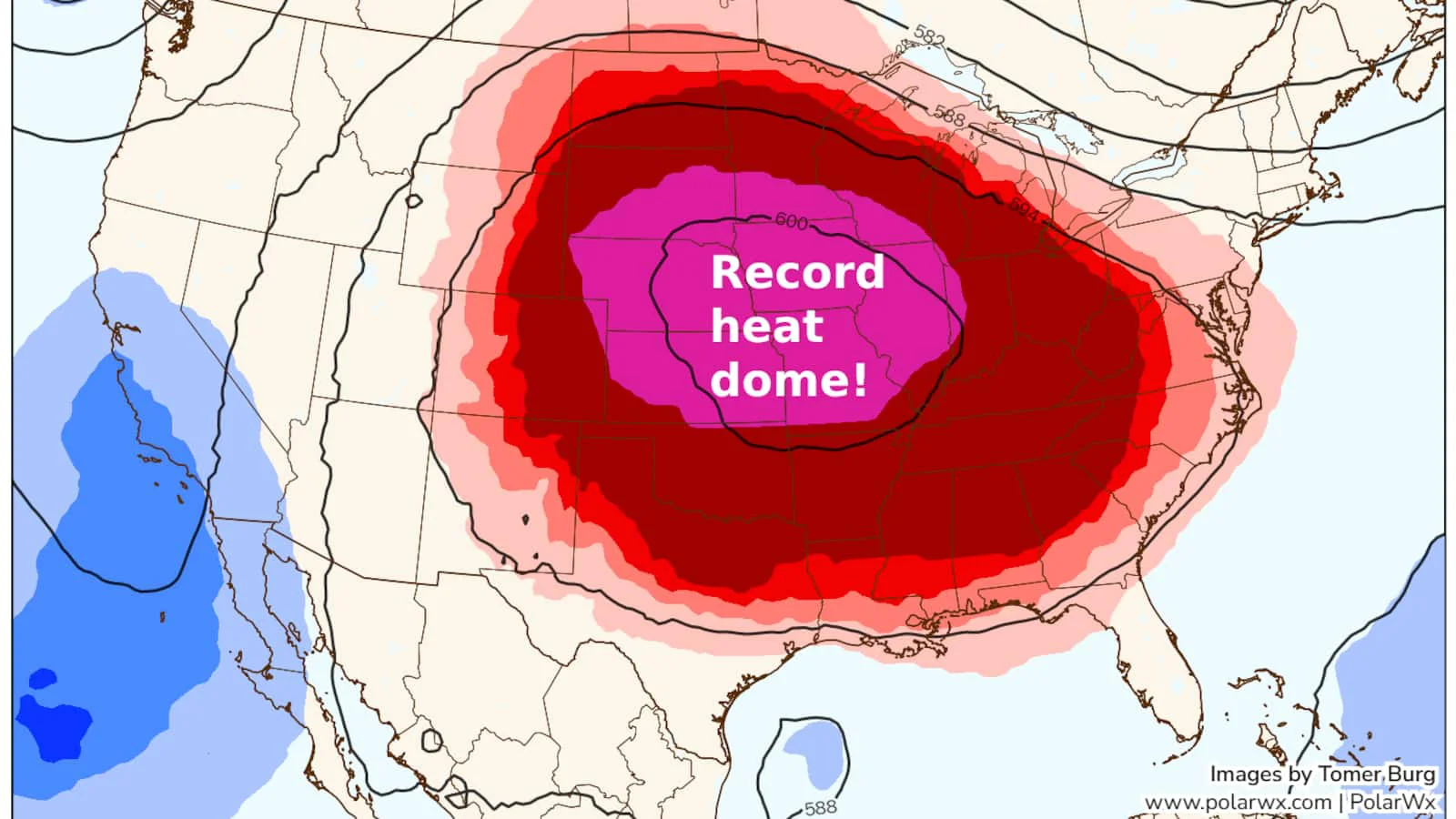
Protecting Commercial HVAC From Oklahoma Heat Domes: High-Ambient Strategy, Coil Cleaning, and Load Management
A practical Oklahoma guide to surviving heat domes: high-ambient chiller/RTU performance, coil cleaning cadence, tower readiness, demand management, and emergency cooling planning.
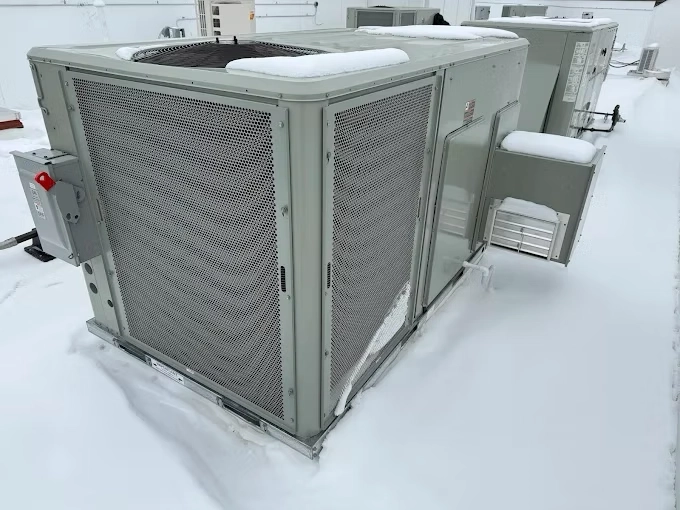
RTU Winterization Checklist for Oklahoma Ice Storms: Freeze Protection, Hail Risk, and Start-Up
A practical rooftop unit winterization checklist for Oklahoma facilities: freeze protection, condensate and economizer checks, hail prep, and post-storm start-up steps.
Need Help with Your System?
Our expert team is ready to assist with design, installation, maintenance, and troubleshooting.