The Regency Apartments (Oklahoma City): Redwood Cooling Tower Replacement at Extreme Height
One of the few remaining Redwood cooling towers in Oklahoma City was replaced with a modern unit. This project required a high-altitude crane set and specialized demolition.
The Regency Apartments (Oklahoma City): Redwood Cooling Tower Replacement at Extreme Height
Quick Answer
Project Overview
The Regency Apartments in downtown Oklahoma City featured a mechanical anomaly: a massive Redwood cooling tower. Redwood was once a standard for its natural decay resistance, but it does not last forever. After decades of service, including surviving the atmospheric shock of the 1995 Oklahoma City Memorial bombing which blew out many of the building’s windows, the wood had become “mush,” presenting a severe collapse risk that threatened the safety of the entire building.
For long-term operation after replacement, this type of asset should follow a documented cooling tower maintenance and Legionella prevention program.
Project Challenges: Demolishing a Wooden Giant
Unlike modern steel cooling towers that can be lifted off in sections, a failing Redwood tower is too fragile for a standard crane pick. If we had tried to lift the original unit, it likely would have crumbled mid-air, raining debris down on the downtown streets.
Specialized Demolition
We brought in a demolition subcontractor to perform a manual demolition. This was a labor-intensive process that required:
- Technicians using chainsaws on the roof to cut the Redwood frame into manageable 4-foot sections.
- Documenting every step with over 10,000 photos for insurance and structural records—essential for a building with the Regency’s history.
- Piling up the debris and lifting it down by crane in secure, reinforced bins.
- Managing “sludge” and water-logged wood that weighed significantly more than dry material.
Height and Reach Constraints: The Maxed-Out Crane
The Regency is one of the tallest buildings in the city. At that height, standard cranes are useless. We had to coordinate a specialized crane with enough boom length to reach the center of the roof from the street below.
- The $30,000 Crane Lift: The crane alone was a major investment, but it was the only way to avoid the even higher cost of a helicopter lift.
- Max Reach Safety: We were at the absolute limit of the crane’s load chart. When you are maxed out, there is zero room for error. We performed multiple dry-run movements before the first piece was lifted.
Solution Design: Setting a Two-Piece Tower
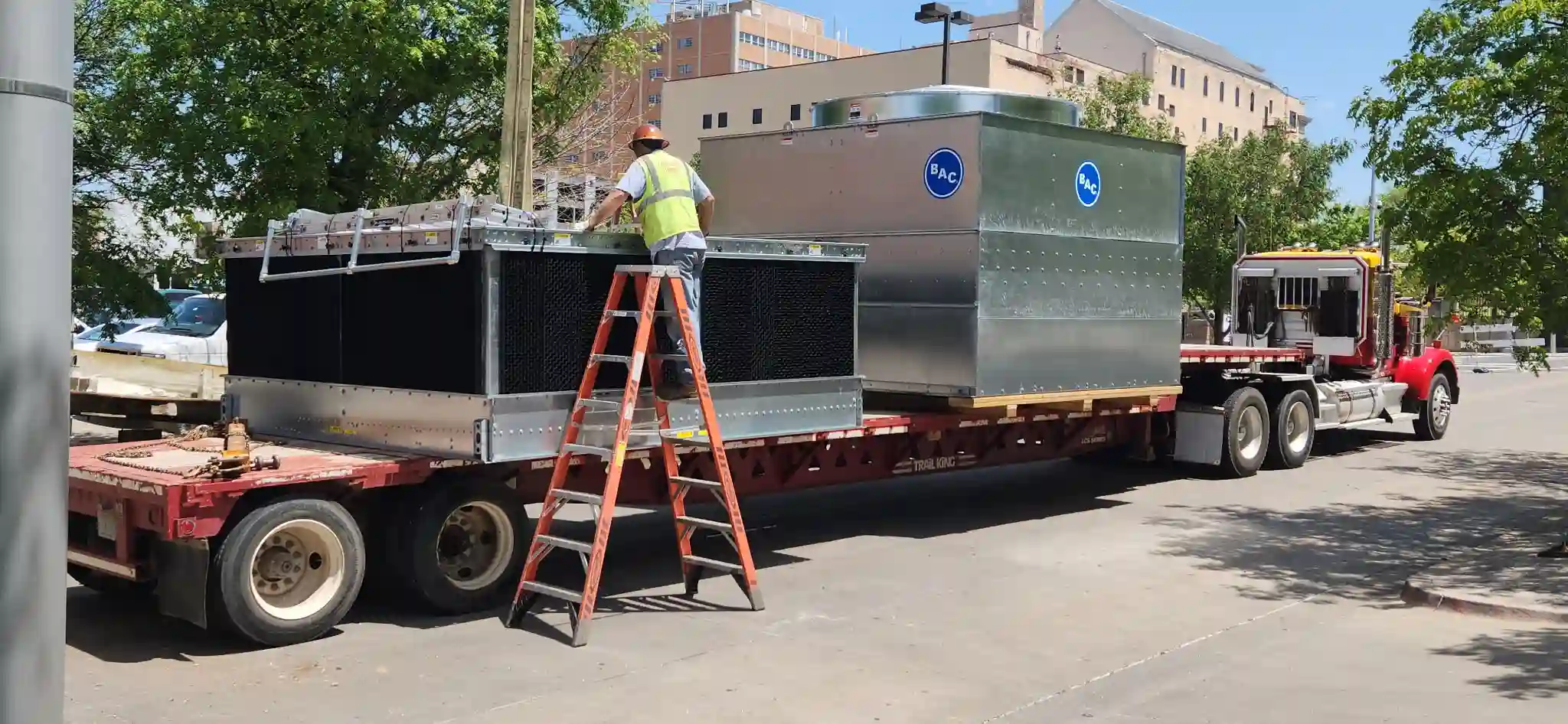
Due to its size and the height of the building, the new cooling tower could not be delivered as a single unit. It arrived in two sections: a bottom pan and a top fan assembly.
The Problem with Ground Assembly
In many projects, you would assemble the tower on the ground and lift it as one piece. However, at the Regency:
- There were no lifting points strong enough for a single-pick of a fully assembled unit of this weight at that height.
- A single-piece pick would have risked warping the galvanized frame under its own weight during the long lift.
- The wind surface area of a full tower is twice as high, increasing the risk of the load “sailing” during the lift.
High-Altitude Assembly Strategy
We had to lift the bottom section, set it on the structural steel, and then lift the top section directly onto it. This is a high-stakes “Lego set” move at several hundred feet in the air.
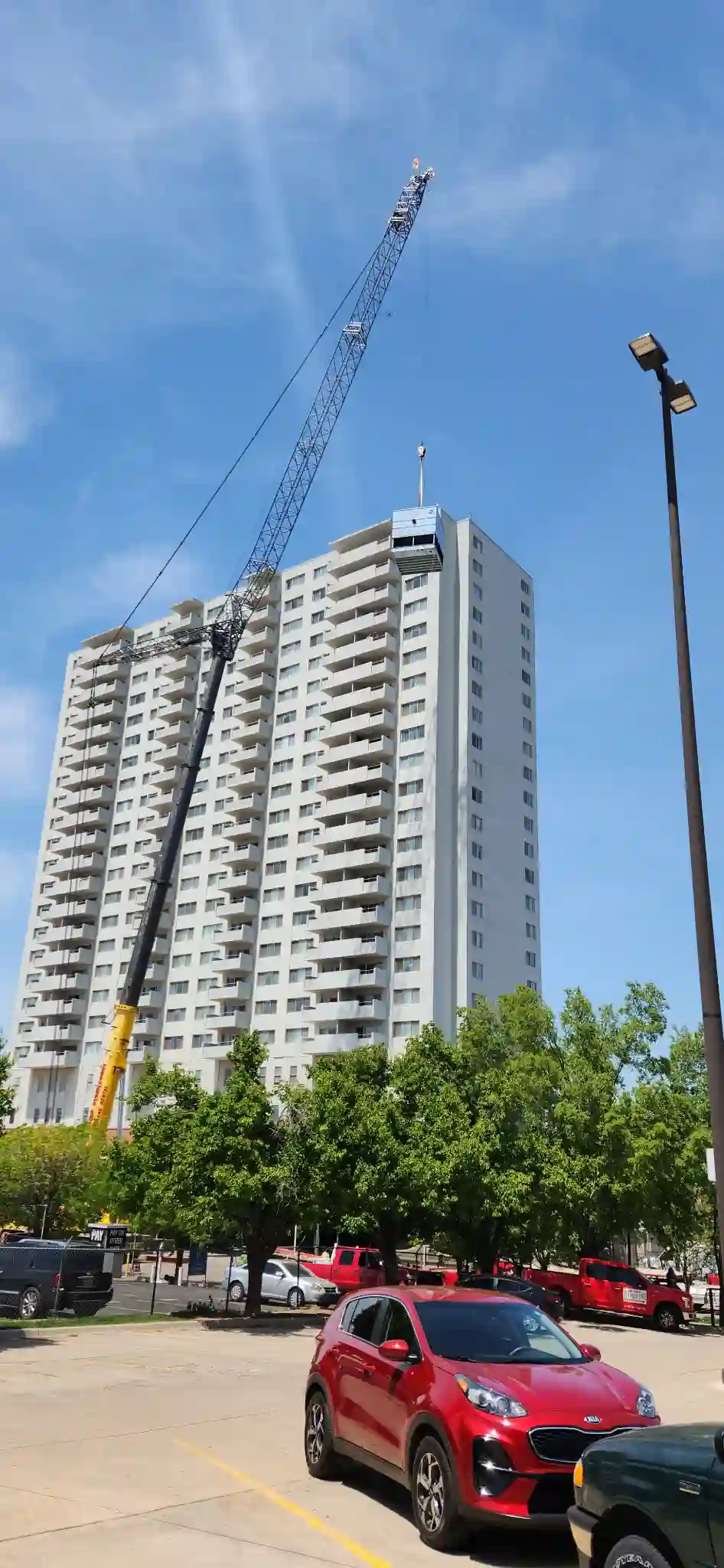
Oklahoma Weather Factor: We were “thanking Jesus” for a calm day. At the height of the Regency, Oklahoma’s typical 20mph winds can feel like 50mph. If a gust hits while you’re setting the top section, you could lose the machine—or worse. Our safety protocol required a “hard stop” if ground winds exceeded 15mph, as roof-level winds are always significantly higher.
Execution Strategy: The Two-Pipe System Reality
The Regency operates on a two-pipe system. This is a hydraulic configuration where the same set of pipes carries chilled water in the summer and hot water in the winter. This system type dictates a strict operational schedule.
Winterization and Draining
In Oklahoma, two-pipe systems require strict winterization procedures because the cooling tower is effectively “abandoned” during the heating season:
- Total System Dump: Because the cooling tower doesn’t run in the winter, we drain the water entirely.
- Freeze Prevention: Unlike four-pipe systems that might use heat trace and constant circulation to keep outdoor loops warm, the two-pipe system relies on being dry to prevent the “mush” of frozen pipes.
- October Transition: Every October, we perform a total system dump, ensuring the tower is dry and safe before the first Oklahoma ice storm hits. We also inspect the heat exchange surfaces while the unit is offline.
For post-event restart and damage triage around these transitions, use our Oklahoma ice storm HVAC recovery guide.
Lessons Learned: The “Eerie Silence” of Completion
- Redwood is a different beast. You cannot treat a wooden tower replacement like a steel one. The demolition phase is a specialized trade in itself.
- Crane capacity is not just weight; it’s reach. Always verify the radius and the height. If we hadn’t used the largest crane in OKC, the project would have required a helicopter lift—at 10x the cost.
- Logistics of “Everything Goes Up.” Don’t forget that everything—including every piece of pipe, every tool, and even the technician’s ladders—must go up with the crane. If it doesn’t fit in the freight elevator, and the crane is gone, you are “carrying it up the stairs.”
- The Post-Crane Silence: Once the crane engine stops and the diesel exhaust clears, there is an eerie silence on the roof. That’s when you realize you’re on your own to finish the tie-ins. If you forgot one critical flange or a specific wrench, the project stops.
Once the project is online, plan for summer stress using our Oklahoma heat dome HVAC protection playbook.
Technical Specifications
| Component | Detail |
|---|---|
| Original Unit | Redwood Cooling Tower (Rare) |
| Replacement | Two-piece Steel/Galvanized Cooling Tower |
| System Type | Two-Pipe Hydraulic System |
| Crane | OKC’s largest mobile crane |
| Demolition | Chainsaw/manual demolition |
Need HVAC Support for a High-Rise?
Whether you’re dealing with a rare redwood tower or a modern high-rise mechanical plant, we have the experience and the equipment to handle Oklahoma’s most challenging HVAC projects. Call (405) 223-9900 or request a proposal.
This case study is based on a real-world project in downtown Oklahoma City. Site conditions and equipment specs are unique to this facility.
Related Resources

Oklahoma Ice Storm HVAC Recovery: Freeze Damage Triage, RTU/Chiller Plant Checks, and Safe Restart
A practical Oklahoma guide to recovering HVAC after ice storms: pre-storm prep, freeze damage triage, thaw and restart strategy, and documentation for insurance and risk control.
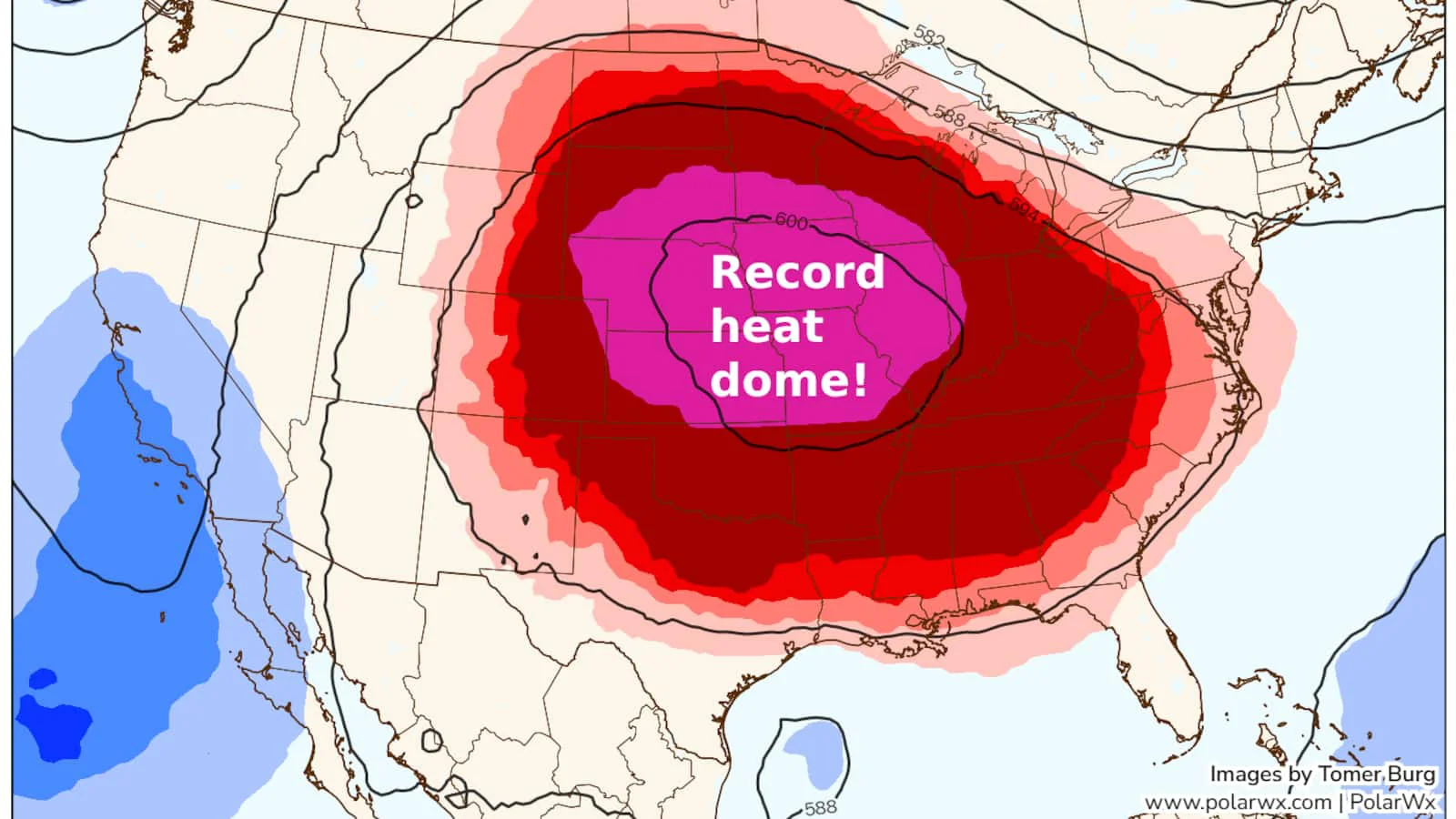
Protecting Commercial HVAC From Oklahoma Heat Domes: High-Ambient Strategy, Coil Cleaning, and Load Management
A practical Oklahoma guide to surviving heat domes: high-ambient chiller/RTU performance, coil cleaning cadence, tower readiness, demand management, and emergency cooling planning.
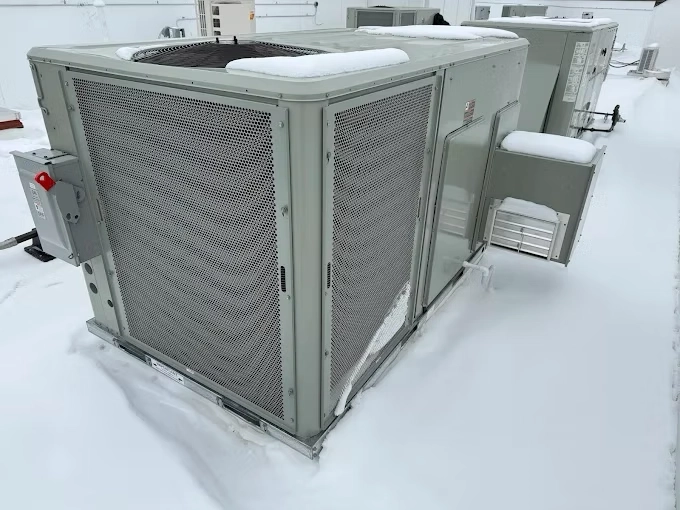
RTU Winterization Checklist for Oklahoma Ice Storms: Freeze Protection, Hail Risk, and Start-Up
A practical rooftop unit winterization checklist for Oklahoma facilities: freeze protection, condensate and economizer checks, hail prep, and post-storm start-up steps.
Need Help with Your System?
Our expert team is ready to assist with design, installation, maintenance, and troubleshooting.