Trane Chiller Alarm Codes: What They Mean and What to Do (Oklahoma Guide)
A practical Trane chiller alarm-code guide for Oklahoma facility teams: what the alarms mean, what to check safely, and when to call for emergency service.
Trane Chiller Alarm Codes: What They Mean and What to Do (Oklahoma Guide)
If your Trane chiller is in alarm, your goal is simple: protect people and equipment, stabilize the building, and shorten downtime. In Oklahoma, we see alarms spike during heat waves, dust events, and seasonal changeovers—when condenser conditions and loads swing fast. This guide explains what alarm codes typically indicate, what you can safely verify on-site, and when you should stop and call for service.
Quick Answer
Start here: Safety-first checklist (before touching anything)
Commercial chillers can involve high voltage, pressurized refrigerant, rotating equipment, and hot surfaces. If you are not trained and authorized for chiller work, keep your actions to observation and facility-side checks.
Immediate Safety Assessment
| Warning Sign | Action Required |
|---|---|
| Refrigerant odor (sharp/ether-like) | Clear area immediately, call emergency service |
| Loud hissing sound | Clear area, potential refrigerant leak |
| Oil on floor or fittings | Treat as refrigerant leak, do not restart |
| Repeated safety trips | Stop resetting—call for service |
| Critical load affected | Start contingency plan immediately |
- If you smell refrigerant (sharp/ether-like) or hear a loud hissing: clear the area and call for emergency service.
- If you see oil on the floor or around fittings: treat it as a potential refrigerant leak and call.
- If the chiller tripped on a safety (high pressure, oil pressure, motor protection): do not “just reset” repeatedly—this is how compressors get hurt.
- If this is a hospital, data center, or process load: start your contingency plan (load shedding, backup cooling, notifying stakeholders).
What Trane alarm codes are (and why the same “code” can mean different things)
Trane chillers use controls that may display alarms differently depending on platform and model (examples you might see in the field: CVHF/CVGF centrifugals, RTAC/CGAM air-cooled, etc.). The same alarm family can map to different sensor inputs or thresholds based on configuration.
What’s consistent:
- Alarms are triggered by limits (pressure, temperature, flow, electrical, or logic).
- The right next step is usually confirm the condition, not “clear the alarm.”
Quick triage: classify the alarm severity
Use this simple classification while you gather information:
| Severity Level | Meaning | Response Time |
|---|---|---|
| Critical / Lockout | Chiller shut down to prevent damage | Immediate—call now |
| Warning / Protective | Running but at reduced capacity | Same-day service |
| Informational / Advisory | Needs attention, not emergency | Schedule service |
Before you reset: the 5 “facility-side” checks that solve a lot of alarms
These are the checks we often ask for on the phone because they can quickly reveal whether the issue is plant-side (water flow, tower, valves) vs chiller-side (refrigerant circuit, compressor, controls).
Facility-Side Diagnostic Checklist
| Check | What to Verify | Common Issues Found |
|---|---|---|
| 1. Chilled Water Flow | Pumps running, strainers clean, valves open | VFD changes, stuck valves, clogged strainers |
| 2. Tower/Condenser Water | Fans/pumps running, basin level, approach temp | Fan failures, low water level, fouling |
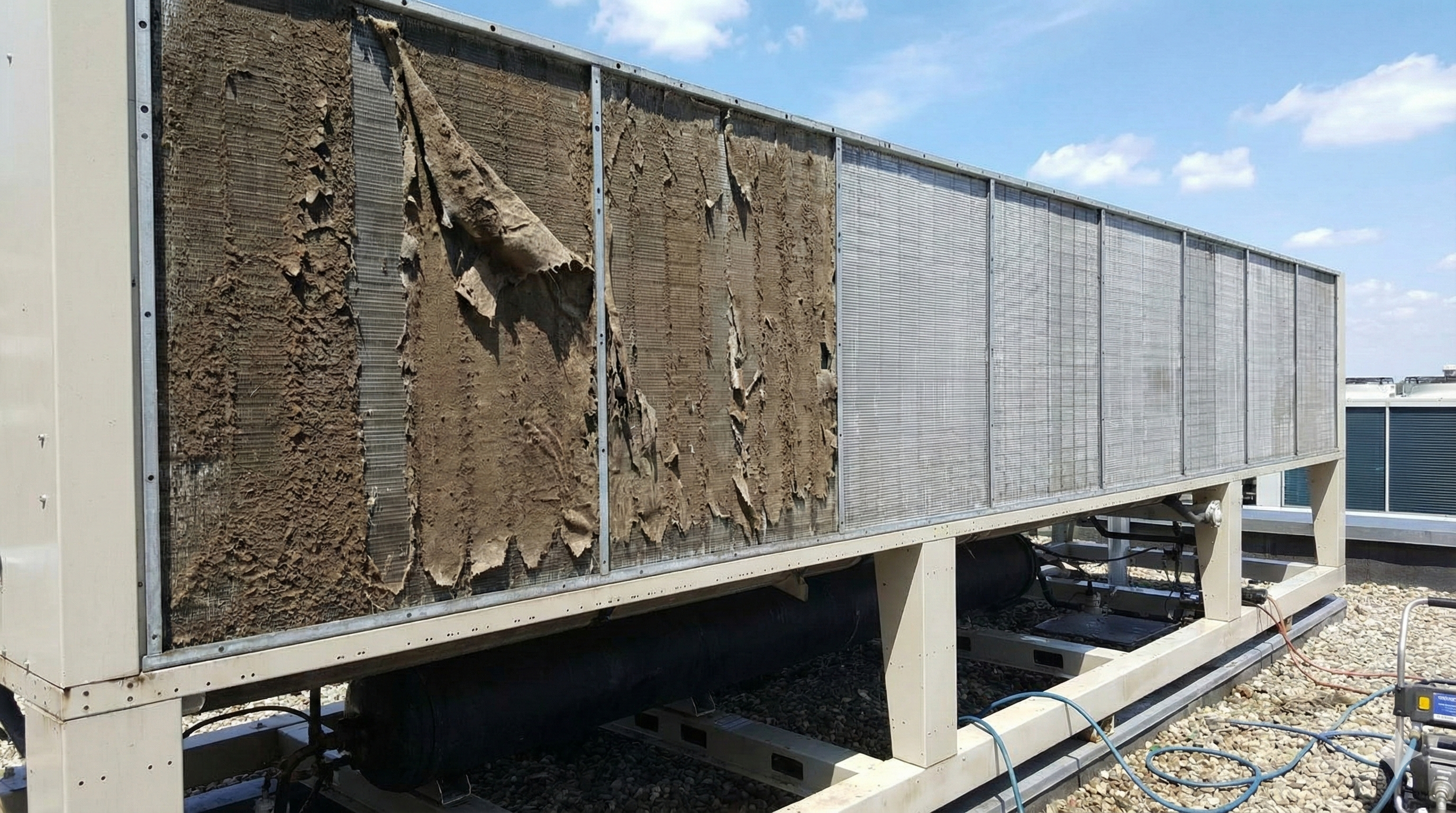
| 3. Condenser Airflow (air-cooled) | Coils clear, fans running, no hail damage | Cottonwood/dust clogging, fan motor failure |
| 4. Power Quality | Utility events, breaker trips, hot spots | Voltage sags, loose connections |
| 5. Setpoints/Schedule | BAS changes, setpoint adjustments | Aggressive optimization, schedule conflicts |
Common Trane alarm categories (practical “what it usually means”)
Below is a field-focused reference. Your exact message wording may differ, but the category and response logic is consistent.
Refrigerant circuit and pressure alarms
| Alarm / Message | Severity | What It Often Indicates | Safe Facility-Side Checks | When to Call |
|---|---|---|---|---|
| High condenser pressure / High head | Critical | Dirty coils, tower issues, blocked airflow | Check tower fans/pumps or coils/fans | Same-day; immediate if repeated |
| Low evaporator pressure / Low suction | Warning to Critical | Low load, low flow, low refrigerant | Confirm chilled water flow, valves | Immediate if freeze risk |
| Freeze protection / Low leaving water | Critical | Flow issue, low load, control issue | Confirm pumps and flow, verify setpoints | Immediate—protect tubes |
| Differential pressure / Flow proof | Critical | Pump off, flow switch open, strainer clogged | Verify pumps, DP, strainers | If flow can’t be restored |
Oil system / compressor protection alarms (centrifugal/screw)
| Alarm / Message | Severity | What It Often Indicates | Safe Facility-Side Checks | When to Call |
|---|---|---|---|---|
| Low oil pressure / Oil differential | Critical | Oil pump issue, filter restriction, bearing risk | Note oil temp/pressure trends | Immediate—avoid repeated restarts |
| High oil temperature | Warning to Critical | Oil cooler issue, fouling, low flow | Check condenser conditions | Same-day; immediate if rising fast |
| Motor overload / High amps | Critical | High head pressure, mechanical or electrical issue | Check condenser side first, voltage | Immediate if repeated trips |
Water-side and heat transfer alarms
| Alarm / Message | Severity | What It Often Indicates | Safe Facility-Side Checks | When to Call |
|---|---|---|---|---|
| High approach temperature | Warning | Fouled tubes, scaling, low flow | Confirm water treatment, flow rates | Schedule soon |
| Condenser water high temp | Warning to Critical | Tower not rejecting heat, fan issues | Verify tower controls and fans | Same-day during peaks |
Sensors and control alarms
| Alarm / Message | Severity | What It Often Indicates | Safe Facility-Side Checks | When to Call |
|---|---|---|---|---|
| Sensor fault / out of range | Advisory to Warning | Failed transducer, wiring, calibration | Compare to BAS sensors | Schedule; urgent if lockout |
| Communication / BAS interface | Advisory | Wiring, network, gateway issues | Confirm BAS power/network | Schedule unless blocking operation |
A reset rule that protects your compressor (and your budget)
If you didn’t identify and correct the underlying condition, resetting can just create a start-stop cycle that accelerates failure.
Reset Decision Guide
| Scenario | Safe to Reset? | Action |
|---|---|---|
| First trip, cause identified and fixed | Yes | Reset once, monitor |
| First trip, cause unknown | Proceed with caution | Reset once, observe closely |
| Second trip on same safety | No | Call for service |
| Trip on oil pressure | No | Do not restart—call |
| Trip during heat event (high head) | Maybe | Fix condenser issue first |
Critical Rule: If it trips twice on the same safety in one shift, stop resetting and call. Repeated starts damage starters and compressors.
Oklahoma-specific realities we plan around
These aren’t “textbook” factors—they show up in real maintenance logs across Oklahoma:
| Factor | How It Causes Alarms | Prevention |
|---|---|---|
| Dust/cottonwood loading | Clogs coils, causes high head | Increase coil cleaning frequency |
| High ambient + humidity | Compresses operating margin | Verify condenser capacity |
| Hard water/tower chemistry | Tube fouling, approach rise | Consistent chemical treatment |
| Ice storms/freeze events | Flow issues, heat trace failures | Winterization procedures |
What information to have ready when you call (speeds up dispatch)
When you call (405) 223-9900, having these items can cut troubleshooting time:
Pre-Call Checklist
| Information | Where to Find It |
|---|---|
| Chiller model/serial | Nameplate on unit |
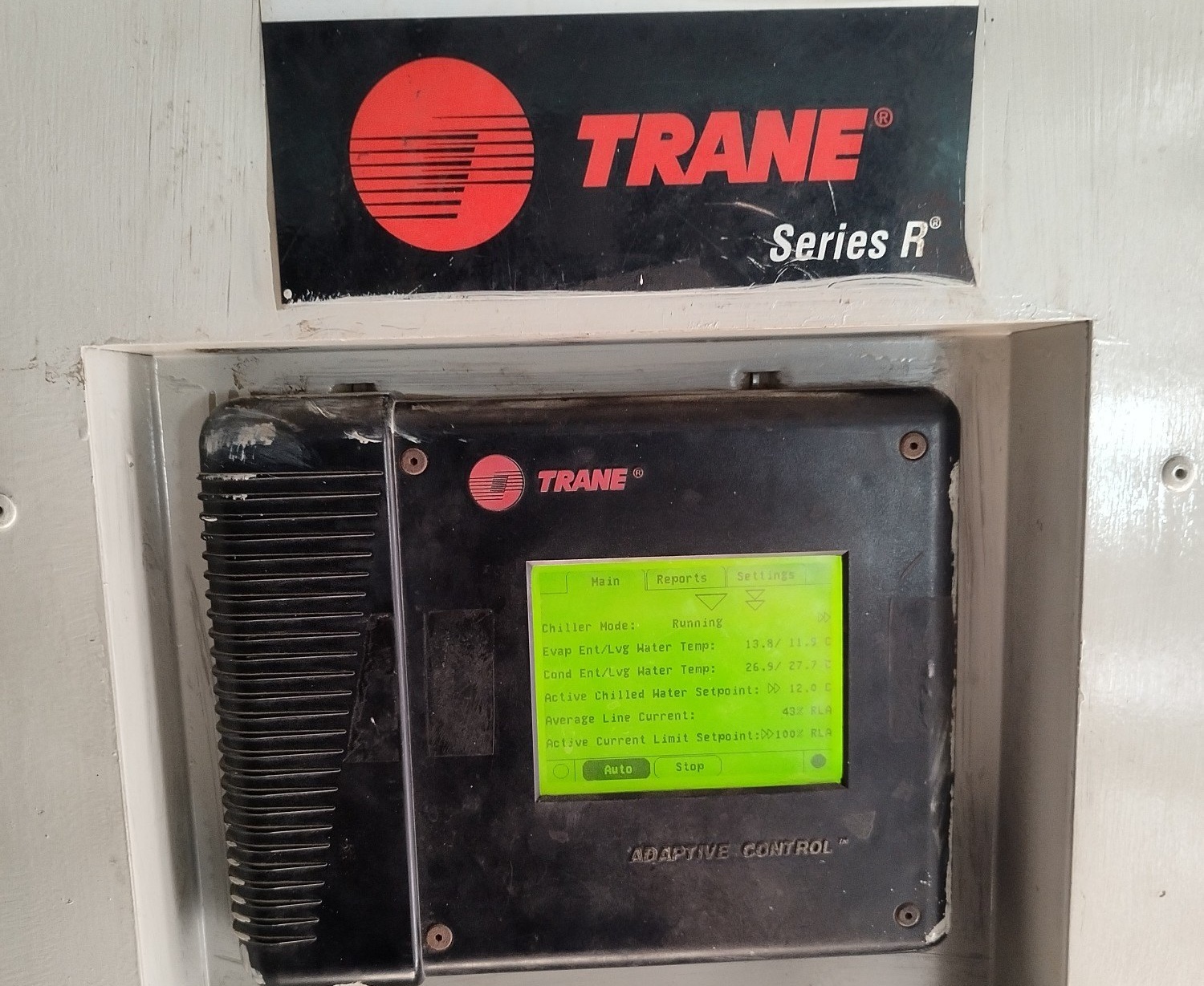
| Exact alarm text/code | Control panel display |
| Lockout status | Control panel (locked out vs warning) |
| Entering/leaving water temps | BAS or local display |
| Pump and tower status | Visual check or BAS |
| Recent maintenance | Your service records |
| Critical environment? | ORs, imaging, data center, process |
When to call for emergency service vs. schedule service
| Situation | Recommendation |
|---|---|
| Lockout on high pressure, oil pressure, motor protection | Call now |
| Refrigerant odor, visible oil, loud hissing | Evacuate and call now |
| Reduced capacity during peak cooling week | Call within 24 hours |
| Approach trending worse over weeks | Schedule service (tube cleaning) |
| Sensor fault that doesn’t stop operation | Schedule service |
Need help getting the chiller back online?
Total Mechanical Services provides commercial chiller troubleshooting and 24/7 emergency support across Oklahoma. Call (405) 223-9900 or request a proposal.
Disclaimer: This guide is informational and not a substitute for OEM documentation or a qualified technician. Refrigerant handling and high-voltage work must be performed by trained personnel. If you suspect a refrigerant leak or unsafe condition, clear the area and call for emergency service.
Related Resources
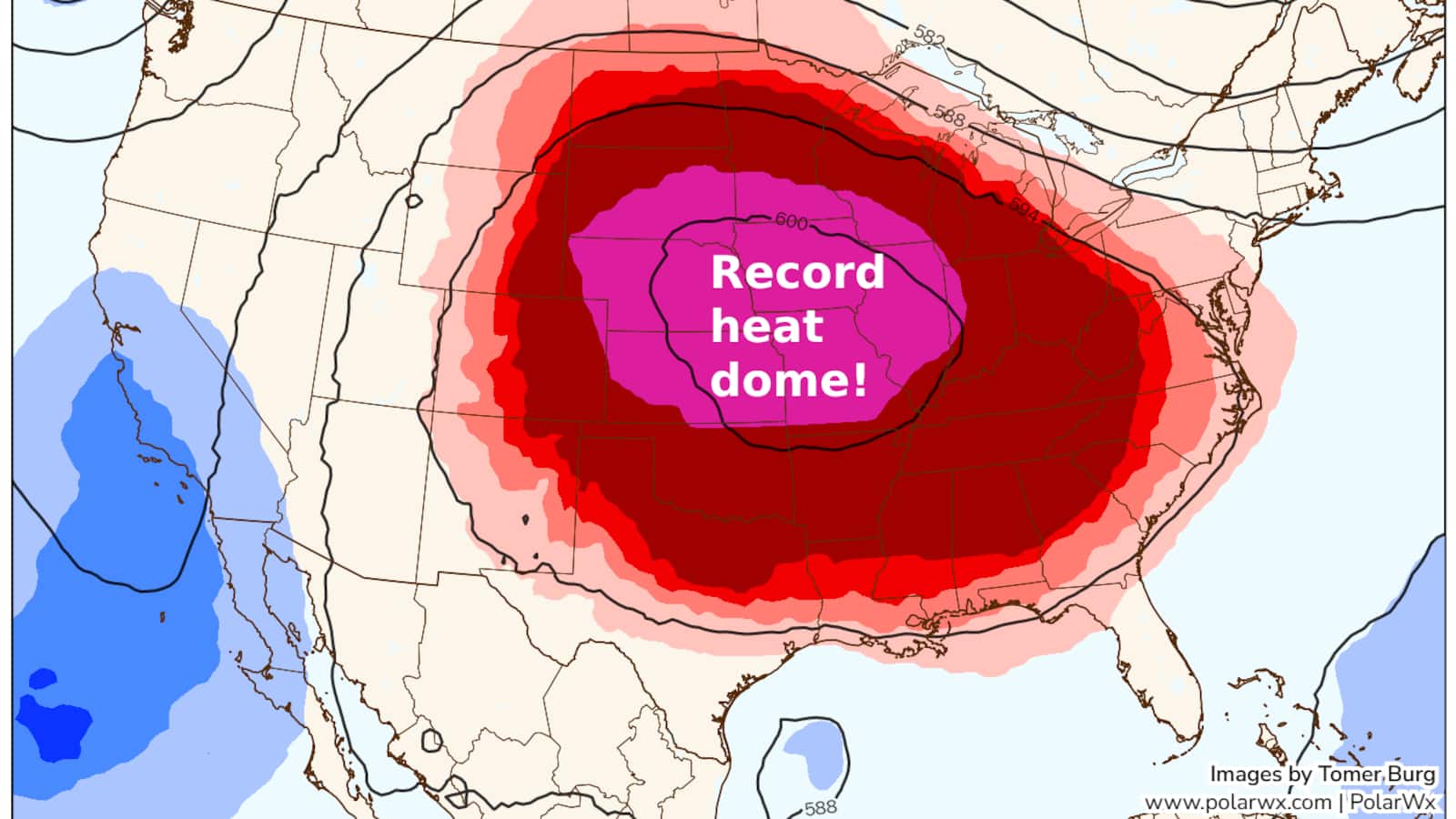
Protecting Commercial HVAC From Oklahoma Heat Domes: High-Ambient Strategy, Coil Cleaning, and Load Management
A practical Oklahoma guide to surviving heat domes: high-ambient chiller/RTU performance, coil cleaning cadence, tower readiness, demand management, and emergency cooling planning.

Oklahoma Ice Storm HVAC Recovery: Freeze Damage Triage, RTU/Chiller Plant Checks, and Safe Restart
A practical Oklahoma guide to recovering HVAC after ice storms: pre-storm prep, freeze damage triage, thaw and restart strategy, and documentation for insurance and risk control.
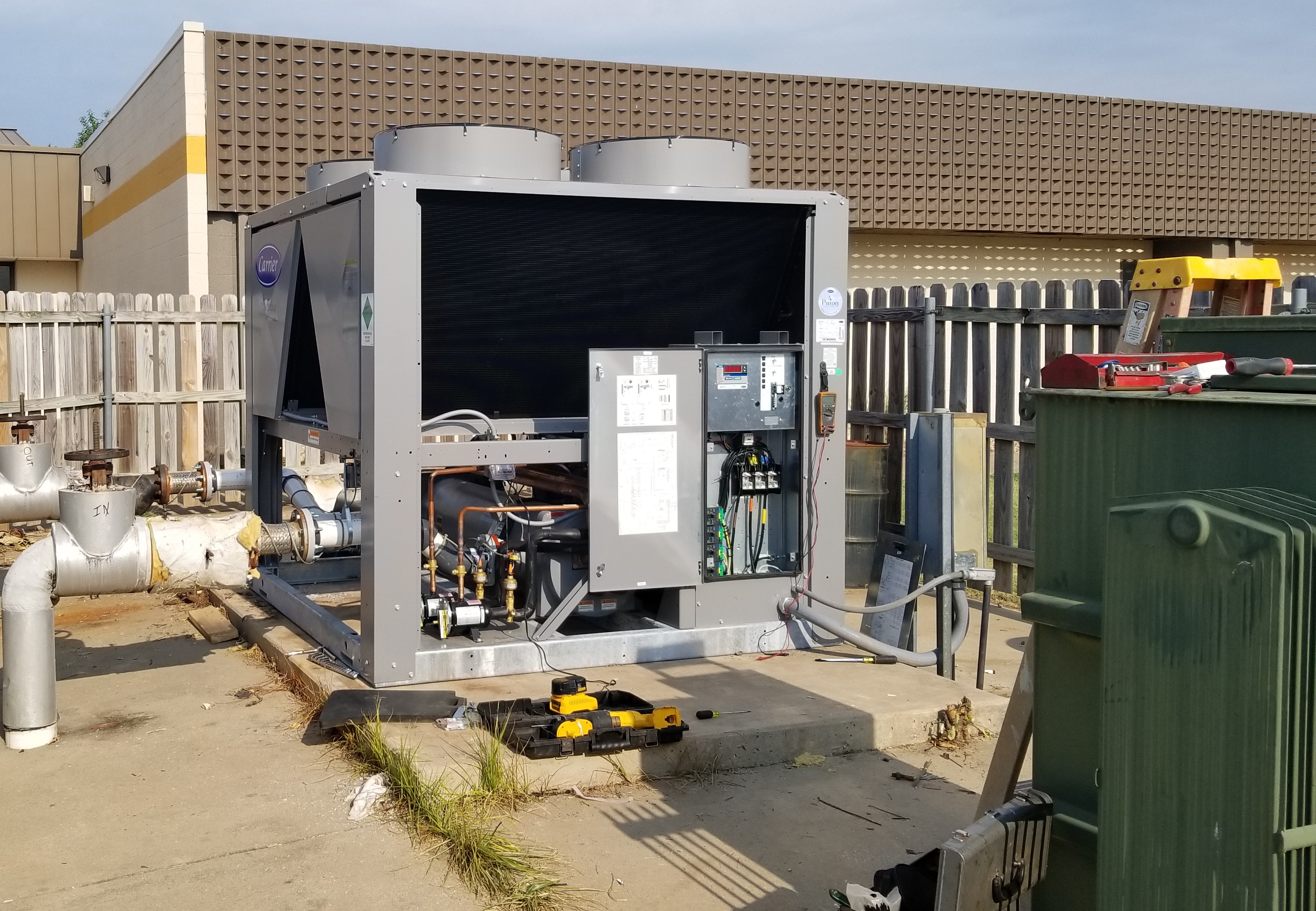
5 Common Chiller Problems and How to Diagnose Them
Expert troubleshooting guide for commercial chiller problems. Learn to identify symptoms, diagnose root causes, and determine when to call for emergency service.
Need Help with Your System?
Our expert team is ready to assist with design, installation, maintenance, and troubleshooting.