
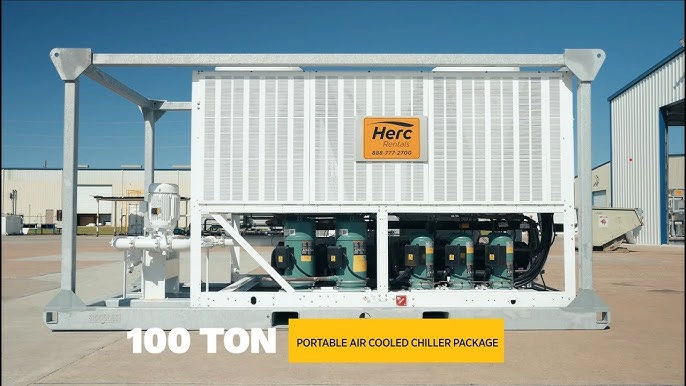
Emergency Rental Chillers in Oklahoma: When to Deploy, How Fast, and What You Need On-Site
A practical guide for Oklahoma facilities on emergency rental chillers: triggers to deploy, what tonnage you may need, site requirements, timelines, and cost drivers.
Emergency Rental Chillers in Oklahoma: When to Deploy, How Fast, and What You Need On-Site
Emergency rental chillers are not just for mega-events—they’re a proven way to keep critical cooling online when repairs, parts, or system recovery will take longer than your operation can tolerate. In Oklahoma, we see rental needs spike during extended heat events, when condenser-side problems cascade, or when a critical facility can’t risk even a day of downtime. This guide explains when a rental makes sense, what information to gather, and how to prepare your site so a rental deployment doesn’t become a second emergency.
Quick Answer: Should you call about a rental chiller?
If your building cannot tolerate losing chilled water for more than 6–24 hours (healthcare, process, IT), or if your chiller is down with an uncertain repair timeline, you should start the rental conversation immediately. Rentals require power, safe hose routing, and a connection plan; the earlier you plan, the faster you can get temporary cooling operating and stabilize the facility.
To decide faster in the field, run this in parallel with our first-60-minutes emergency HVAC response checklist.
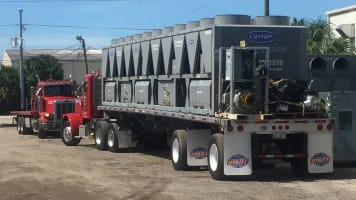
Photo credit: Carrier
When rental chillers are the right move
We recommend considering a rental chiller when any of these are true:
| Situation | Why Rental Makes Sense | Urgency Level |
|---|---|---|
| Critical load at risk | Healthcare, data center, process cooling cannot wait | Immediate |
| Unknown downtime | Compressor failure, controls board, major leak | High |
| Parts lead time | OEM parts not available same-day or next-day | High |
| Cascading failure risk | Running “half-working” may damage more equipment | High |
| High ambient event | Peak summer with no margin for reduced capacity | High |
| Planned replacement bridge | Avoid shutdown during equipment changeover | Planned |
- Critical load: hospital ORs, imaging, pharmacy, data centers, process cooling
- Unknown downtime: compressor, controls boards, major refrigerant leak, or multiple failures
- Parts lead time: OEM parts not available same-day
- Risk of cascading failures: the longer you run “half-working,” the more likely more equipment fails
- High ambient event: peak summer weeks where “limping along” is not realistic
Rentals can also be a bridge during planned replacement projects to avoid shutdown windows.
When a rental chiller is NOT the best first option
Not every outage needs a rental. Rentals may not be the fastest option if:
| Situation | Better First Option | Why |
|---|---|---|
| Condenser-side issue (coil fouling, tower staging) | On-site cleaning/repair | Faster resolution, lower cost |
| Redundant chillers available | Operate on reduced capacity | Already have backup |
| Airside issue (AHU down) | AHU repair | Chilled water isn’t the constraint |
| Short repair timeline (under 4 hours) | Wait for repair | Rental setup takes time too |
- A straightforward condenser-side issue can restore operation quickly (coil cleaning, tower staging)
- Your facility has redundant chillers and can operate on reduced capacity temporarily
- The real constraint is distribution (airside) rather than chilled water (e.g., a critical AHU is down)
The right sequence is: triage → stabilize → determine timeline → decide rental.
How to estimate tonnage (without guessing)
The most common mistake we see is undersizing or oversizing because someone picks a “round number.” Use one of these methods:
Method A: Use your actual equipment nameplate and trend data
- Identify the tonnage of the failed chiller(s)
- Determine whether you need full capacity or a critical subset
- Review BAS trends: peak CHW flow and temperature differential
Method B: Use a “critical load” approach
If the whole building doesn’t need to stay at 72°F, prioritize:
- server rooms / IT closets that overheat first
- imaging equipment
- OR suites / recovery
- process areas with heat-sensitive equipment
This often reduces required tonnage significantly.
Method C: Rule-of-thumb checks (only as a starting point)
Rule-of-thumb tonnage per square foot can be misleading. Use it only to sanity-check your planning, not as the final answer. Oklahoma humidity and load profiles can make the “average” numbers wrong quickly.
| Sizing Method | Accuracy | Best Used When |
|---|---|---|
| Nameplate + BAS trends | High | Data available, replacing specific chiller |
| Critical load calculation | Medium-High | Prioritizing essential areas only |
| Square footage rule-of-thumb | Low | Quick sanity check only |
| Prior rental experience | Medium | Same facility, similar conditions |
Typical rental tonnage ranges (what’s realistic)
Rental fleets often support a wide range, and multi-unit staging is common:
| Tonnage Range | Typical Applications | Power Considerations |
|---|---|---|
| 50-100 tons | Targeted critical loads, smaller facilities, spot cooling loops | Often 480V, may work with existing capacity |
| 150-300 tons | Mid-size plants, multi-story buildings, partial operations | Requires dedicated power planning |
| 400-500+ tons | Large campuses, convention/hospitality, industrial/process | Often requires generator or utility coordination |
The best approach is to plan a rental that fits your power and connection realities.
Site requirements checklist (what you need ready)
Rental chillers are not “plug and play” unless your site is prepared. Here’s what we confirm before deployment:
| Requirement Category | Key Questions | Common Issues |
|---|---|---|
| Electrical power | What voltage/phase? Spare breaker capacity? Generator tie-in? | Insufficient capacity, wrong voltage |
| Connection points | Hose connections available? Isolation valves? | No planned tie-in points |
| Hose routing | Safe path? Traffic protection? Insulation needed? | Blocked egress, sun exposure |
| Heat rejection | Air-cooled space? Tower connection possible? | Insufficient airflow, no tower access |
| Controls/monitoring | How will you monitor temps and alarms? | No monitoring plan |
1) Electrical power
- What voltage/phase is available?
- Is there a spare breaker capacity or generator tie-in?
- Where is the safe connection point?
Power constraints often drive whether you use one large unit or multiple smaller units.
2) Connection points (water-side)
You need a safe way to connect the rental into your chilled water loop:
- existing hose connections (ideal)
- temporary tie-in points with isolation valves
- piping access for a controlled tie-in
Also plan for:
- strainer protection
- air removal / venting
- flow verification
3) Hose routing and safety
Hose runs need:
- safe paths that won’t block egress
- protection from vehicle traffic
- insulation or protection if exposed to sun/heat
- clear labeling and signage
4) Heat rejection plan
Depending on the rental type:
- air-cooled rental rejects heat via its own condenser (space and airflow matter)
- water-cooled rental may require tower connection or temporary heat rejection
5) Controls and monitoring
Even temporary systems need monitoring:
- supply/return temps
- flow
- alarms
- minimum staffing plan for after-hours checks
Timeline: how fast can a rental chiller be online?
Timeline depends on:
- availability
- site readiness (power + tie-in plan)
- equipment complexity
- weather and logistics
| Site Readiness Level | Typical Deployment Time | What Makes It Faster |
|---|---|---|
| Pre-planned connections, power ready | 4-8 hours from arrival | Existing hose bibs, known power source |
| Some infrastructure, planning needed | 8-24 hours | Coordination, minor tie-in work |
| No prep, emergency scramble | 24-48+ hours | Everything done under pressure |
The fastest deployments happen when the facility:
- has clear tie-in points,
- has a known power plan,
- and can give the rental team safe access.
Hours to Operational
Saved 40 hrs
Cost drivers (what makes rentals expensive)
Rental cost depends on:
| Cost Factor | Lower Cost | Higher Cost |
|---|---|---|
| Tonnage | Match to critical load only | Oversized “just in case” |
| Duration | Days | Weeks or months |
| Mobilization timing | Business hours | After-hours, weekends, holidays |
| Site prep | Pre-planned connections | Emergency tie-in labor |
| Consumables | Standard fittings | Custom piping, long hose runs |
| Monitoring | Self-monitored | 24/7 service support |
- tonnage and configuration
- duration (days vs weeks)
- electrical and piping labor
- after-hours mobilization
- consumables (hoses, fittings, temporary piping)
- monitoring/support requirements
The best way to control cost is to reduce scope to critical loads and prepare the site before the truck rolls.
When this is part of a broader replacement decision, align rental assumptions with the commercial chiller TCO framework so temporary and permanent costs are evaluated together.
Oklahoma-specific deployment notes
| Oklahoma Factor | Rental Consideration | Planning Action |
|---|---|---|
| Heat events (100°F+) | Air-cooled units may derate | Plan for additional capacity margin |
| Dust and wind | Coil fouling during deployment | Schedule coil cleaning, consider protection |
| Storm season | Power instability | Generator backup plan |
| Winter ice events | Hose/piping freeze risk | Insulation, heat trace if running in cold |
- Heat events: plan for additional derate and ensure airflow for air-cooled rentals
- Dust/wind: consider coil protection and cleaning cadence
- Storm season: plan for power instability and generator coordination
- Ice events: protect temporary hoses/piping from freeze risk if running during winter
For peak-summer derate planning before deployment, use Oklahoma heat dome HVAC protection guidance.
What to have ready when you call (speeds up sizing and dispatch)
| Information Needed | Where to Find It | Why It Helps |
|---|---|---|
| Building address and access | Facility records | Logistics planning |
| Current chiller make/model/status | Nameplate, BAS | Sizing baseline |
| BAS data (CHW temps, flows) | Building automation | Load calculation |
| Desired outcome | Your judgment | Scope definition |
| Power availability | Electrical records | Equipment selection |
| Photos of tie-in locations | Site walkthrough | Connection planning |
- Building address and access constraints
- Current chiller make/model and status
- BAS data: CHW temps, flows, critical zones
- Desired outcome: “keep ORs and imaging stable” vs “cool the entire building”
- Power availability details (voltage/phase/breaker capacity)
- Photos of potential tie-in locations (if you can)
Need emergency rental chiller planning in Oklahoma?
Total Mechanical Services can help you evaluate whether a rental chiller is the right move and coordinate the deployment plan. Call (405) 223-9900 or request a proposal.
Disclaimer: Rental chiller deployments involve temporary electrical and piping work that must be planned and executed safely. This guide is informational and does not replace engineering review, OEM guidance, or site safety policies.
Related Resources
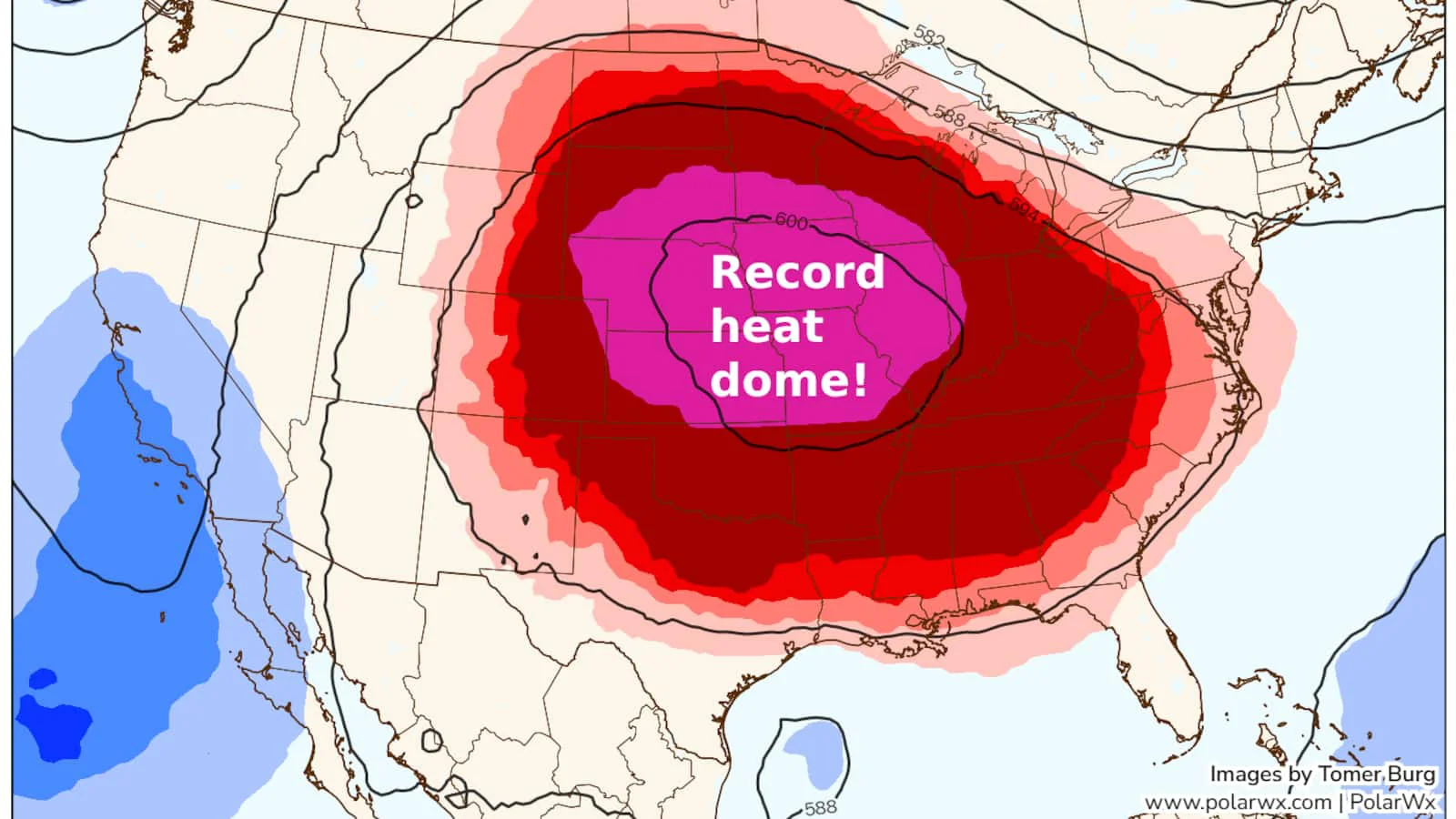
Protecting Commercial HVAC From Oklahoma Heat Domes: High-Ambient Strategy, Coil Cleaning, and Load Management
A practical Oklahoma guide to surviving heat domes: high-ambient chiller/RTU performance, coil cleaning cadence, tower readiness, demand management, and emergency cooling planning.
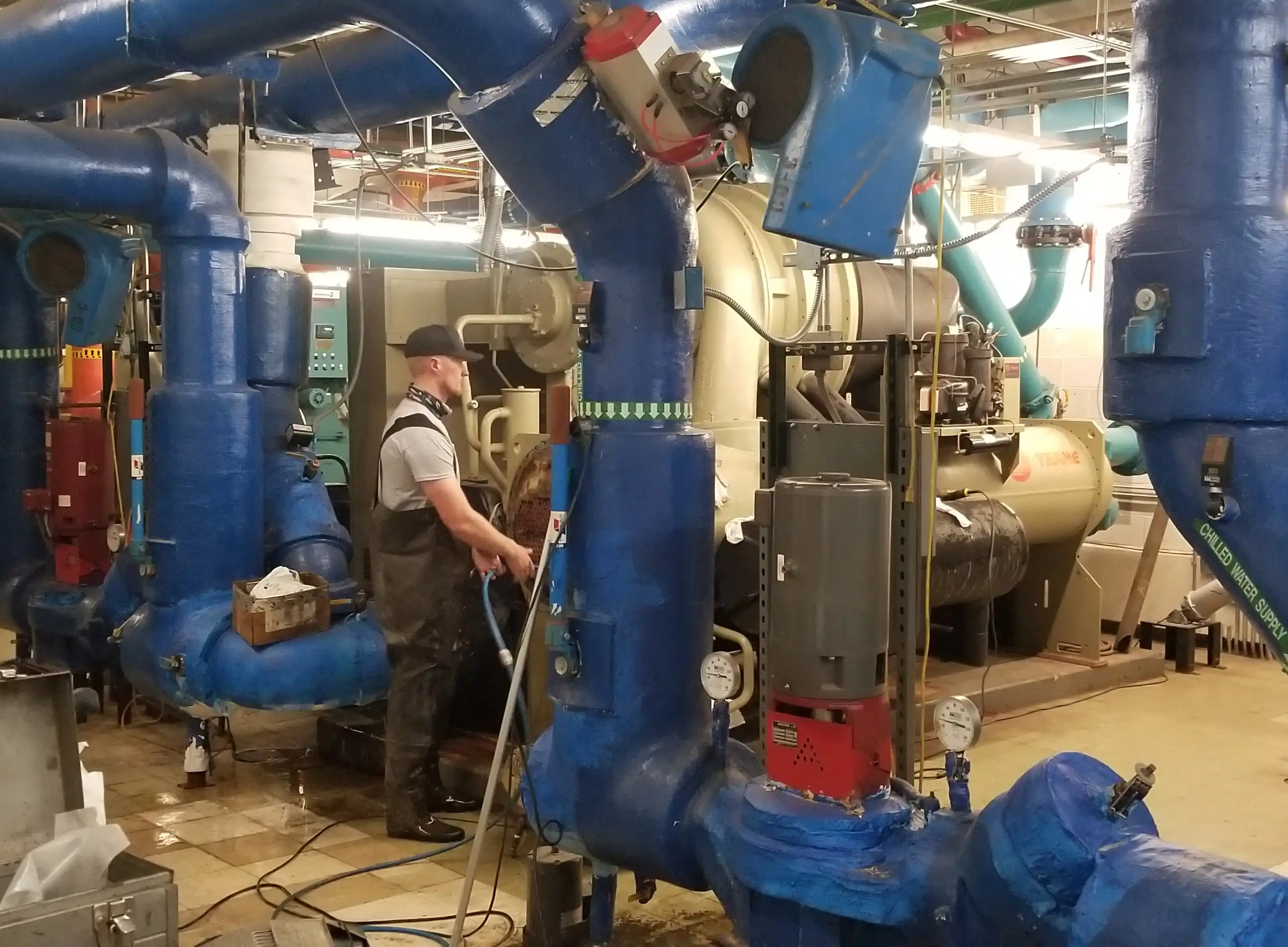
Commercial Chiller Tube Cleaning in Oklahoma: Frequency, Methods, and Hard-Water Reality
A field-practical guide to chiller tube cleaning for Oklahoma facilities: how hard water and tower chemistry affect efficiency, how often to clean, and what methods work.

Oklahoma Ice Storm HVAC Recovery: Freeze Damage Triage, RTU/Chiller Plant Checks, and Safe Restart
A practical Oklahoma guide to recovering HVAC after ice storms: pre-storm prep, freeze damage triage, thaw and restart strategy, and documentation for insurance and risk control.
Need Help with Your System?
Our expert team is ready to assist with design, installation, maintenance, and troubleshooting.