Commercial Chiller Total Cost of Ownership (TCO): A Practical Comparison Framework (Trane vs York vs Carrier vs Daikin)
A practical TCO framework for comparing commercial chillers: what to include beyond first cost, how Oklahoma conditions affect ownership cost, and how to make an approval-ready selection.
Commercial Chiller Total Cost of Ownership (TCO): A Practical Comparison Framework (Trane vs York vs Carrier vs Daikin)
When owners compare chillers, the conversation often starts with purchase price and ends with “which brand is best.” That’s the wrong frame. The right frame is Total Cost of Ownership (TCO): the full cost to purchase, install, operate, maintain, and keep the plant reliable over a long horizon (often 15–25 years). In Oklahoma, you also need to account for climate stress (extended high-ambient weeks), water quality and tower chemistry realities, and the operational consequences of downtime.
This guide gives you a practical TCO framework you can use to compare options—including Trane, York, Carrier, Daikin, and similar OEMs—without falling into brand-war shortcuts.
If you are still choosing plant architecture, start with our air-cooled vs water-cooled Oklahoma comparison, then come back to this TCO model to score options.
Quick Answer: How do you compare chiller TCO correctly?
Compare chillers using a full lifecycle model that includes first cost, installation, energy at part load and peak conditions, water treatment and tube cleaning (for water-cooled plants), planned maintenance, unplanned repairs, parts and service logistics in Oklahoma, and the cost of downtime risk. The “best” chiller is the one that delivers stable performance with manageable maintenance burden for your facility—not the one with the lowest bid.
Step 1: Define what “success” means for your facility
Different facilities have different TCO drivers:
| Facility Type | Primary TCO Drivers | Critical Considerations |
|---|---|---|
| Healthcare | Humidity control, redundancy, uptime, documentation | OR/procedure room stability, ICRA compliance |
| Industrial | Process continuity, power quality resilience, serviceability | 24/7 production, process cooling tolerances |
| Hospitality | Comfort, noise, event uptime, fast recovery | Guest experience, conference/banquet loads |
Write down:
- critical areas served
- uptime tolerance (hours of acceptable outage)
- maintenance staffing and discipline
- whether water treatment can be managed consistently
Your TCO model must reflect your actual operations.
Step 2: TCO components (what to include)
At minimum, include these categories:
A) Capital cost (CapEx)
| Component | Typical Range Factor | Notes |
|---|---|---|
| Chiller equipment | Base cost | Varies by type, capacity, efficiency |
| Starter/VFD packages | 5-15% of chiller | Electrical upgrades may be required |
| Rigging and structural | 3-10% of chiller | Access constraints drive cost |
| Commissioning | 2-5% of chiller | Never treat as optional |
| Controls/BAS integration | 3-8% of chiller | Critical for optimization |
B) Operating cost (OpEx)
| Cost Category | Water-Cooled | Air-Cooled |
|---|---|---|
| Chiller energy (kWh) | Lower per-ton | Higher per-ton |
| Condenser energy | Tower fans + pumps | Condenser fans |
| Water and sewer | Significant | None |
| Chemical treatment | Required | None |
| Demand charges | Monitor peak kW | Monitor peak kW |
Typical Efficiency (kW/ton)
Increased by 0.2 kW/ton
C) Maintenance cost
| Maintenance Item | Water-Cooled Chiller | Air-Cooled Chiller |
|---|---|---|
| Annual PM contract | Standard | Standard |
| Tube cleaning | Annual or bi-annual | N/A |
| Eddy current testing | Every 3-5 years | N/A |
| Coil cleaning | N/A | Quarterly to annual |
| Oil analysis | Some programs | Some programs |
| Refrigerant management | Required | Required |
Maintenance assumptions should include the real field work behind those costs, especially chiller tube cleaning frequency in Oklahoma and ongoing cooling tower hygiene and water treatment discipline for water-cooled systems.
D) Unplanned repair cost
| Component | Typical Repair Cost Range | Lead Time Impact |
|---|---|---|
| Controls boards/sensors | $2,000-$15,000 | Days to weeks |
| Compressor repair/rebuild | $25,000-$100,000+ | Weeks to months |
| Refrigerant leak/recovery | $5,000-$30,000 | Days |
| Emergency labor (after-hours) | 1.5-2x standard rates | Immediate availability varies |
E) Downtime cost (risk-adjusted)
Even a conservative expected-value estimate is better than ignoring downtime:
| Facility Type | Downtime Cost Estimate | Risk Level |
|---|---|---|
| Hospital (critical areas) | $10,000-$50,000 per hour | Critical |
| Industrial (process cooling) | $5,000-$25,000 per hour | High |
| Hospitality (peak event) | $2,000-$10,000 per hour | Moderate to High |
| Commercial office | $500-$2,000 per hour | Moderate |
Step 3: Oklahoma-specific factors that affect TCO
High-ambient summer performance
In Oklahoma, the chiller must hold setpoint during:
- extended 100°F+ weeks
- high humidity swings that stress latent control
| Ambient Condition | Performance Impact | TCO Consideration |
|---|---|---|
| 95°F design day | Rated performance | Baseline efficiency |
| 100-105°F peak | Capacity reduction 5-15% | May require oversizing |
| 110°F+ extreme | Capacity reduction 15-25% | High-ambient package needed |
TCO is not just efficiency “at rating.” It’s performance stability when the plant is under stress.
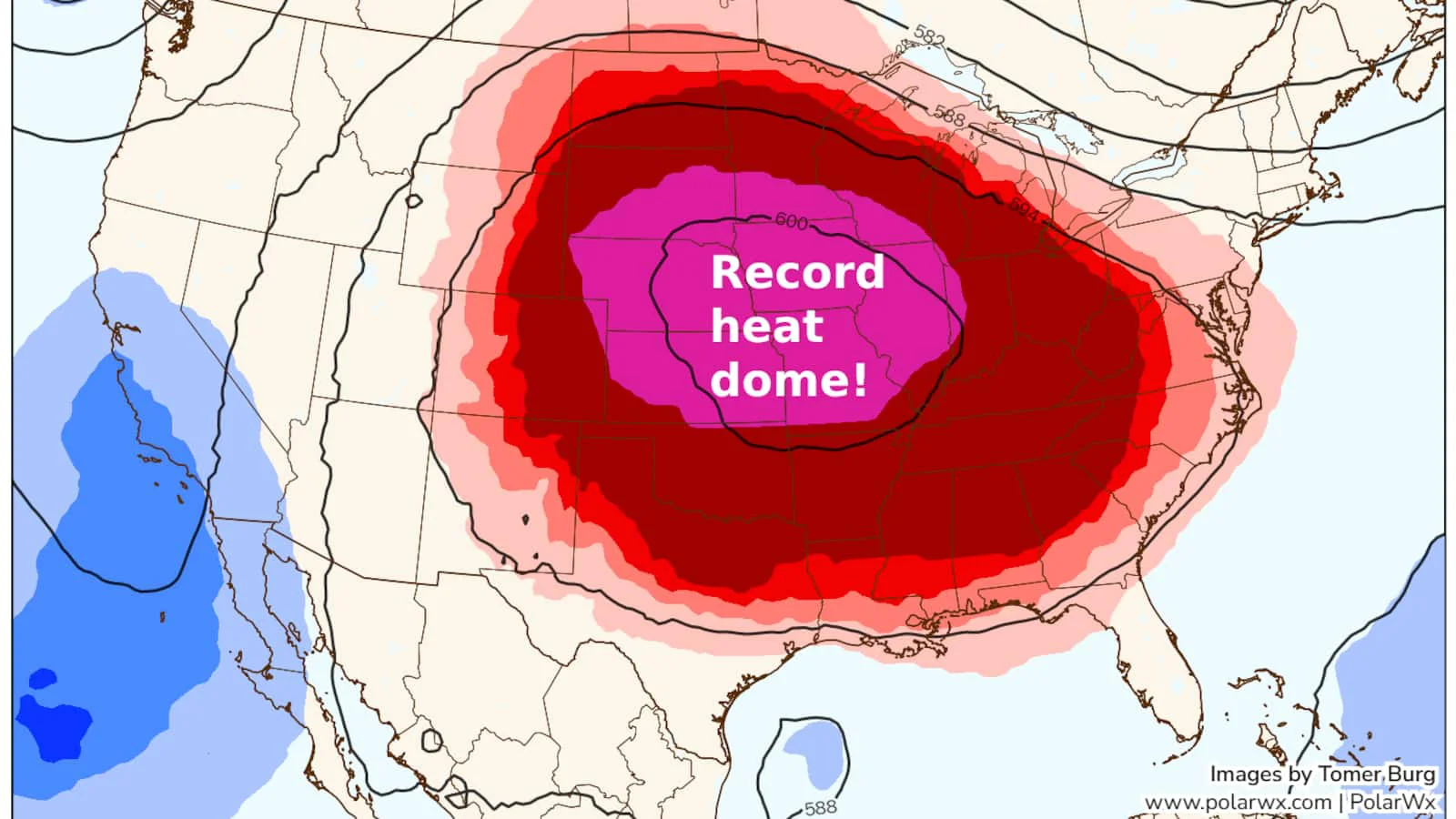
For practical peak-condition preparation, use this companion guide on protecting commercial HVAC during Oklahoma heat domes.
Dust, cottonwood, and coil loading (air-cooled)
Air-cooled chillers are often “simple”—until coils load up and head pressure climbs. Your TCO model should include:
| Coil Maintenance Factor | Impact on TCO | Recommended Action |
|---|---|---|
| Cottonwood season (May-June) | Rapid coil loading | Weekly inspections |
| Dust accumulation | Gradual efficiency loss | Quarterly cleaning |
| Coil fin damage | Permanent capacity loss | Protective screens |
Water quality and tower chemistry (water-cooled)
Water-cooled plants can deliver excellent performance, but only if:
- water treatment is stable
- tubes are kept clean
- tower hygiene is maintained
| Water Quality Issue | TCO Impact | Mitigation |
|---|---|---|
| Scale buildup | Efficiency loss 2-5% per year | Chemical treatment program |
| Biological growth | Health risk, efficiency loss | Biocide and hygiene program |
| Corrosion | Tube failure, major repairs | Corrosion inhibitors |
If your facility struggles to execute water treatment consistently, your TCO risk increases.
Parts and service logistics
A chiller brand with great lab performance can still be a poor TCO choice if:
- parts availability is slow
- specialized service is scarce
- controls platforms are difficult to support on your timeline
| Factor | Local Market Reality | TCO Implication |
|---|---|---|
| OEM distributor presence | Trane, York, Carrier strong in OKC/Tulsa | Faster parts, lower freight |
| Specialty service availability | Limited for some brands | Emergency response delays |
| Controls platform support | Varies by brand | Integration and troubleshooting costs |
Step 4: A practical comparison table (what to score)
Rather than debate brands, score the option against your needs:
| Category | What to Evaluate | Why It Matters | Weight (Adjust to Your Needs) |
|---|---|---|---|
| Peak performance stability | Can it hold setpoint in extreme heat? | Prevents emergency outages | High |
| Part-load efficiency | Real operating hours are often part load | Drives real energy cost | High |
| Serviceability | Access, diagnostics, supportability | Reduces downtime duration | Medium-High |
| Controls platform | Integration with BAS, trendability | Enables proactive maintenance | Medium |
| Maintenance burden | Tube/coil cleaning, oil programs | Prevents “maintenance debt” | Medium |
| Parts logistics | Lead times, local support | Determines recovery speed | Medium |
| Warranty and support | Coverage terms and exclusions | Shifts long-term risk | Medium |
This scoring approach makes procurement discussions more rational and less emotional.
Step 5: Water-cooled vs air-cooled is a TCO decision too
Before you compare brands, confirm you’re comparing the right architecture:
| Factor | Air-Cooled | Water-Cooled |
|---|---|---|
| First cost (installed) | Lower | Higher |
| Efficiency (kW/ton) | 0.80-1.10 | 0.50-0.70 |
| Water usage | None | 2-4 gal/ton-hr |
| Maintenance complexity | Lower | Higher |
| High-ambient performance | Degrades more | More stable |
| Infrastructure needs | Simpler | Towers, pumps, treatment |
| Oklahoma suitability | Good for smaller loads | Preferred for larger loads |
20-Year Operating Cost Example (500-ton)
Saved $23,000 USD/year
If your maintenance capability doesn’t match the system, TCO will be worse regardless of brand.
When the project is part of a broader modernization effort, tie this analysis into a full commercial HVAC retrofit ROI model so finance and operations are using one decision framework.
Step 6: How to model TCO (a simple 20-year structure)
A practical 20-year TCO model often includes:
| Year | Cost Category | Typical Items |
|---|---|---|
| Year 0 | Capital | Purchase + installation + commissioning |
| Years 1-20 | Annual operating | Energy, PM, tower/coil maintenance |
| Year 5 | Major service | Tube testing, oil change, controls update |
| Year 10 | Major service | Compressor inspection, major PM |
| Year 15 | Major service | Possible compressor rebuild, controls refresh |
| All years | Risk adjustment | Expected-value downtime cost |
You can run a conservative, expected, and aggressive case. The goal is decision clarity, not false precision.
Common TCO mistakes we see
| Mistake | Real-World Consequence | Better Approach |
|---|---|---|
| Comparing only first cost | Higher lifecycle cost, reliability issues | Full TCO model |
| Ignoring commissioning | Poor performance, warranty disputes | Include in every project |
| Ignoring water treatment | Tube fouling, efficiency loss, repairs | Budget water program |
| Ignoring downtime risk | Surprise costs during failures | Risk-adjusted modeling |
| Assuming rated efficiency | Overstated savings projections | Use part-load and peak data |
What to ask vendors and bidders (approval-ready questions)
Ask questions that reveal lifecycle reality:
| Question | What It Reveals | Red Flag If… |
|---|---|---|
| What is the recommended maintenance program and annual cost? | True maintenance burden | Vague or minimized |
| What are typical lead times for critical controls boards? | Parts logistics reality | “We’ll figure it out” |
| What data points are available for BAS trending? | Diagnostic capability | Limited integration |
| What are warranty limitations? | Risk transfer | Excessive exclusions |
| What is the high-ambient performance derating? | Peak capacity reality | Not documented |
If a bidder can’t answer these clearly, you’re not getting a TCO-based proposal.
Need help evaluating chiller replacement or retrofit options?
Total Mechanical Services supports chiller selection guidance, lifecycle planning, and maintenance strategy for Oklahoma facilities. Call (405) 223-9900 or request a proposal.
Disclaimer: This guide is informational. Actual costs and performance vary by equipment selection, application, operating profile, and maintenance execution. Always confirm OEM data, site conditions, and current pricing.
Related Resources
Protecting Commercial HVAC From Oklahoma Heat Domes: High-Ambient Strategy, Coil Cleaning, and Load Management
A practical Oklahoma guide to surviving heat domes: high-ambient chiller/RTU performance, coil cleaning cadence, tower readiness, demand management, and emergency cooling planning.
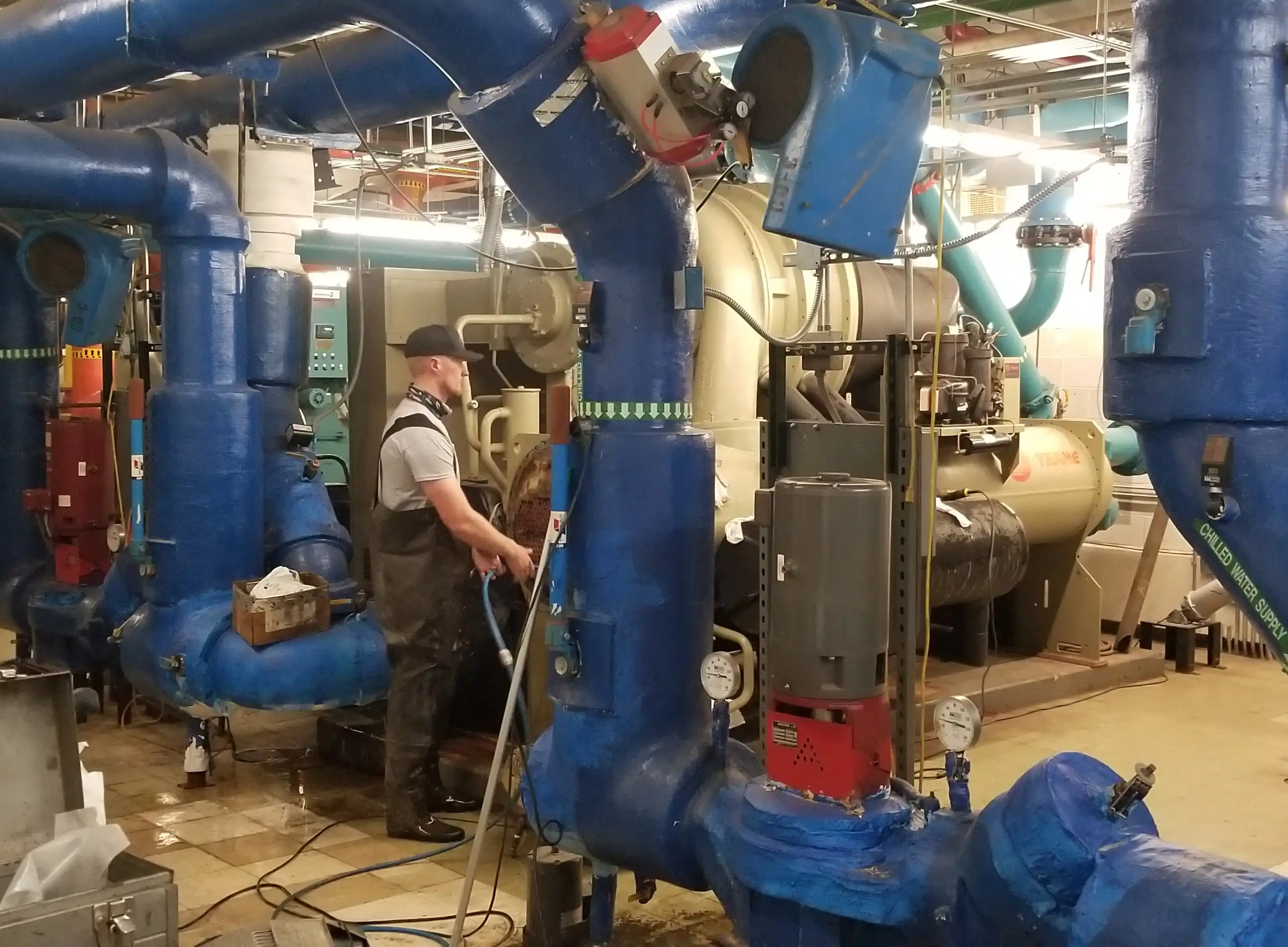
Commercial Chiller Tube Cleaning in Oklahoma: Frequency, Methods, and Hard-Water Reality
A field-practical guide to chiller tube cleaning for Oklahoma facilities: how hard water and tower chemistry affect efficiency, how often to clean, and what methods work.

Oklahoma Ice Storm HVAC Recovery: Freeze Damage Triage, RTU/Chiller Plant Checks, and Safe Restart
A practical Oklahoma guide to recovering HVAC after ice storms: pre-storm prep, freeze damage triage, thaw and restart strategy, and documentation for insurance and risk control.
Need Help with Your System?
Our expert team is ready to assist with design, installation, maintenance, and troubleshooting.