Tecumseh Schools (Tecumseh, OK) 80-Ton Carrier Chiller Replacement: Root-Cause Diagnosis After Repeated Compressor Failures
A Tecumseh Schools chiller that ate compressors year after year was fixed the right way: water-in-refrigerant diagnosis, evaporator leak root cause, and an 80-ton Carrier replacement with hail protection.
Tecumseh Schools (Tecumseh, OK) 80-Ton Carrier Chiller Replacement
Quick Answer
Project overview
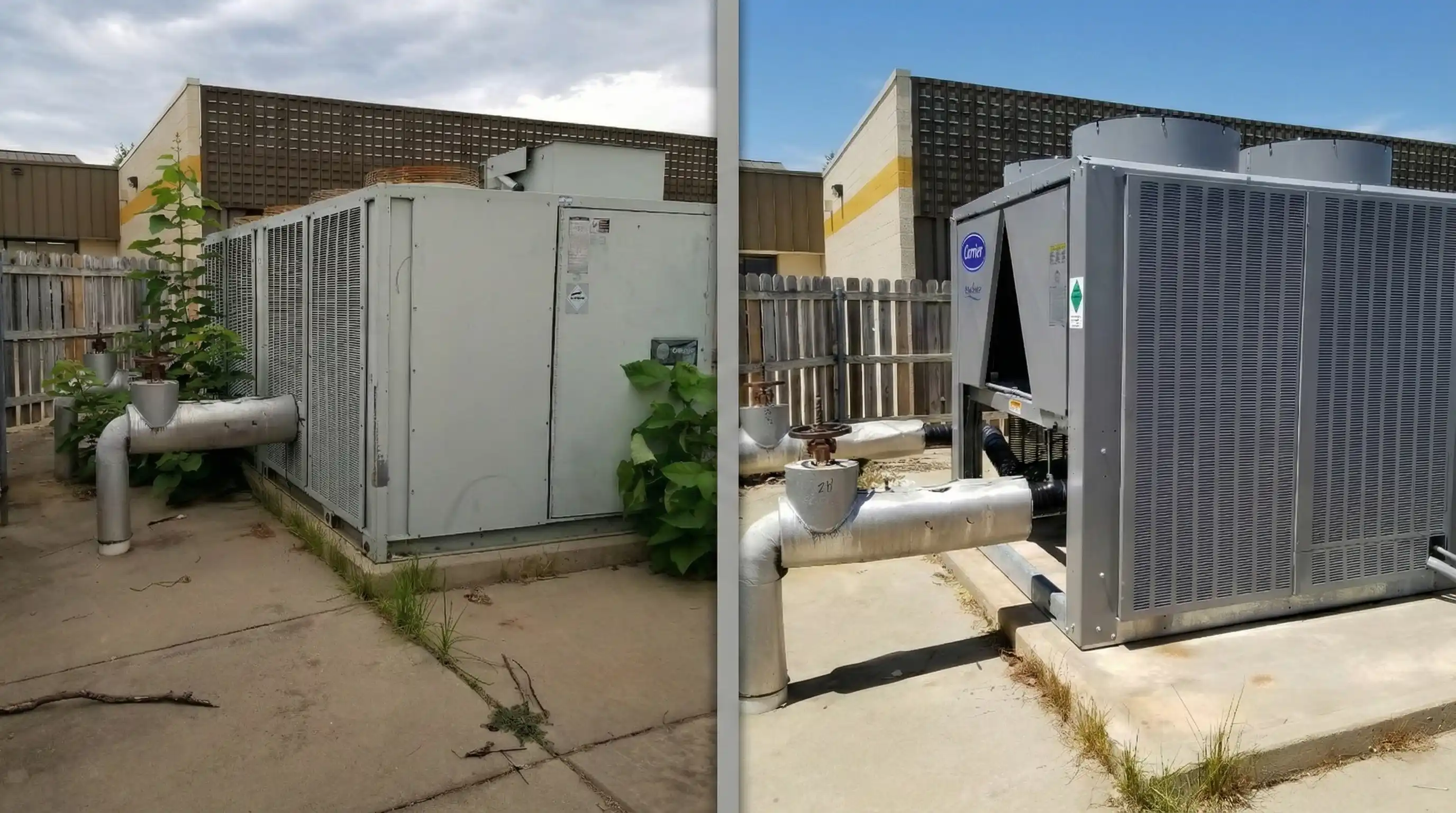
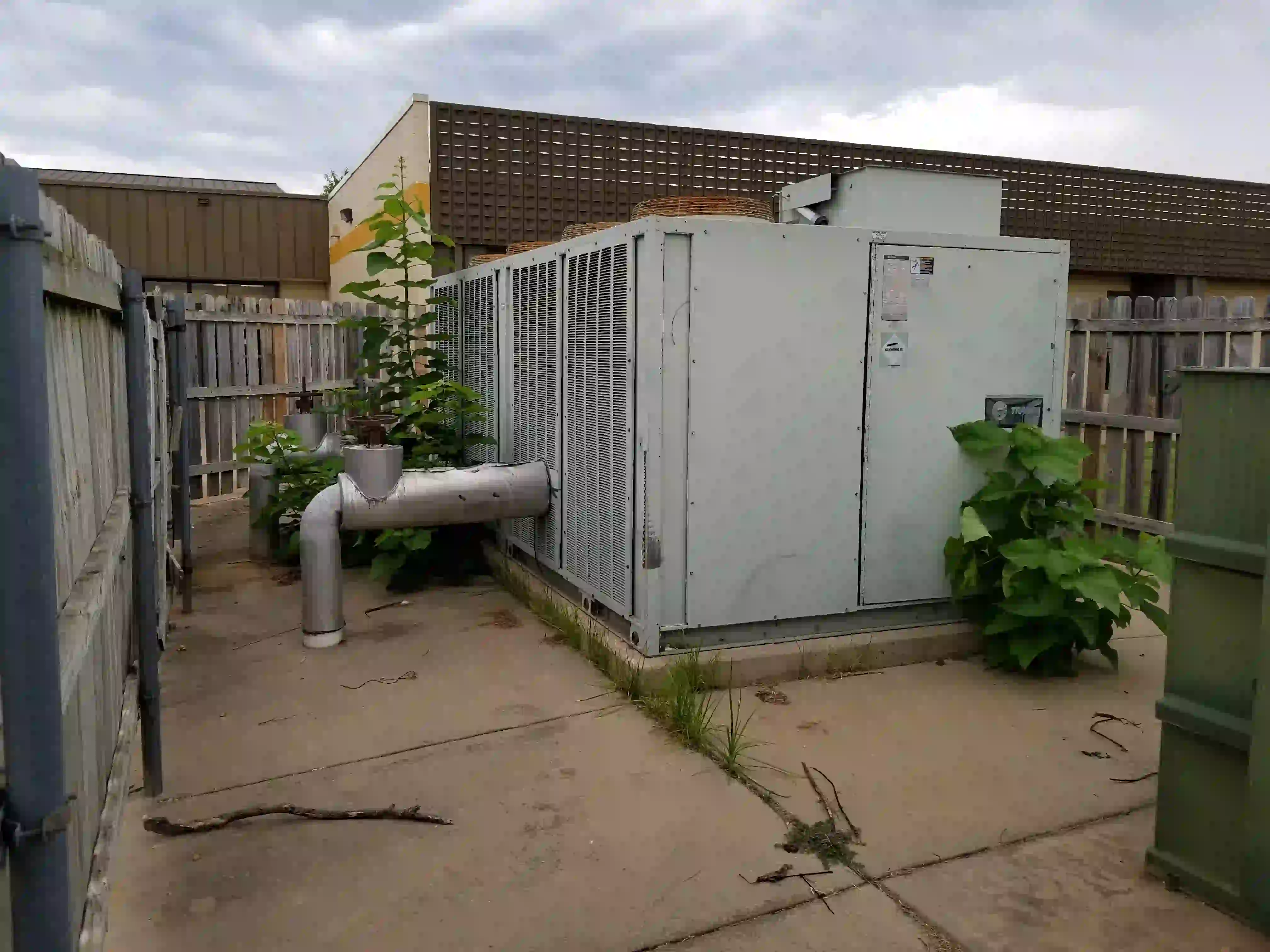
This project took place at Tecumseh Schools in Tecumseh, Oklahoma. The site had a chronic cooling failure pattern: a competitor had been replacing compressors repeatedly, but the system kept failing.
That “replace the compressor again” approach is common when you don’t step back and ask the only question that matters:
Why is the compressor failing in the first place?
Schools feel these failures differently than many facilities:
- They can’t “wait it out” during hot weeks.
- Access is controlled (locked buildings, badge requirements).
- Approvals move through a school board chain, not a single decision maker.
The turning point: root-cause diagnosis (not another compressor)
When we got the call, we approached it as a diagnostics problem—not a parts swap.
What we found
We opened the system and found something that makes every chiller tech’s stomach drop:
- water in the refrigerant circuit
- visible evidence of moisture contamination in the compressor
Refrigerant and water must stay separated. When they don’t, you’re not dealing with a “bad compressor.” You’re dealing with a system that will keep destroying compressors until the leak path is eliminated.
Root cause
The underlying failure was a pinhole leak in a water tube in the evaporator barrel. That breach allowed water to migrate into the refrigerant side over time.
At that point, the honest recommendation is simple:
- stop spending money on compressors
- replace the machine (or at minimum, replace the leaking vessel—often not cost-effective on older units)
We told the customer directly: another compressor might run for six months, then you’ll be right back here.
Planning and approvals (school reality)
When you do a chiller replacement at a school, the schedule isn’t only “lead time.”
It’s also:
- diagnosis time (to be sure the solution is correct)
- proposal and board approval windows
- access planning (getting into buildings, keys, badges, escorts)
A practical scheduling lesson
We work backward from “we need cooling before it gets hot.”
For many Oklahoma school projects, a reliable timeline looks like:
- early fall: diagnostics + scope + budgeting
- late fall: approvals and signatures
- late winter / early spring: equipment arrival and set
Waiting until spring forces the project into peak workload season and increases cost and risk.
Scope of work (what we did)
Equipment replacement
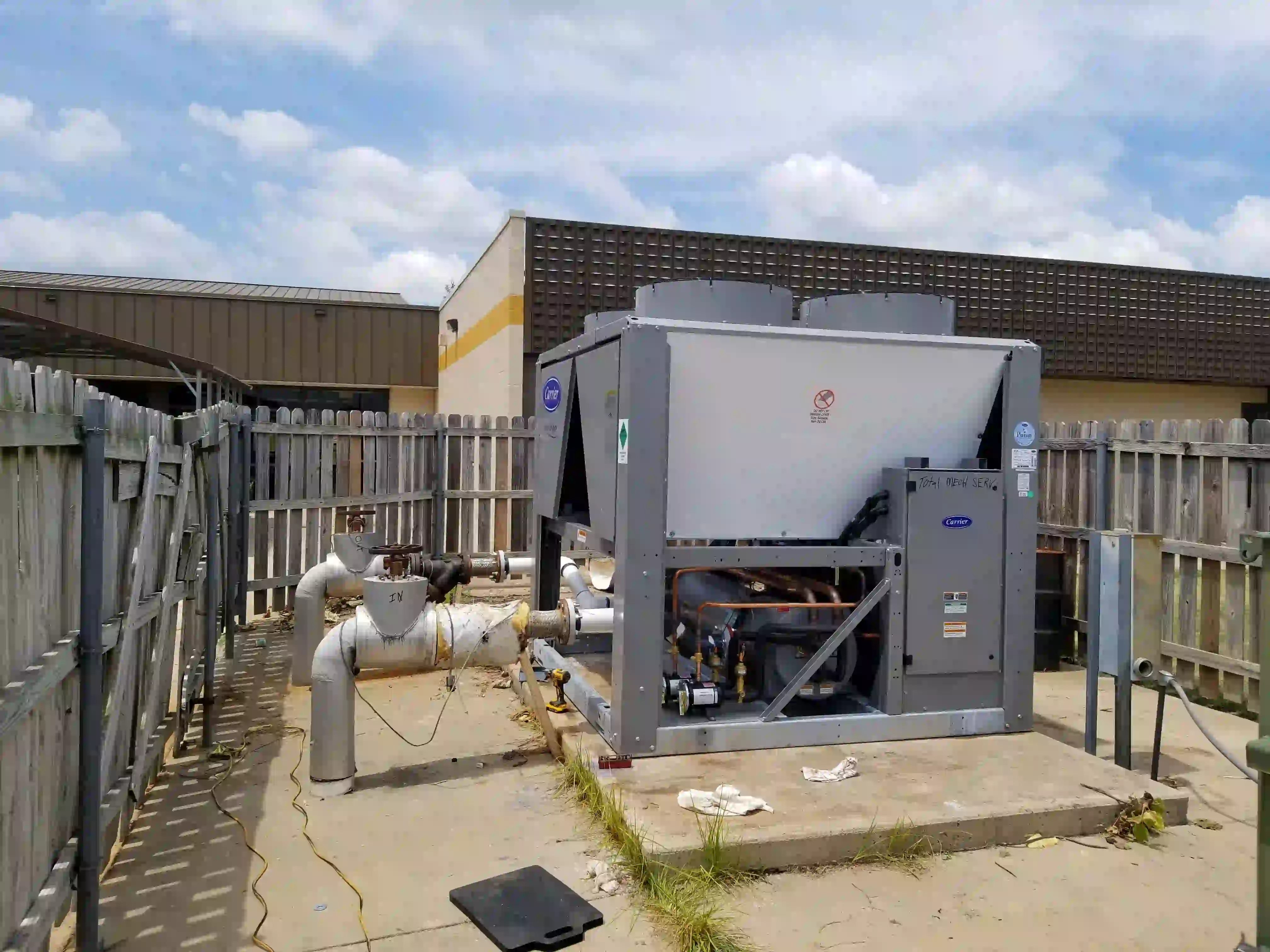
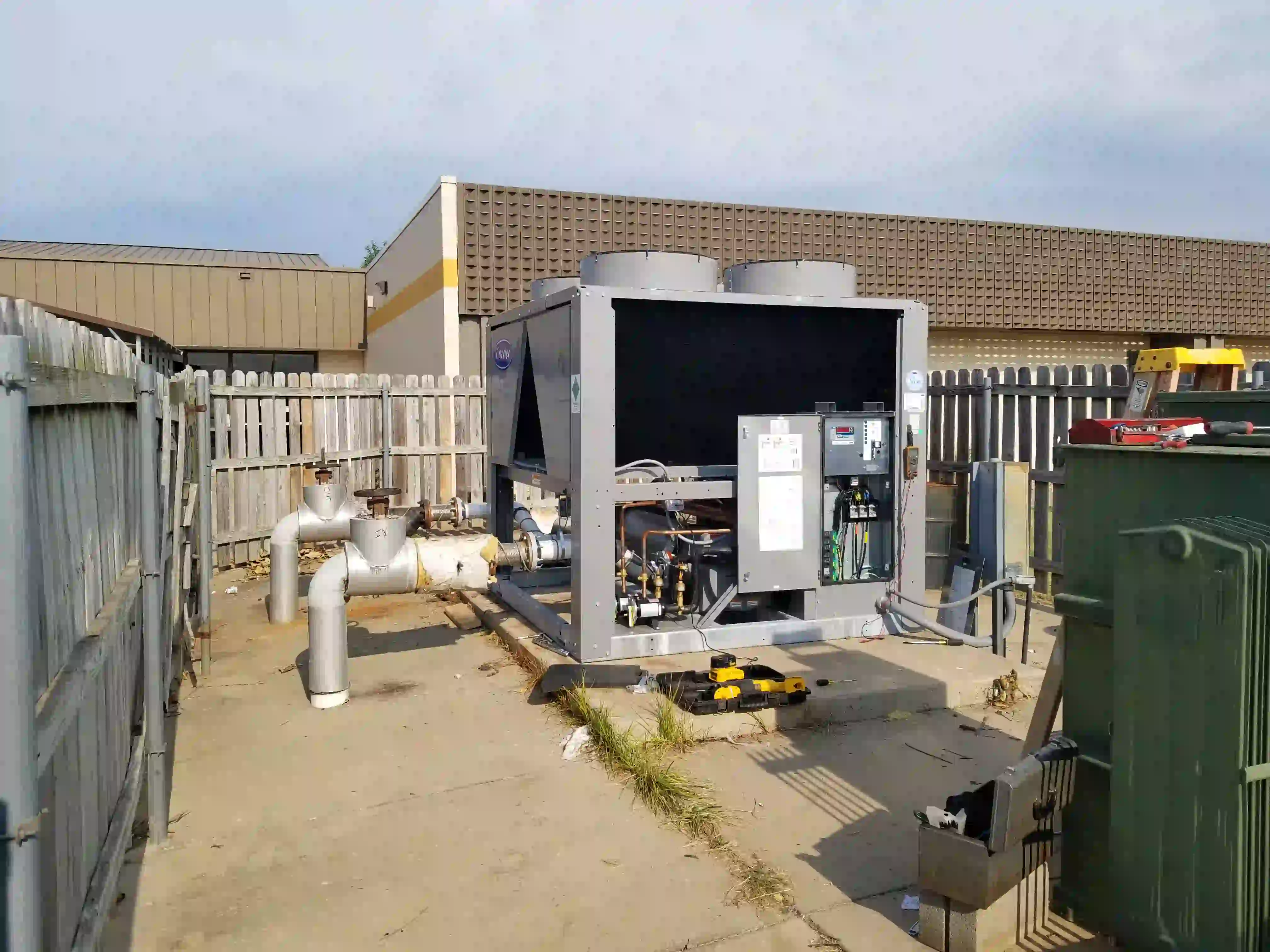
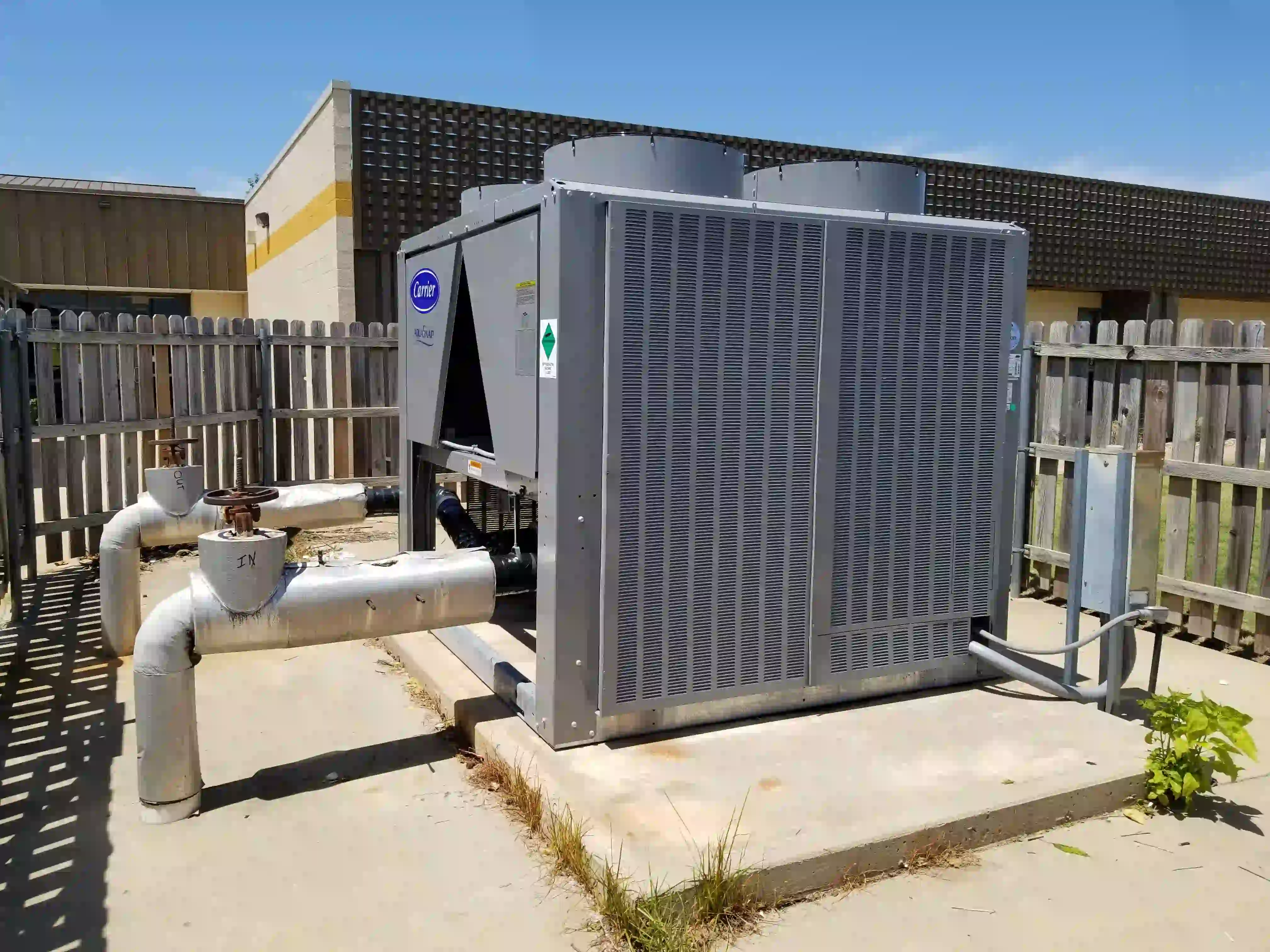
We installed an 80-ton Carrier chiller. Carrier air-cooled chillers in this size class are known for strong reliability, and one of the benefits we see on modern equipment is how quiet the fan systems can be when designed correctly—quiet enough that people ask, “Is it even running?”
Crane set and removal
We coordinated a crane to:
- lift out the old unit
- set the new chiller
- stage removal safely (no shortcuts)
We also managed old equipment disposition (including salvaging what made sense) so the site didn’t end up with a dead machine sitting indefinitely.
Piping tie-ins, valves, and insulation
A chiller replacement is never “just the chiller.” We tied into existing chilled water piping:
- isolated and valved the system appropriately
- connected supply and return
- leak-checked
- ensured insulation requirements were met (to prevent sweating and energy loss)
Electrical and controls
We verified electrical conditions and controls tie-ins so the new chiller integrated cleanly into the existing plant.
One important economic detail here: new chillers are often more efficient, which can mean the existing disconnect and overcurrent protection are already large enough. Upsizing electrical infrastructure is where costs can escalate quickly on retrofits.
Freeze protection details (the “small” stuff that prevents big damage)
We included practical freeze protection where applicable (e.g., heat tape power and routing) so exposed components weren’t left vulnerable.
For summer and emergency contingency around similar assets, pair this with Oklahoma heat dome HVAC protection and a rental chiller deployment plan.
Oklahoma-specific protection: hail guards are not optional
On air-cooled chillers in Oklahoma, hail protection isn’t a “nice to have.” It’s a reliability requirement.
Hail guards protect condenser fins from damage that can:
- reduce heat rejection capacity
- drive high head pressure trips
- shorten equipment life
We treat hail guards as a standard on air-cooled equipment because the cost is small compared to the financial damage from a single severe hail event.
Results (what changed after the replacement)
The biggest “result” wasn’t a marketing number—it was the elimination of a failure loop:
- no more throwing compressors at an unsolved root cause
- predictable cooling capacity heading into hot season
- a more maintainable machine with modern diagnostics
Lessons learned (what we’d tell another school district)
- Repeated compressor failures are a symptom. If you haven’t proven root cause, you’re gambling.
- Water in refrigerant is a stop sign. Find the breach, don’t keep replacing parts.
- Plan around approvals. School projects take longer to approve—start earlier than you think you need to.
- Access friction is real. Locked buildings, badges, and escorts need to be scoped into the schedule.
For proactive trending that helps prevent this failure pattern, use our chiller tube cleaning guide for Oklahoma.
Decision guidance: when to stop repairing and replace
| Condition | Risk level | Recommended response |
|---|---|---|
| Multiple compressor failures over multiple seasons | Very high | Perform full root-cause diagnostics |
| Water/moisture contamination confirmed | Very high | Replace or correct the leaking vessel (often replacement) |
| Old chiller with poor efficiency and high noise | High | Replacement improves reliability and may reduce operating cost |
| Approval timeline pushes you into spring | Medium-High | Start the process earlier next season to reduce risk and cost |
Need chiller support for a school or campus in Oklahoma?
We help education facilities diagnose the real problem, plan projects around board approvals, and deliver replacements that hold up to Oklahoma heat and hail. Call (405) 223-9900 or request a proposal.
Disclaimer: This case study is informational and generalized. Diagnosis and replacement requirements vary by equipment type, site conditions, and applicable codes. Always follow OEM procedures and qualified professional guidance.
Related Resources

Oklahoma Ice Storm HVAC Recovery: Freeze Damage Triage, RTU/Chiller Plant Checks, and Safe Restart
A practical Oklahoma guide to recovering HVAC after ice storms: pre-storm prep, freeze damage triage, thaw and restart strategy, and documentation for insurance and risk control.
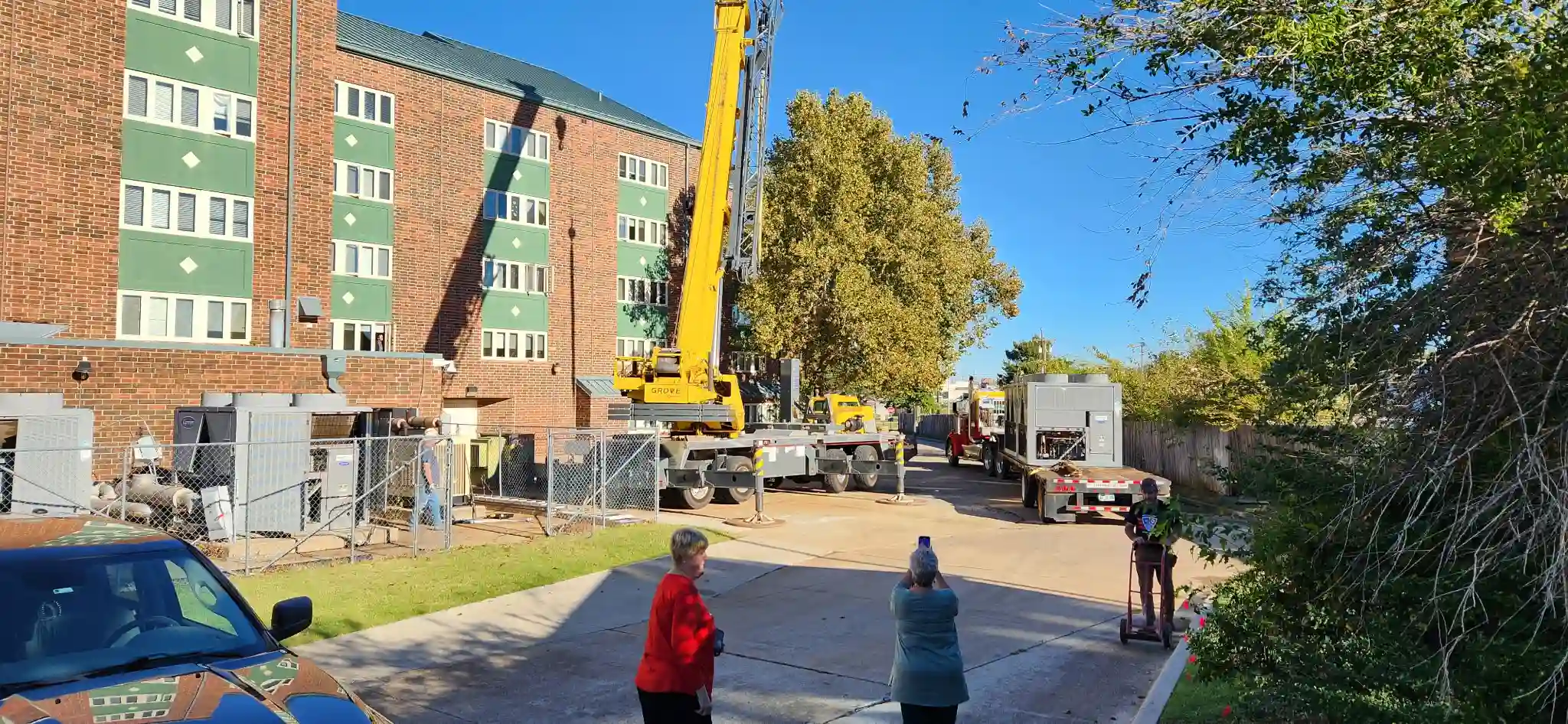
Autumn House (Oklahoma City) Emergency Rental Chiller and 45-Week Lead Time Replacement
When Autumn House faced a 45-week lead time for a new chiller, we pivoted to an emergency rental solution and custom piping modifications to keep their residents cool through the Oklahoma summer.
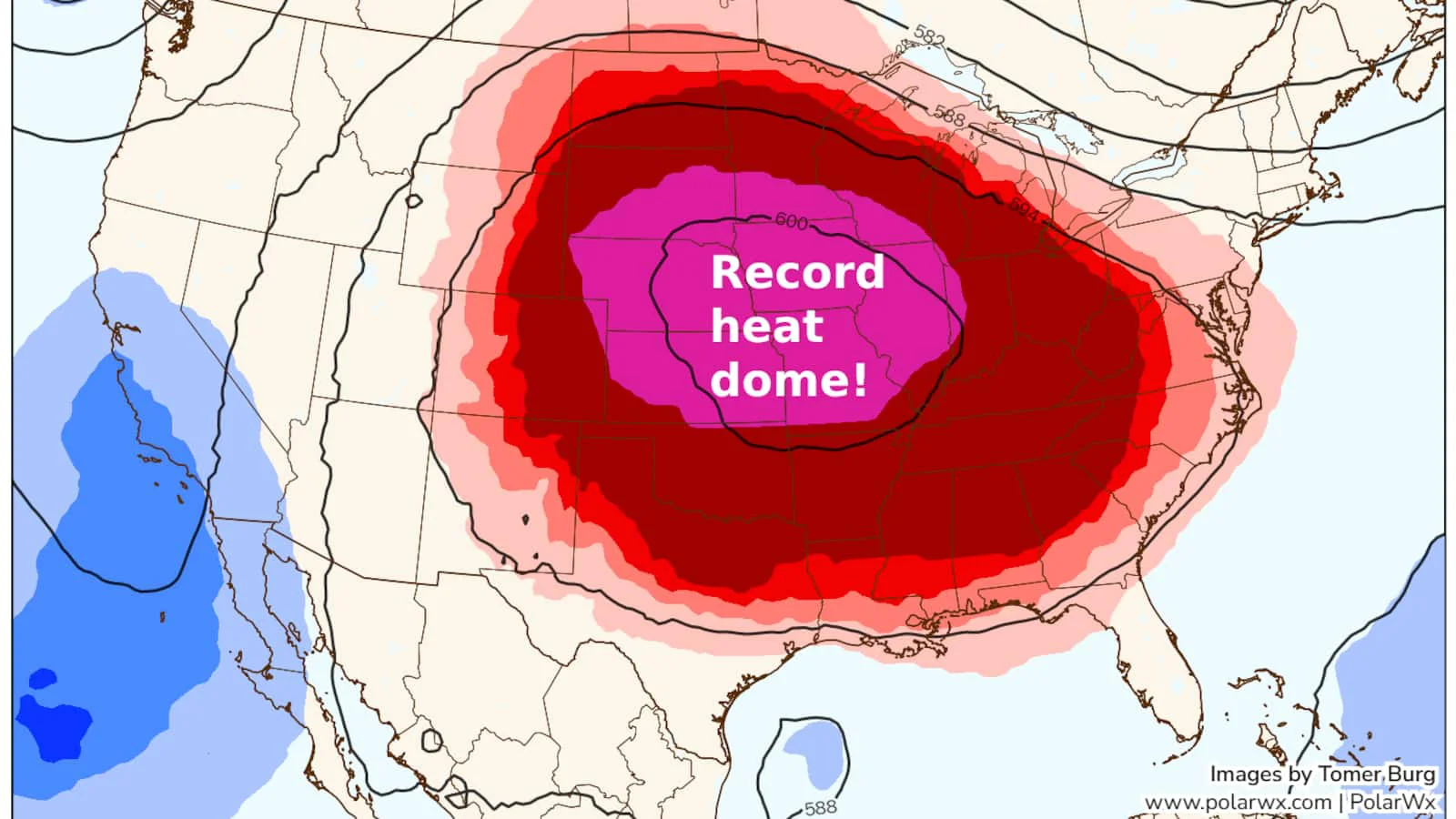
Protecting Commercial HVAC From Oklahoma Heat Domes: High-Ambient Strategy, Coil Cleaning, and Load Management
A practical Oklahoma guide to surviving heat domes: high-ambient chiller/RTU performance, coil cleaning cadence, tower readiness, demand management, and emergency cooling planning.
Need Help with Your System?
Our expert team is ready to assist with design, installation, maintenance, and troubleshooting.