Air-Cooled vs Water-Cooled Chillers in Oklahoma: Efficiency, Maintenance, and What Actually Wins
A practical Oklahoma guide to choosing air-cooled vs water-cooled chillers: peak-heat performance, maintenance realities, water treatment, and total cost considerations.
Air-Cooled vs Water-Cooled Chillers in Oklahoma: Efficiency, Maintenance, and What Actually Wins
Choosing between an air-cooled and water-cooled chiller in Oklahoma is not an academic exercise. It’s about whether your plant holds setpoint during the first heat wave, how much maintenance you can reliably execute, and what your building can tolerate when something goes sideways. Both options can be “right,” but they fail in different ways—and Oklahoma weather, water quality, and operating hours can make the trade-offs sharper than what generic national guidance suggests.
If you’re evaluating options for capital approval, pair this technical comparison with a lifecycle model using our commercial chiller TCO framework.
Quick Answer
Quick Comparison: Air-Cooled vs Water-Cooled
| Factor | Air-Cooled | Water-Cooled |
|---|---|---|
| Peak Summer Efficiency | Lower (affected by ambient temp) | Higher (stable with good tower) |
| First Cost | Lower | Higher (includes tower, piping) |
| Water Usage | None | Significant (tower evaporation) |
| Maintenance Complexity | Coil cleaning, fan service | Tower, water treatment, tube cleaning |
| Space Requirements | Large outdoor footprint | Mechanical room + tower location |
| Best For | Smaller facilities, water restrictions | Large loads, critical facilities |
Why Oklahoma changes the math
Oklahoma’s challenge isn’t just “it gets hot.” It’s:
- extended high-ambient periods where condenser performance matters
- humidity swings that can affect comfort requirements (especially healthcare)
- wind-driven dust and cottonwood that load coils and filters
- hard water and tower chemistry drift that accelerate scaling and fouling
- storm season power events that can stress electrical equipment
So the question becomes: which system is most reliable for your facility’s realities?
Oklahoma Climate Challenges by Chiller Type
| Challenge | Air-Cooled Impact | Water-Cooled Impact |
|---|---|---|
| 100°F+ Heat Waves | Capacity drops, high head pressure | Stable if tower maintained |
| Cottonwood Season | Coils clog rapidly | Tower screens need attention |
| Hard Water | Not affected | Scaling risk without treatment |
| Ice Storms | Less exposure | Tower/piping freeze risk |
| Dust Events | Coil loading | Basin contamination |
The core difference (in one paragraph)
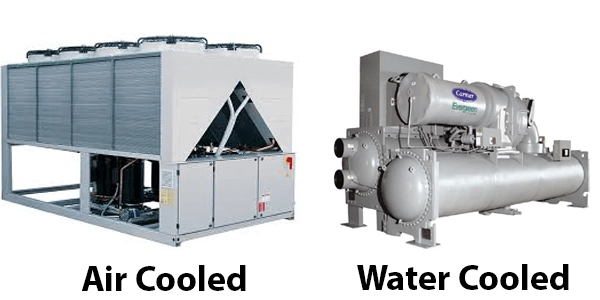
- Air-cooled chillers reject heat directly to outdoor air through condenser coils and fans. They avoid cooling towers but require strong coil maintenance and enough outdoor airflow.
- Water-cooled chillers reject heat to condenser water, then to a cooling tower. They can be more efficient and stable at high load, but require tower maintenance and consistent water treatment.
Performance in peak Oklahoma heat (what drives trips)
Air-cooled: the coil is everything
Air-cooled performance is heavily dependent on:
- coil cleanliness
- fan staging and motor health
- available airflow and placement (recirculation is real)
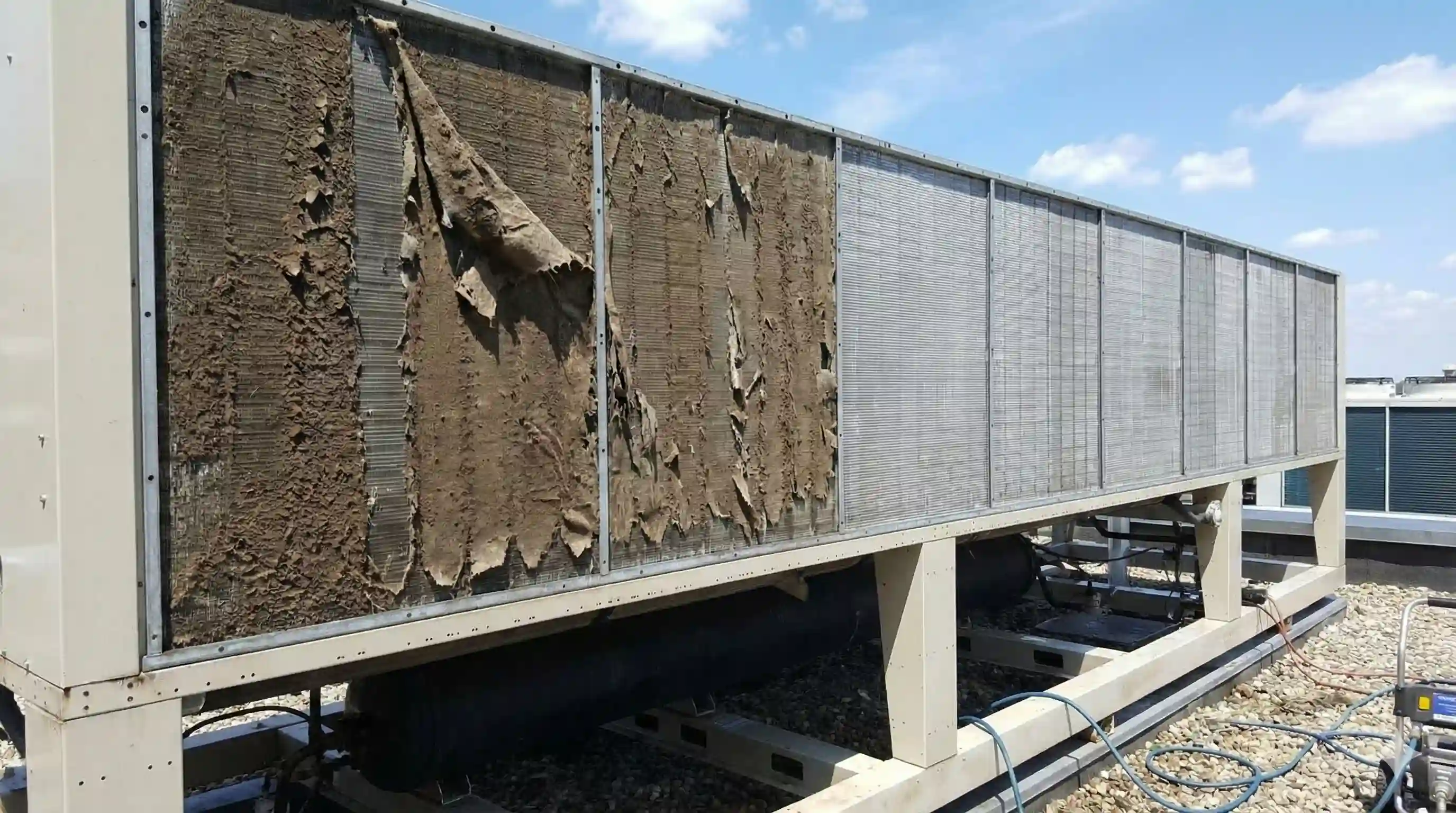
In Oklahoma, coil loading from dust/cottonwood can push head pressure up fast, especially during the same weeks you most need cooling.
During extreme weather windows, this dynamic gets worse, so we recommend reviewing heat-dome HVAC protection strategy for Oklahoma before peak season.
Water-cooled: tower performance and chemistry decide your fate
Water-cooled performance depends on:
- tower fan staging and airflow
- condenser water flow
- water chemistry control (scale and biofilm prevention)
- tube cleanliness (approach temperature)
In practice, water-cooled plants can handle high ambient better—if the tower system is maintained and chemistry is stable.
Condenser Approach Temperature (°F)
Saved 17
Maintenance reality check (what teams actually do consistently)
This is where many decisions are won or lost.
Air-Cooled Maintenance Requirements
| Task | Frequency | Consequence If Skipped |
|---|---|---|
| Coil cleaning | Monthly during cottonwood, quarterly otherwise | High head pressure, capacity loss |
| Fan inspection | Quarterly | Motor failure, uneven staging |
| Fin straightening | After hail events | Reduced airflow |
| Electrical connections | Annually | Hot spots, VFD faults |
| Refrigerant check | Annually | Low charge = poor performance |
Water-Cooled Maintenance Requirements
| Task | Frequency | Consequence If Skipped |
|---|---|---|
| Water treatment | Continuous | Scaling, Legionella risk, tube fouling |
| Tower cleaning | Quarterly minimum | Basin contamination, drift issues |
| Tube inspection/cleaning | Annually | Rising approach temp, trips |
| Fill media check | Annually | Reduced heat rejection |
| Freeze protection | Pre-winter | Cracked basin, burst pipes |
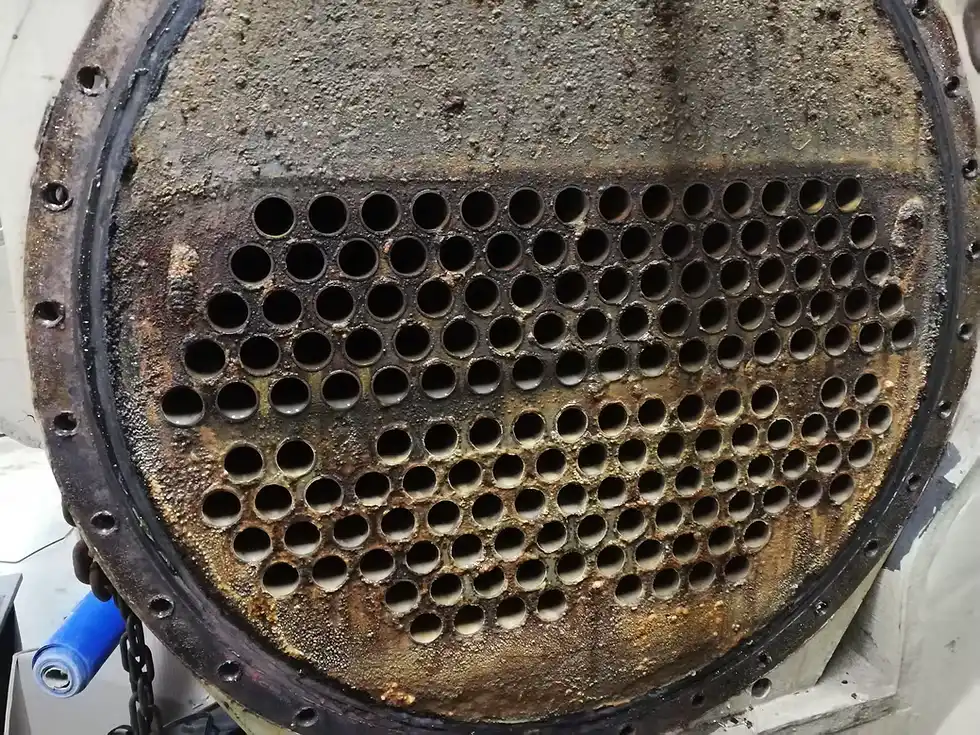
Photo credit: skillcatapp.com
If your organization struggles to maintain water treatment consistency, water-cooled systems can drift into high head pressure problems just like air-cooled systems drift into dirty-coil problems.
To tighten this part of your program, use a dedicated chiller tube cleaning plan for Oklahoma water conditions and a documented cooling tower maintenance and Legionella prevention workflow.
Total cost of ownership: what people forget to include
Equipment first cost is only the beginning. TCO should include:
TCO Comparison Framework
| Cost Category | Air-Cooled | Water-Cooled |
|---|---|---|
| Equipment Cost | Lower | Higher |
| Installation | Simpler | More complex (tower, piping) |
| Energy (annual) | Higher at peak | Lower overall |
| Water/Sewer | $0 | $5,000-20,000+ annually |
| Chemical Treatment | $0 | $3,000-8,000 annually |
| Maintenance Labor | Moderate | Higher |
| Downtime Risk | Coil issues in summer | Tower/chemistry drift |
| Equipment Life | 15-20 years | 20-25 years |
The “cheapest chiller” is rarely the cheapest system over 15–20 years.
Decision matrix: which fits your facility type?
| Facility Type | Often Leans Toward | Why |
|---|---|---|
| Hospitals / Healthcare | Water-cooled | Stable peak performance + redundancy planning |
| Industrial Process | Depends | Process loads may demand stability; infrastructure decides |
| Education Campuses | Mixed | Budget + staffing + seasonal profile vary |
| Smaller Standalone Buildings | Air-cooled | Simpler infrastructure and fewer water-side variables |
| Data Centers | Water-cooled | Consistent cooling critical, 24/7 operation |
| Retail / Office | Air-cooled | Lower first cost, simpler maintenance |
This isn’t a rule—just a practical trend. The “right” answer is always site-specific.
Oklahoma-specific pitfalls to plan for
For air-cooled systems
| Pitfall | Prevention |
|---|---|
| Coil loading during windy seasons | Increase cleaning frequency |
| Hail damage risk | Consider hail guards |
| Hot air recirculation | Verify placement and clearances |
| Inadequate electrical capacity | Size for peak + startup loads |
For water-cooled systems
| Pitfall | Prevention |
|---|---|
| Hard water scaling | Consistent chemical program |
| Tower basin hygiene issues | Regular cleaning, biocide |
| Freeze protection | Heat trace, drain procedures |
| Neglected tube cleaning | Annual inspection schedule |
What we recommend (a realistic selection process)
- Define mission-critical areas (what cannot fail)
- Review real load profile (not just design load)
- Assess maintenance discipline honestly (tower chemistry vs coil cleaning capability)
- Model TCO (energy + water + maintenance + downtime risk)
- Plan redundancy (N+1 strategies where required)
If you treat the chiller as a commodity, you’ll get commodity outcomes.
When to bring in professional support
You should involve a commercial HVAC team when:
- you’re selecting a chiller for critical loads
- your existing plant has repeated high head or low suction events
- you need help with tower water treatment and tube cleaning strategy
- you want a sequencing review for multi-chiller plants
Need help selecting or maintaining a chiller plant in Oklahoma?
Total Mechanical Services supports chiller selection, maintenance, and troubleshooting across Oklahoma. Call (405) 223-9900 or request a proposal.
Disclaimer: This guide is informational and does not replace engineering design review, OEM guidance, or site-specific analysis.
Related Resources
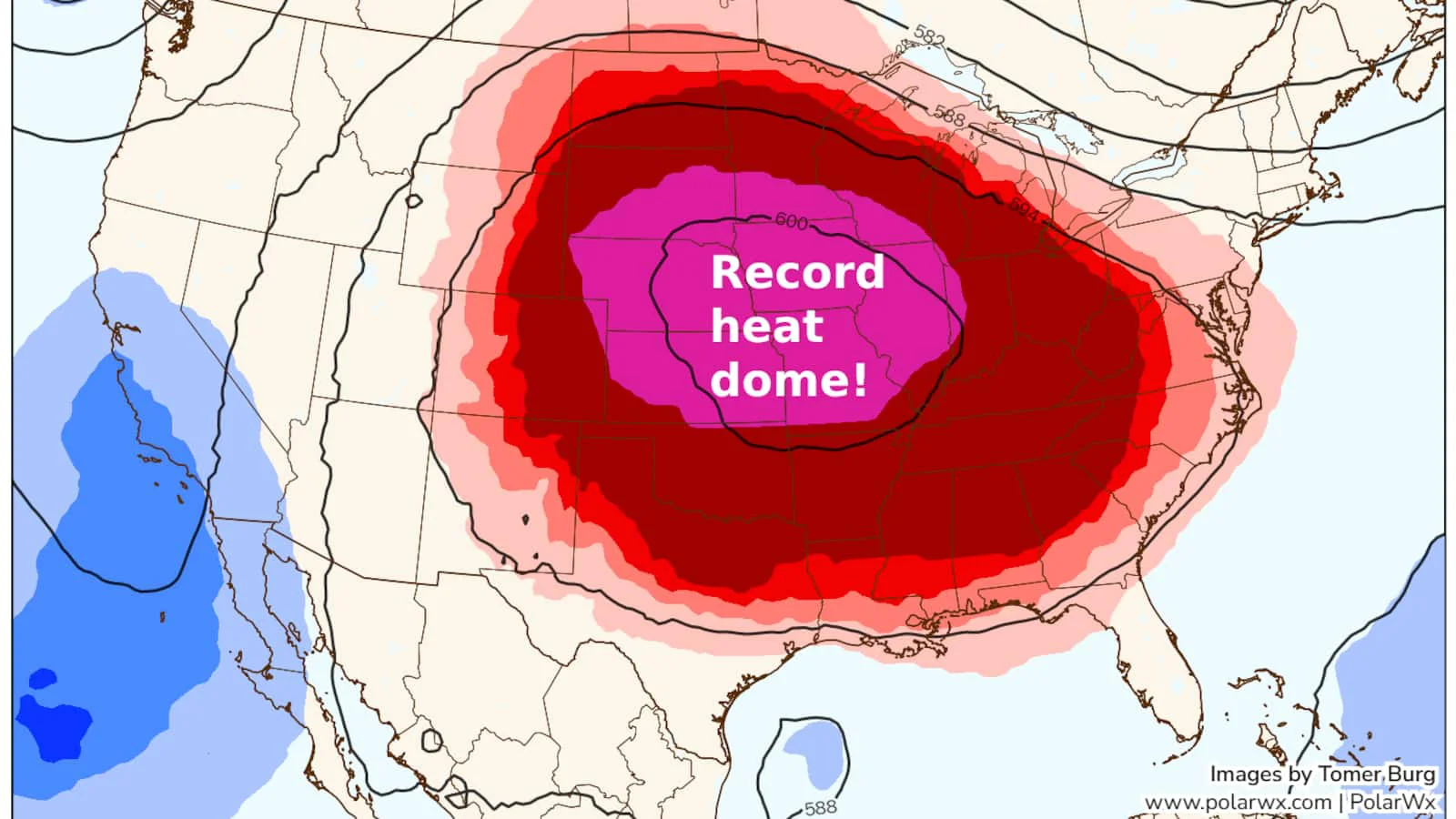
Protecting Commercial HVAC From Oklahoma Heat Domes: High-Ambient Strategy, Coil Cleaning, and Load Management
A practical Oklahoma guide to surviving heat domes: high-ambient chiller/RTU performance, coil cleaning cadence, tower readiness, demand management, and emergency cooling planning.

Oklahoma Ice Storm HVAC Recovery: Freeze Damage Triage, RTU/Chiller Plant Checks, and Safe Restart
A practical Oklahoma guide to recovering HVAC after ice storms: pre-storm prep, freeze damage triage, thaw and restart strategy, and documentation for insurance and risk control.
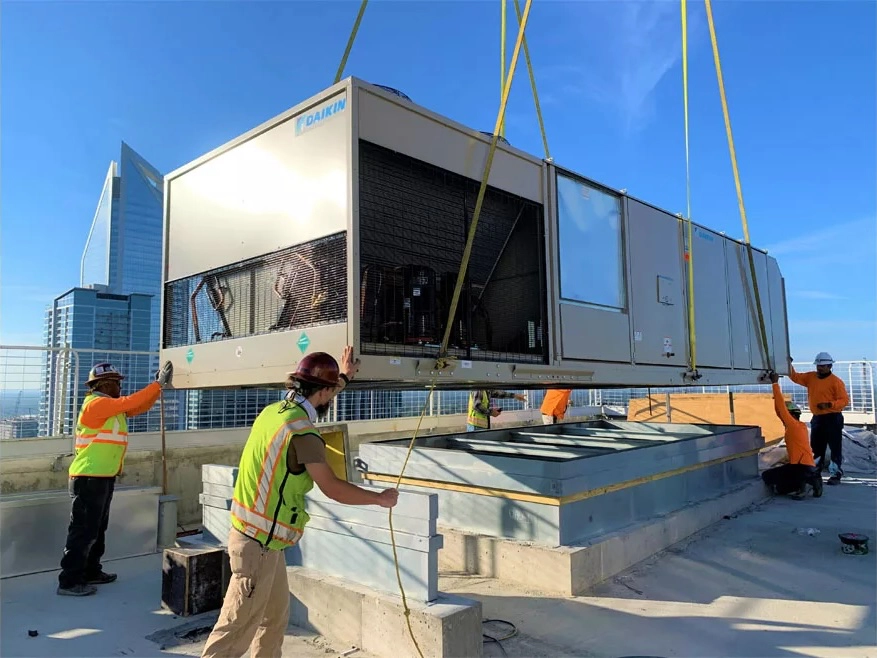
Commercial HVAC Retrofit ROI in Oklahoma: How to Calculate Payback, NPV, and Risk (Facility + CFO Guide)
A practical framework for Oklahoma facilities to calculate HVAC retrofit ROI: baseline energy, maintenance and downtime costs, incentives, simple payback vs NPV, and risk-adjusted decisions.
Need Help with Your System?
Our expert team is ready to assist with design, installation, maintenance, and troubleshooting.