Tinker AFB Hangar Access Platform Controls Support (Midwest City, OK): Secure-Site Coordination and Field-Fit Fabrication
A short, high-friction secure-site service call at a Tinker AFB hangar: access badges, aircraft-driven stop-work windows, and practical controls/fabrication work done safely.
Tinker AFB Hangar Access Platform Controls Support (Midwest City, OK)
Quick Answer
Project overview
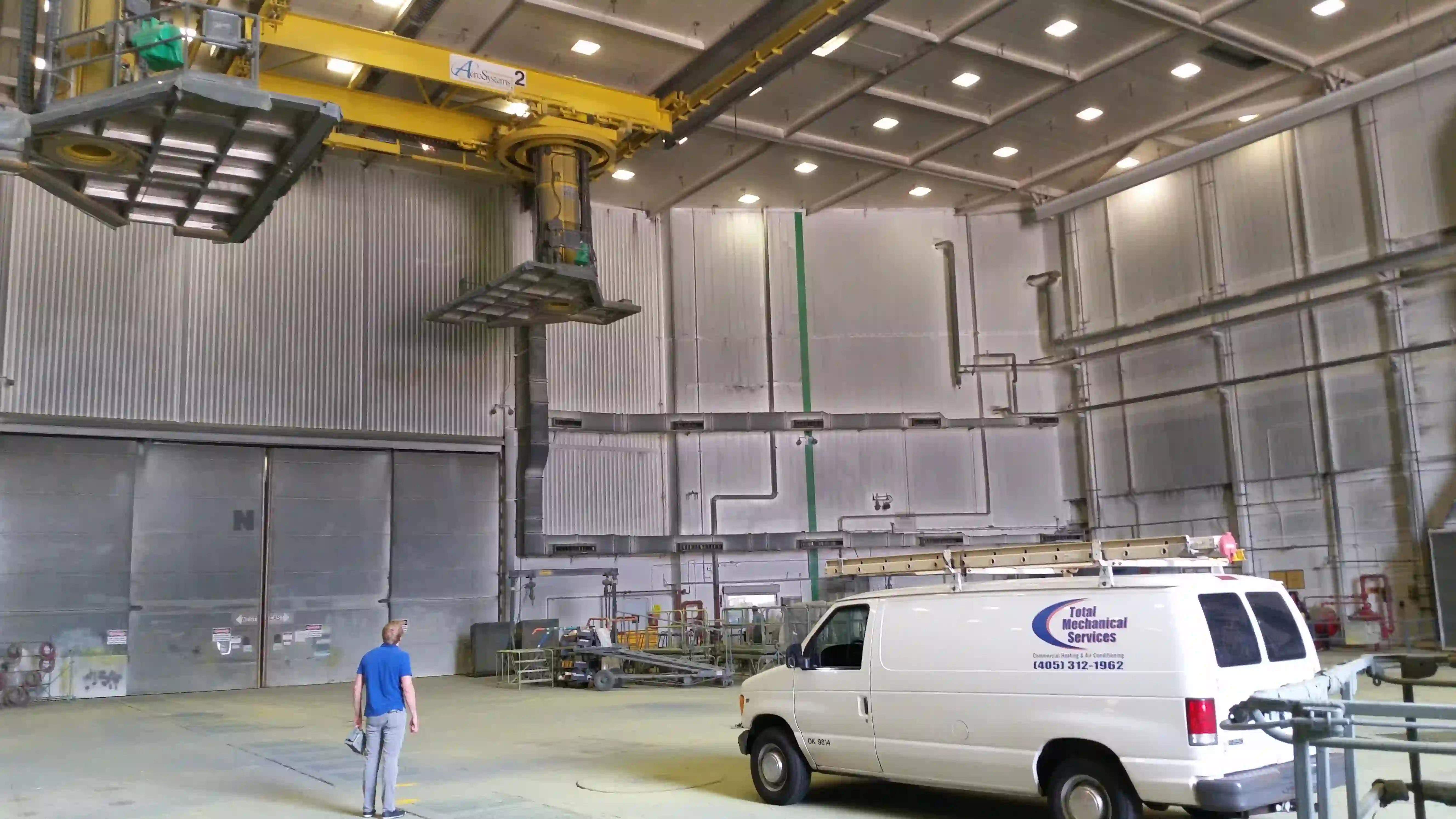
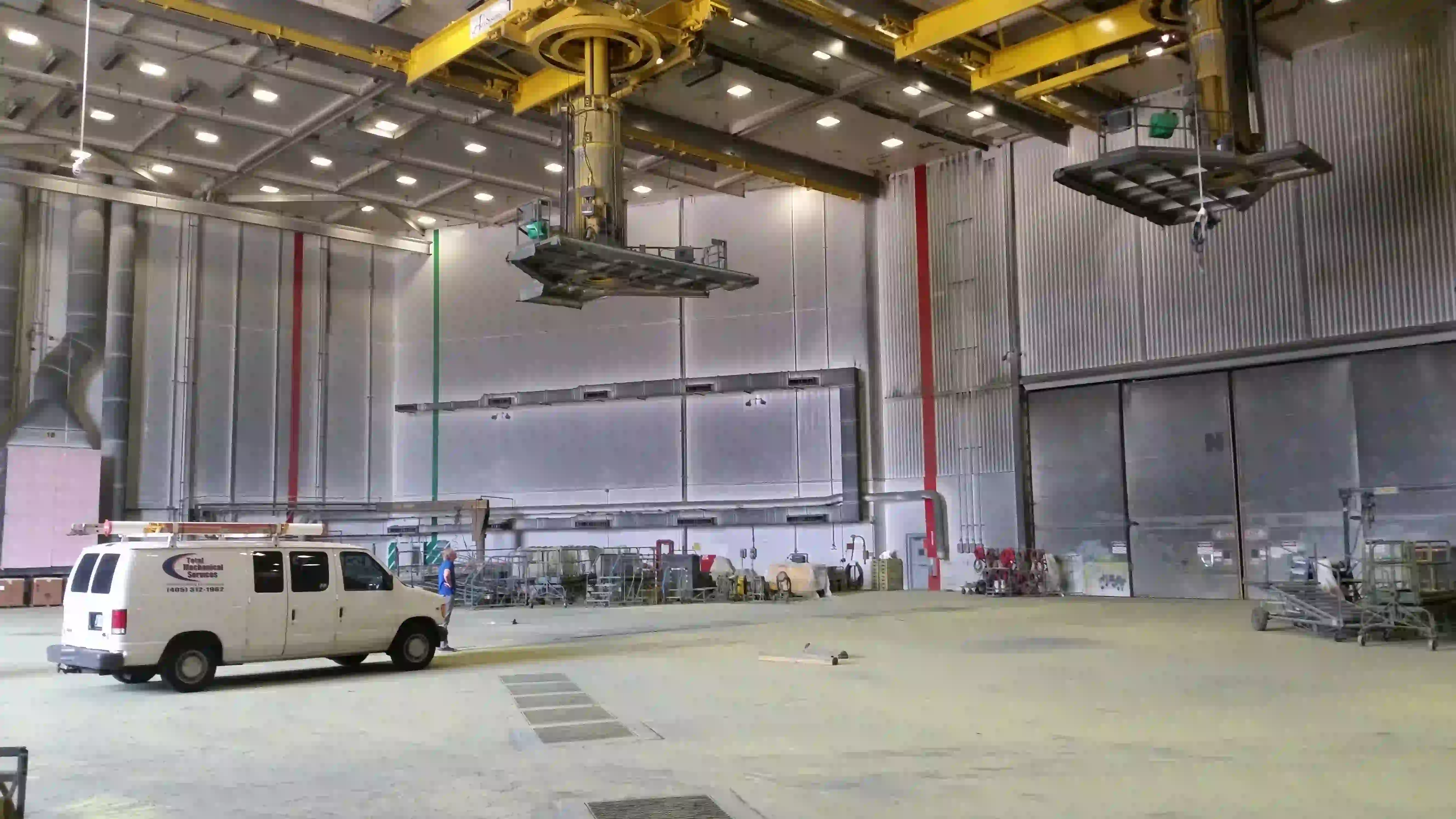
This project was a short service call at a Tinker Air Force Base hangar in the Midwest City area. The equipment in the photos is an electric, adjustable aircraft access platform used to position crews at wing level for maintenance work.
From an HVAC standpoint, it’s not a “core mechanical” job like a boiler plant or chiller replacement. But it is absolutely relevant to industrial and defense-adjacent environments because:
- Access is controlled.
- Work windows are dictated by operations (in this case: aircraft movement).
- You have to show up prepared and finish cleanly—there’s no “we’ll come back later when it’s convenient.”
For the broader mechanical service model behind this kind of site, see our commercial HVAC guide for Tinker AFB contractors.
What made this job unusual (secure-site reality)
In our experience, the hard part of many secure-site jobs isn’t the wrench work—it’s everything around it.
Controlled access and credentials
We had to coordinate access and credentialing before we could even start:
- Badging / ID process: access is not “walk in with a tool bag.”
- Escort / gate process: you have to plan for delays.
- Rules of the site: what tools can come in, where you can stage, what’s off-limits.
Stop-work windows (aircraft-driven interruptions)
We would get set up and then operations would change instantly:
- An aircraft would arrive.
- The hangar needed to clear.
- We’d be told to pack up and leave the area.
That kind of interruption is normal on bases and in high-security industrial settings. It’s also why secure-site work can feel “expensive” compared to a standard commercial call: productivity gets fragmented, and the contractor is still responsible for safety and control of materials the entire time.
Project challenges (what could have gone wrong)
Even though this was “only” a one-day job, there were several high-consequence pitfalls we intentionally avoided.
Challenge 1: Losing access mid-task
When you’re told “you’re leaving” because a plane is coming in, you can’t be halfway into a control circuit with loose conductors hanging out. Secure-site work demands a workflow where you can:
- pause immediately
- restore the equipment to a known safe state
- clear the area without leaving parts behind
Challenge 2: Tool/material accountability
On base, accountability matters. The expectation is simple: if you bring it in, you leave with it. That affects how we stage:
- fewer loose parts
- labeled bins
- pre-planned “grab-and-go” packing
Challenge 3: Safety interlocks are not optional
Motion equipment (lifts, platforms, scaffolds) often has limits, interlocks, and E-stops that have been “worked around” over time to keep production moving. We treat that as a red flag. If a platform’s safety chain is compromised, it’s a liability problem—not a productivity problem.
Scope of work (what we actually did)
The work itself was a combination of:
- Controls / wiring troubleshooting: verifying safe operation and correcting control issues.
- Minor fabrication / field-fit work: adapting components on-site so the platform could operate correctly.
It was completed in a single day (roughly an eight-hour window), with most time pressure coming from operational interruptions rather than technical complexity.
Execution strategy (how we approached it)
Phase 1: Pre-arrival readiness
Secure-site jobs punish improvisation. We planned for:
- The possibility of getting bumped mid-task
- Minimizing loose material and tools
- Keeping the work area clean and “ready to clear” at all times
- Having a “stop work” plan: how to secure equipment if we had to leave with no warning
Phase 2: Field work in short windows
When we had access, we moved fast and stayed disciplined:
- Verify safe state before touching controls
- Make changes that are reversible and traceable
- Test functionality when allowed, then leave it in a known safe condition
Why this matters to defense-adjacent facilities in Oklahoma
If you’re in Midwest City, Del City, OKC, or supporting defense work, there are two realities:
- You can’t assume you’ll have uninterrupted access.
- The cost of “we’ll figure it out on-site” is higher than it is at a standard commercial building.
We took this job years ago largely to get a foot in the door and learn the operational reality. That lesson still applies today: secure-site work is mostly logistics and process—the mechanical work is only half the battle.
Lessons learned (what facility teams can take from this)
1) Secure-site scheduling can dominate the schedule
If your facility is secure (base, data center, defense-adjacent manufacturing), plan for:
- Access delays
- Escort requirements
- Stop-work windows and unexpected operational shifts
The best project plan includes these constraints up front instead of pretending they don’t exist.
Practical planning tip
If you want a secure-site job to go smoothly, we recommend you schedule it like this:
- time window: pick a slot where operations are least likely to interrupt access
- one accountable point of contact: escort access and approvals can’t be “whoever answers the phone”
- clear staging location: where the crew can set up without being in the way
When an active failure overlaps these constraints, use our 24/7 emergency HVAC response workflow to structure the first hour.
2) Bid strategy matters for government/secure work
Government and secure-site work can be time-intensive to bid and often has a long, uncertain award cycle. If you want reliable outcomes, choose contractors who are honest about:
- What will slow the job down (access)
- What documentation is required
- What site rules will change the work plan
3) Documentation and “leave it safe” is non-negotiable
When you may get pushed out of a work zone with little notice, the rule is simple:
- Leave the system safe
- Leave it clearly labeled
- Leave a written record of what changed
Technical notes (for similar equipment)
Even on “simple” platform equipment, common industrial reliability points include:
- Control wiring integrity (strain relief, routing, labeling)
- Interlocks and limits (don’t defeat safety devices to “get it working”)
- Power isolation (lockout/tagout compliance every time)
What we recommend you standardize (if you own multiple platforms/lifts)
If you have multiple access platforms or motion equipment across a site, standardization reduces downtime:
- label every panel and disconnect consistently
- document limit switch positions and interlock logic
- keep a small spare-parts kit (fuses, contactors, common sensors) staged on-site
Decision guidance: when to call a pro vs. DIY
For industrial platforms and controlled-motion equipment, we recommend professional service if you have any of these conditions:
- Repeated nuisance trips or limit faults
- Unknown wiring changes over time
- Safety interlocks being bypassed to keep operations moving
- Any work inside a secure-site environment where documentation and compliance matter
Quick risk matrix
| Situation | Risk level | Why | Recommended response |
|---|---|---|---|
| Platform intermittently stops mid-travel | High | Potential limit/interlock issue | Call for service and document faults |
| Someone suggests bypassing an interlock | Very high | Liability + injury risk | Stop and correct the root cause |
| Work must occur inside controlled access | High | Lost time is predictable | Plan, badge, stage, then execute |
| Minor adjustment with full OEM procedure | Medium | Usually straightforward | Perform with qualified staff + documentation |
Need secure-site mechanical/controls support in Oklahoma?
If you manage industrial operations in the OKC metro or support defense-adjacent environments, we can help you plan service that respects access constraints and still gets the job done cleanly. Call (405) 223-9900 or request a proposal.
For metro-wide uptime planning outside secure perimeters, also review commercial HVAC for Oklahoma City industrial parks.
Disclaimer: This project summary is informational and generalized. Secure-site access requirements, safety procedures, and equipment configurations vary by facility. Always follow site policies, OEM procedures, and qualified professional guidance.
Related Resources
Data Center Cooling Best Practices in Oklahoma: CRAC/CRAH, Hot Spots, Humidity, and Redundancy
A practical Oklahoma guide to data center cooling: how to prevent hot spots, manage humidity, maintain CRAC/CRAH systems, and build redundancy that holds up during heat events.
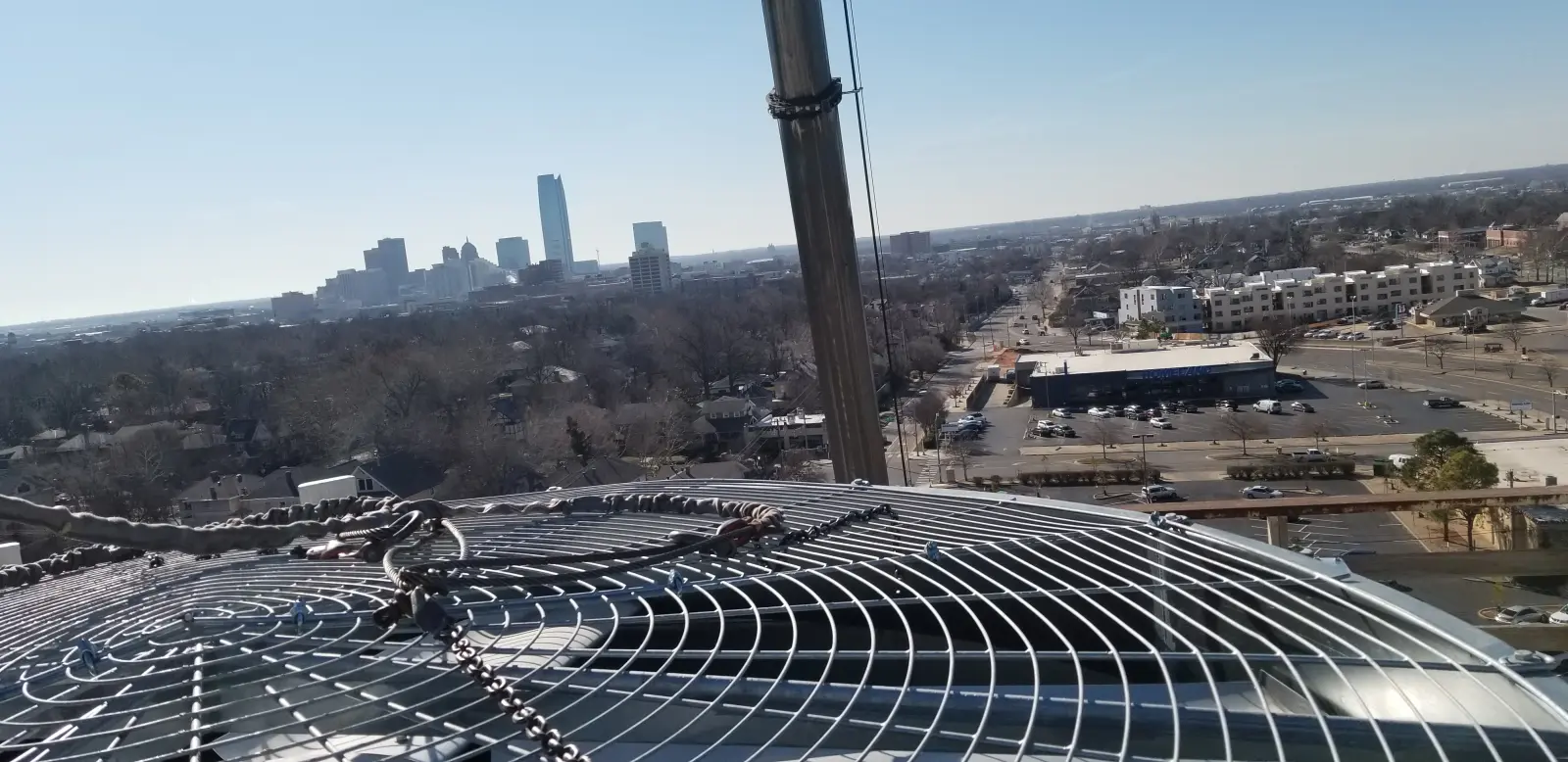
The Dowell Building (Oklahoma City): Cooling Tower Consolidation and VFD Retrofit
We consolidated two aging, unreliable cooling towers into a single, high-efficiency unit with a Variable Frequency Drive (VFD), simplifying the building's mechanical plant and improving energy performance.
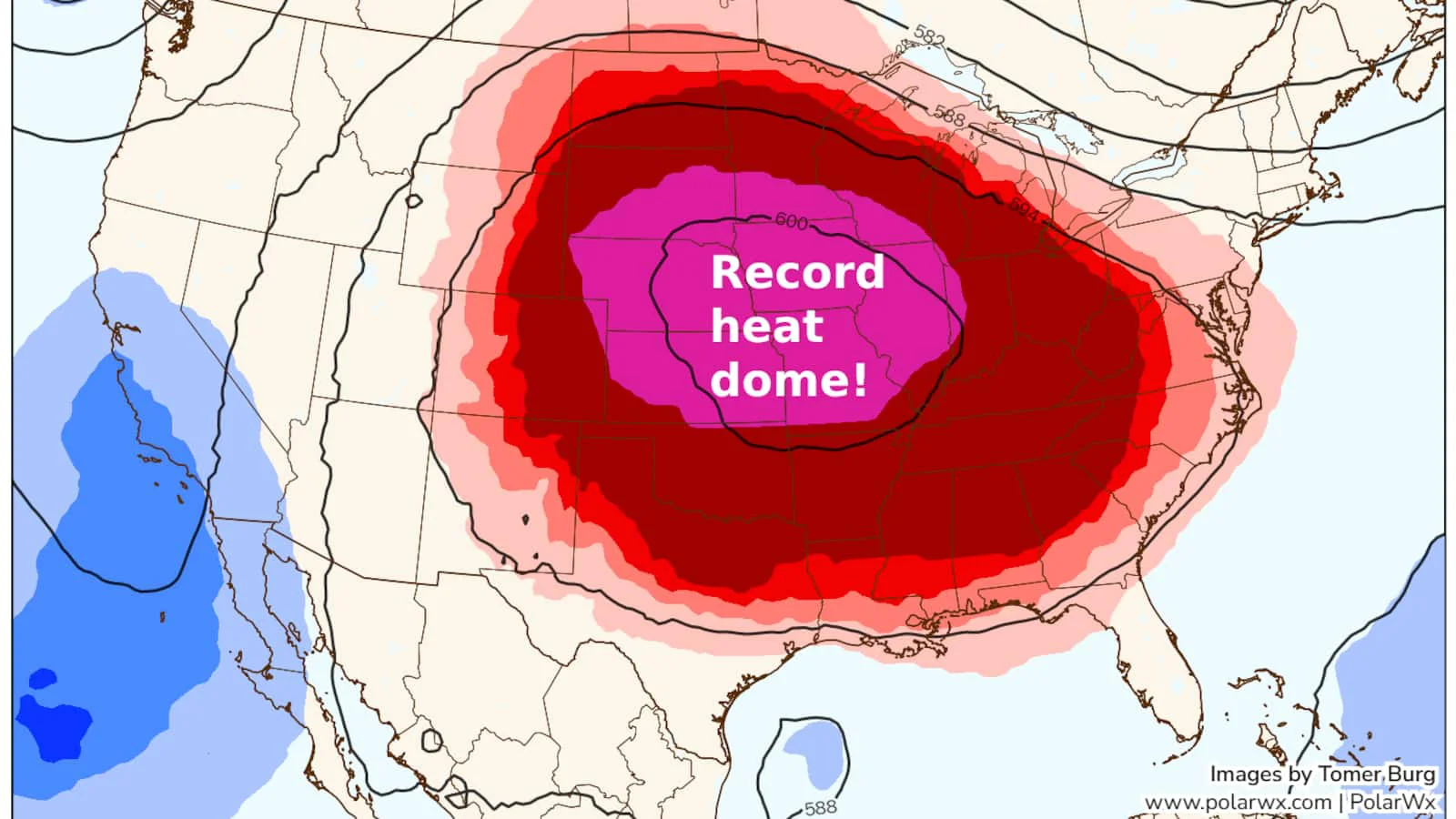
Protecting Commercial HVAC From Oklahoma Heat Domes: High-Ambient Strategy, Coil Cleaning, and Load Management
A practical Oklahoma guide to surviving heat domes: high-ambient chiller/RTU performance, coil cleaning cadence, tower readiness, demand management, and emergency cooling planning.
Need Help with Your System?
Our expert team is ready to assist with design, installation, maintenance, and troubleshooting.